



Zoe Alina
2 weeks ago
Very well organized team, uncomplicated operation of online lessons, versatile informative script :) All in all top!
posted on Google

Training planning is an essential part of the work of a fitness trainer and personal trainer. In order to achieve efficient progress in your clients' training and to achieve long-term success, there are a number of important factors to consider. Regardless of whether the client's personal goal is to improve performance, reduce body fat, learn new, complex exercises or something else.
A few important basic principles are the Weineck training principles. These state, among other things, that a training stimulus must be sufficiently high in order to achieve adaptation, that the load must increase steadily and also specify the correct load sequence as well as sufficient recovery and much more. The individual choice of the five load normatives is also crucial: intensity, duration, frequency, density and volume. Training planning deals with how to adapt these correctly to individual goals and requirements in order to achieve optimum results.
Keyword goals: Setting the right goals for clients also has a major influence on training design. Training level, age, regeneration, available time and many other factors also play important roles. The training plan can only be successfully implemented in practice if the customer's individual needs and resources are taken into account.
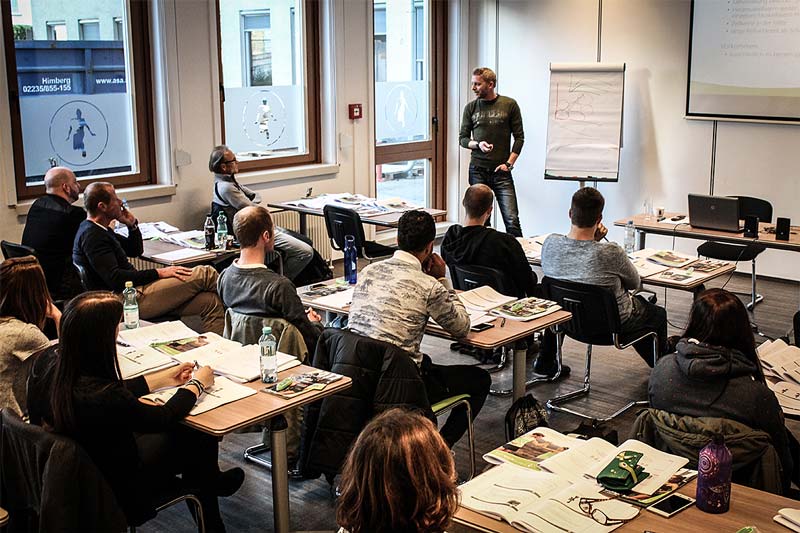
Our graduates learn about the physiological adaptation phenomena of the body's functional systems through different training loads. They also learn about different periodization models and how these are implemented in practice at different performance levels. As a result, our graduates know what is needed for optimal training planning , what obstacles can stand in the way and how individual goals can be correctly set (and of course achieved).
To refresh the content of training planning or to expand your knowledge of training planning in general, we recommend the workshop 1x1 of training planning


Based on 338 Google reviews
Very well organized team, uncomplicated operation of online lessons, versatile informative script :) All in all top!
posted on Google
I am very impressed with Flexyfit, always nice and helpful people. Very sympathetic. Thank you very much for your great support.
posted on Google
Great training and super nice people. You can tell how much emphasis is placed on conveying the necessary knowledge to the course participants in an understandable way. I was even kindly allowed to take a course completely free of charge after there were somewhat problematic and disruptive participants in my group. I will 100% take more courses with you in the future because learning is extremely fun, especially thanks to the friendly staff!
posted on Google
The entire flexyfit team is extremely friendly, prompt and helpful. The lecturers are competent and respond to the course participants. All learning materials were provided clearly and in sufficient detail. The additional videos mean there is something for every type of learner. All in all, the training and exam went well. I can definitely recommend flexyfit and will be happy to book and recommend further training courses with you again!
posted on Google
A great team - competent, friendly, always helpful and supportive - provided excellent support for the practical training. We recommend! :)
posted on Google
Great support and extensive course content. We recommend!
posted on Google
I really enjoyed training to become a B-license fitness trainer there. The teaching materials provided are great and flawless. I learned a lot of new things there and always enjoyed what I was doing. The team is great and is always there for you if you have any questions!
posted on Google
The best thing that could have happened to me is this academy. Access to participants is excellent. All employees are very competent, very professional and very friendly. A person can learn so much that it is indescribably good. I would recommend it to everyone. When I arrived in Austria I was looking for something like this and luckily I found this academy and signed up for the course without hesitation. Everything we get in return is worth 100 times more than what we pay. Indescribable experience, indescribable people, once again and 1000 times I say: Thank you for everything, thank you for this indescribable experience. THANK YOU, THANK YOU, THANK YOU
posted on Google
I was able to learn a lot of new things as part of my training at the Flexyfit Academy and was able to take on a new, demanding challenge with my chosen course. The structure of the training courses is very understandable and clear, so that you can master the distance learning course on your own without any problems. If there were any questions, ambiguities or isolated problems, the Academy team was always quick to help and we could always find a common solution. Here and there I would have liked a little more practical relevance. Nevertheless, I always felt very comfortable, had great speakers and with my degree as a qualified medical sports coach, many new doors are now open to me :)
posted on Google
I was able to complete my chosen course very well and quickly. The team is very quick and courteous and you are always offered a good solution if there are any uncertainties. I will book again when I get the chance and can recommend the academy!
posted on Google
It was a lot of fun completing my swimming trainer training at Flexyfit! The program is very extensive and the trainers are very well trained.
posted on Google
Training at Flexyfit was the best decision; I learned a lot about sport and nutrition. The support was always there, very competent and nice staff/trainers. I will definitely recommend the Academy. Especially thanks to Melanie, Sarah and Daniel
posted on Google
A really demanding training, great material, the videos are great, the script complements it well. The structure is very sensible and you can find your way around easily. I just find the proportionality of the yoga license compared to the Pilates license unfavorable. Many more exams are required for the yoga license. The final exam for the yoga license is also significantly more difficult; in my opinion, questions need to be reconsidered.
posted on Google
Extensive, informative training with a lot of flexibility and quick help with any questions - highly recommended!
posted on Google
Thank you Flexyfit - very competent, great documents and support. The practical exercises in Innsbruck were TOP - thank you Matthias. I can only recommend. I will continue. 😉
posted on Google
Very high quality training! The Flexyfit Academy tried very hard to answer and explain in detail all the questions that arose during the training. Can I definitely recommend!
posted on Google
Highly recommended 👍🏻 Proudly completed my fitness trainer training. :)
posted on Google
Absolutely satisfied! I chose distance learning because I couldn't be there in person, and I highly recommend it! Everything worked smoothly, contact was quick and a solution was always found if there were any problems. The team is super friendly and the profile overview is very clear. A small suggestion: It would be helpful if users who are inactive for a long time received a reminder or if an app were available so that they could learn on the go.
posted on Google
I was very positively surprised by the training! The distance learning course was very uncomplicated and the service was also perfect! The materials were very good and I learned a lot! I can recommend it with a clear conscience! Update 2024: Now that I have completed my third training course, I can only confirm my first assessment! As a full-time worker, it was a great opportunity for me to do part-time training that corresponds to my passion! I regularly read books on the subject of sport and health, and I have to say that the training courses everywhere are very good and up to date! That surprised me somewhat positively! =) Thanks to Flexyfit I can now turn my hobby into a career! So another clear recommendation from me!
posted on Google
A great training program that is offered there, with a very friendly and competent team. It was a pleasure to learn with your very well prepared videos and scripts. I'm already looking forward to my next training. I'm already looking forward to my next training. I can only highly recommend it, I definitely give it 5 stars.
posted on Google
Well thought out concept. Very good support from the team. I can only recommend.
posted on Google
Hi guys, That was great training to become a neuro athletic trainer. I'm already looking forward to the next course. Thanks again for everything!
posted on Google
Great training, learned a lot, top online academy, professional trainers, great service. Training at Flexyfit at any time.
posted on Google
Dear Sarah, Dear Melanie, I can only recommend you, thank you for everything
posted on Google
Very accommodating team and warm treatment on all sides! The training courses include an interesting exchange with good, sporty instructors :)
posted on Google
I did the children's trainer training at Flexyfit. From the very beginning you receive great support and the communication is perfect. Everyone is hardworking and friendly. Everything worked perfectly online and on site. It definitely won't be the last training or workshop I do with you. I am looking forward to meet you again. Thanks to Daniel, Melanie and Beno :-)
posted on Google
Flexible learning made easy :) Very competent and friendly. Very quick answers to questions and I would recommend Flexyfit to anyone who wants to do training in the sports sector 💪🏾
posted on Google
I have already completed two correspondence courses and I can say that continuing my education with the Flexyfit courses is simply fun. You learn at your own pace and are flexible in terms of time and location.
posted on Google
Great yoga pilates training!
posted on Google
I have already successfully completed two training courses! I can only recommend this academy!
posted on Google
I have now completed two training courses at the Flexyfit Academy and would do it again in a heartbeat. If possible, I recommend the face-to-face courses, they simply result in a really exciting exchange. Service and support are top and all needs are taken into account. Mini drawback: the online learning system is not entirely straight-forward, but you get used to it quickly.
posted on Google
➕ Good institute with a great online academy and a wide range of training options. I have already completed 3 training courses there. I like the modular structure, so that various basic modules can also be used for other training courses. ➖ Unfortunately, the price structure has been adjusted so that (basic) modules that have already been completed can no longer be deducted from the price. A pity.
posted on Google
I completed the Health Fitness Personal Trainer A license training and think it's a great training
posted on Google
I have already completed two training courses at the Flexyfit Sports Academy and am completely satisfied! A super nice team, the organization and documents are top - can only be recommended ;)
posted on Google
Great team! The organization of the training is uncomplicated and very competent. The speakers are professional and experienced and bring a good mix of theory and practice. Overall, only recommended.
posted on Google
Incredibly friendly team, always available, incredibly helpful and trying very hard to find a solution for everything. The learning videos and scripts are well prepared and easy to follow. I was personally able to learn the most from the really good tutors in the practical part. Overall, you get a very good overview and insight into the relevant subject areas. The course also showed me personally where I would like to orient myself further and which areas I would like to deepen in depth. In addition: well-equipped teaching halls and very attractive rooms - everything is very inviting and familiar. Every now and then you see someone from the team just coming back from running or the weight room - that makes you feel right away! (Training: Dipl. Medical Sports Supervisor)
posted on Google
Online training was very good. The learning videos were understandable and very interesting, well structured. The final exam was practical.
posted on Google
The training was top 👍 learned a lot, met very nice people - I can benefit in every way And my dream was fulfilled - THANK YOU SO MUCH 😊
posted on Google
Flexible, competent, highly recommended!
posted on Google
I am very satisfied, I had a TOP professor (which is not a given these days). I think it's great that as a nutrition trainer you also have to learn anatomical subjects (it's called sports competence). The support was great too. Very helpful team! All in all I'm very satisfied.
posted on Google
Super fast and nice service! Every question answered immediately and in a pleasant and appreciative way! What would be better would be more time for face-to-face teaching!
posted on Google
My training at Flexyfit Sport Academy... I received the best support and advice from the most competent, friendly and successful team. Many thanks to the top team (office, speakers and coaches). It was a great pleasure for me to walk with you on the path to realizing my own goals.
posted on Google
For all coaches who want to absorb detailed knowledge in one or more areas. I'm just very enthusiastic about the Flexyfit Sport Acamedy and felt like I was in great hands with the trainers. The enthusiasm was so palpable even during the Zoom workshops. Regardless of whether you prefer to read the script or watch the accompanying videos, there is a medium for every type of learner and the learning material is extremely well prepared. And should any questions arise, the “Customer Service” is there super quickly and responds after a few hours or is there to give advice.
posted on Google
Simply great and very, very nice. All the employees from the Flexyfit Sports Academy team are so nice, courteous and helpful. Help is available within minutes to an hour if questions arise while learning online. It's a lot to learn, but it shows that trainer training, no matter the subject, requires a certain foundation and I personally think it's exactly right. For me, this shows quality and that not every self-proclaimed professional is also a connoisseur and expert. Be careful with who and where you train! It is our body and every person should pay attention to it and have the “right” trainer with specialist knowledge at their side. I can only recommend Flexyfit Sports Academy. Many thanks to all Flexyfit Sports Academy employees, you are great!!!!!
posted on Google
Incredibly helpful staff! Even worked especially for me on public holidays and made appointments, very accommodating and supportive. Absolutely recommended and happy :)
posted on Google
Great training with a great and very professional team! Gladly again!
posted on Google
The training (Dipl. Health Fitness & Personal Trainer) is really great, if I had a problem I was always helped very quickly. The videos in conjunction with the scripts are very helpful and well designed, the training overall is well structured, including the intermediate exams, practice tasks, etc. This consolidates what you have learned even better! The lecturers are also very competent and my two examiners were very friendly and relaxed, so there was no reason to be nervous. All in all highly recommended!
posted on Google
Excellent training opportunities and outstanding experiences: I had the pleasure of completing three different training courses at the Flexyfit Sports Academy, and it is without a doubt a first-class facility for the further development of sporting skills. Here are my personal reasons why I find the Flexyfit Sports Academy so exceptional: Outstanding Trainers: The trainers I have met are first class. Everyone has extensive knowledge and experience in their respective areas and always responds to the individual needs of the participants. The training was tailor-made for me and extremely effective. Diverse training offers: The Academy offers a wide range of training suitable for various fitness goals. No matter whether you are striving to build strength, flexibility or endurance, you will find the right program here. State-of-the-art facilities: The facilities at Flexyfit Sports Academy are first class and equipped with state-of-the-art equipment. They ensure an optimal training experience and enable participants to get the best out of themselves. An inspiring community: The atmosphere in the academy is motivating and supportive. You feel like you are part of a committed community that has a common goal: making progress in sports and fitness. Excellent value for money: The quality of the training you receive is in excellent relation to the cost. It is an investment for health and well-being. I can fully recommend the Flexyfit Sports Academy. The training I completed here exceeded my expectations. If you are looking for a place where you can achieve your sporting goals, this is the place. The Academy deserves top marks and I look forward to further training in the future.
posted on Google
The training to become a qualified fitness trainer was very instructive and interesting. The modules are carefully structured and go from theory to practice. The whole training was uncomplicated. Service perfect, I can only recommend the Academy. Melanie and Sarah thank you for everything! Simply great!
posted on Google
Daniel best man
posted on Google"Flexyfit - flexible learning, fit for the future."

Please select a learning variant or enter a search text!
Online request
Consultation appointment
Demo training
Hotline/E-Mail
Newsletter
Brochure


* Required fields
Thank you
Your request is on its way to us and we
will answer it as soon as possible!
We took the liberty of sending you a confirmation by email to:
Please also check your SPAM folder
We wish you another
flexytastic day


* Required fields
Thank you
Your consultation appointment has been noted! We took the liberty of sending you a confirmation by email to:
Please also check
your SPAM folder
We wish you a
flexytastic day


* Required fields
You are not entering into any obligation by registering. Access expires automatically

* Required fields
Your data
Code sent to:
Please enter the four-digit code you received by email and/or SMS. (Please check your spam folder)..
YEAH, DONE!
We have sent an email with the link to your honest free demo access to the following
email address:
Please also check your SPAM folder (it may take up to 10 minutes for the email to arrive)
We wish you another flexytastic day!


You can reach us from 8:30 a.m. Monday through Saturday.
Our consulting & service language: English | German
International
+43 1 997 27 38
Scan the QR code with your smartphone or click on "to
 Switch WhatsApp®"
And you will be forwarded directly to the WhatsApp® app.
Switch WhatsApp®"
And you will be forwarded directly to the WhatsApp® app.


* Required fields
Stay up to date. Exciting news & current discounts.

Scan the QR code with your smartphone or click on "Subscribe to Flexyfit® channel"


* Required fields
You will receive our training brochureby email.
Thank you
You will shortly receive an email with your download link to the brochure at:
Please also check
your SPAM folder
We wish you a
flexytastic day

More than 42.820 Satisfied graduates - from Great Britain and 81 other countries, have placed their trust in us since 2007.