Ich bin mit Flexifit sehr zufrieden.
E-Mails werden immer schnell und hilfreich beantwortet und auch telefonisch bekommt man freundliche und kompetente Auskünfte.
Ich habe auch an den Kursen teilgenommen und fand die Kurse sehr gut organisiert und interessant.
Die Vortragenden waren professionell und hilfsbereit.
Insgesamt bin ich sehr zufrieden und kann Flexifit nur weiterempfehlen.
vor 28 Tagen
Schnelle und unkompliziert Hilfe! Der Kontakt war immer außerordentlich hilfsbereit und freundlich.
24.04.2026
Super Kundendienst
21.04.2026
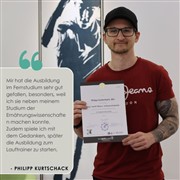
Fundierte Ausbildung, aussagekräftige Skripten und Videos, toller Support!
13.04.2026
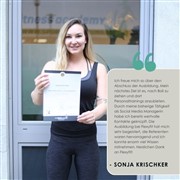
Schnell und nicht aufwendig!
01.04.2026
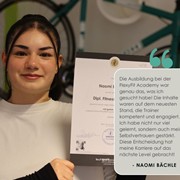
Sehr umfangreiche und interessante Ausbildung.
Sehr nette und kompetente Referenten.
25.03.2026
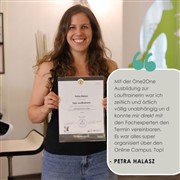
Die Inhalte sind echt toll wie auch die Trainer. Es ist unkompliziert online eine Ausbildung neben Arbeit und Kindern zu verrichten.
Wenn eine Ausbildung dann wieder über flexifit
13.03.2026
Sehr nettes und kompetentes Team. Tolle Ausbildungen. Danke Euch 🙏🏽🫶🏽
06.03.2026
Bei Rückfragen zu einem Kurs, die ich über die Chat-Funktion gestellt habe, habe ich sofort Antwort bekommen und das Angebot für ein spontanes Telefonat. Da fühlt man sich gleich mal gut aufgehoben.
Nach dem Telefonat habe ich mich gut abgeholt gefühlt und zusätzlich alle besprochenen Punkte per Email schriftlich auch noch erhalten.
Großartig!! Das war der Auslöser, dass ich den Kurs auch sofort gebucht habe
14.02.2026
Kundenservice vorab zur Bestellung durch Melanie - sämtliche Fragen wurden umfassend und sehr rasch beantwortet
10.02.2026
Eine super tolle learning Plattform. Fragen egal welches Thema werden sehr schnell beantwortet.Note 1
05.02.2026
Tolles Service!
04.02.2026
Perfekte Unterlagen, unkompliziertes Verfahren und sehr gute Kursauswahl
29.01.2026
I got every info on time. Thank you
28.01.2026
Friendly and very helpful staff.
Thank you
23.01.2026
Passt alles! Super Firma, mit tollem Kundenservice!
19.01.2026
Habe den online Zugang für den Demozugang sehr rasch bekommen, Ansprechpartnerin hat nachgefragt, ob ich fragen habe, online Campus macht einen sehr guten Eindruck auf mich
18.01.2026
Mein Yoga Kurs war sehr umfangreich, und man konnte schnell hineinfinden.
Das Team war auch sehr nett
Certified sports masseur & sports rehabilitation
Strong in training, strong in regeneration - start your diploma in Sports Massage & Sports Rehabilitation
Certified sports masseur & sports rehabilitation - your next step towards holistic care
More than just sports massage
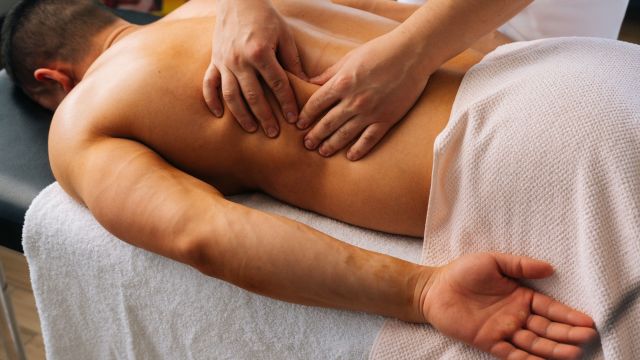
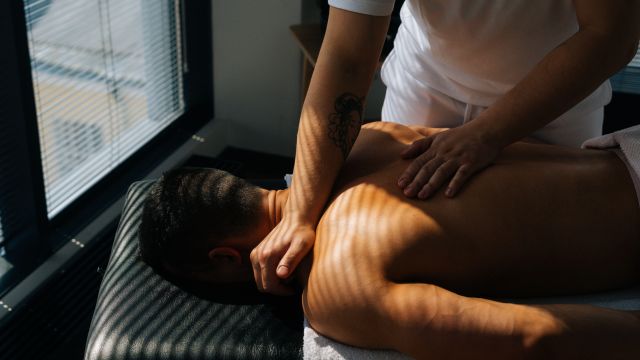
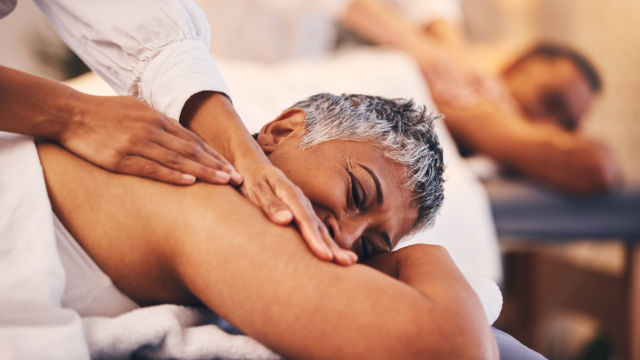
The classic sports massage is a tried and tested means of loosening the muscles, promoting blood circulation and speeding up regeneration. But everyday sport often demands more. This is exactly where the advanced training to become a qualified sports masseur & sports rehabilitation specialist comes in.
You will not only learn how to provide athletes with the best possible care before and after training, but also expand your skills to include modern rehabilitation methods, functional training and prevention strategies. This allows you to support athletes not only during exercise, but also on their way back to sport - safely, competently and sustainably.
You will develop from a pure sports masseur to a comprehensive expert in regeneration, rehabilitation and performance enhancement - a clear competitive advantage in the fitness and sports industry.
What are the benefits of this diploma?
During your training, you will acquire skills that go far beyond classic massage: You will learn to understand sports injuries, carry out functional tests and use targeted measures for different stress and recovery phases.
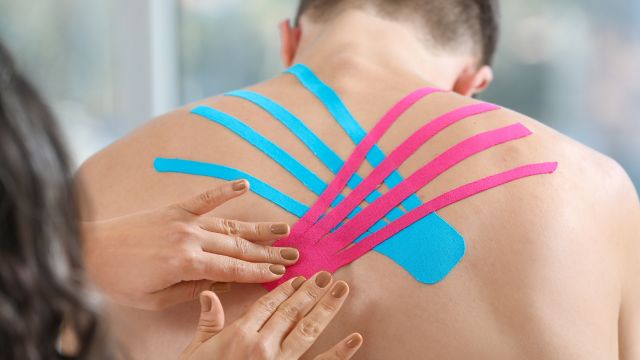
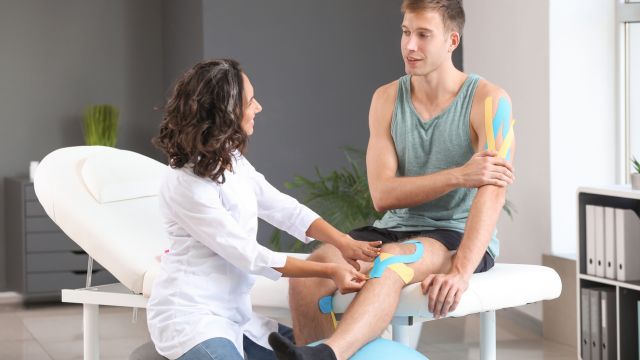
You will train in the use of kinesiotaping, functional bandages and sensorimotor exercises and gain valuable knowledge about nutrition, mental relaxation and prevention. This enables you to not only support athletes in the short term, but also promote their performance and health in the long term.
This diploma is the perfect addition for trainers, masseurs and specialists who want to expand their expertise and position themselves as holistic contacts in sport.
Conditions of participation
Online or written registration
Minimum age 18 years (written parental consent is required for participants under the age of 18)
Certificate of completion
Our certificates are valid worldwide and are issued in different versions. On request, you can receive our certificate in several languages (DE, EN, ES), with country-specific information and with or without printed grades.
All versions are available to download online free of charge. In addition, you will receive a certificate of your choice printed on high-quality special paper with embossed printing.
The following certificate is awarded (in several languages DE, EN, ES):
We are happy to help you by phone, e-mail or chat . However, you may find the answer to your question in our general FAQ or sports masseur FAQ.
Detailed Course Contents
Extent of learning
642 E |
Volume
SPK
200
Sports expertise
PL
366
Presence | Self-study
RE
9
Literature research
TE
60
Practical realization
AE
7
Additional tasks & examinations
Our training courses are generally eligible for funding. The relevant funding body will decide whether you are eligible for funding.
We will be happy to support you in compiling all the necessary course information you need for your funding application.
Of course, we will be on hand to advise you throughout the entire process and support you from the initial inquiry to the submission of your application. Contact us - we will make sure that you are as well prepared as possible!
Hier findest du eine ausführliche Übersicht aller enthaltenen Module, Fächer und Kapitel. Entdecke den gesamten Aufbau und Umfang der Ausbildung und verschaffe dir einen klaren Einblick in die vermittelten Inhalte.
Module Sports competence
Anatomy
We educate the best trainers in the fitness branch. From start to finish of the education - and beyond!- we support and guide our students.
Functional anatomy is a foundation necessary for all trainers in exercise, fitness and sports. This subject provides a comprehensive introduction to the anatomy of the human body and a wellspring of important knowledge.
The course is constructed to present the information in an interesting and comprehensible manner and features different learning approaches appropriate for Fitness and Personal Trainers.
The goal is, to understand the relationship between movement patterns, the human body and relevant anatomical terminology.
Physiology
A working understanding of human physiology and therefore the relationships between the various functions of the human body is crucial for anyone working in the exercise and fitness field. It is a requisite knowledge for the sufficient practice of their profession.
This course makes the relationships within the human organism graspable for everyone. Take a deep-dive into the human body and learn the functions of our organism for your new profession in fitness.
In this subject you will get a close look at energy metabolism needed for muscle activation, the circulatory system and the pulmonary system.
Any high quality education in fitness and exercise begins with the foundations of anatomy and physiology.
Training theory
The first part of training theory teaches the basics of training, such as training principles, principles of training design, training methods and the factors of athletic performance. As performance, performance diagnostics, training and competition are closely interrelated, they are also taught accordingly in the course.
In the second part of training theory, training is defined and evaluated as a complex action process and in connection with planning, execution and evaluation. An important part of training theory is still the design of training plans, which is taught in practice with examples of the possibilities of designing a training plan.
In order to delve even deeper into training science, we have worked with top international speakers such as Prof. em. Dr. phil. Dr. med. Dr. h.c. Jürgen Weineck, we have also developed a video workshop on the subject of altitude training.
Sports Psychology - Communication & Motivation
In this unit participants are prepared for successful communication with their clients on every level. In addition, we take a look at how the trainer or coach can go about dealing with their own goals and motives, which will in turn help them better understand their clients.
The right goal-setting and the proper approach to feedback are an important parts of this unit.
The way we manage stress as trainers and with our clients and a variety of learning strategies are explored so these skills can be integrated into your professional approach.
Marketing & Customer Interaction
The unit on Marketing and Customer Interaction gives participants some insight into identifying, working with and marketing to their ideal customer. This is one of the most useful units for the aspiring trainer, as it helps them identify their place in the market, which makes for a more successful career start.
We begin by taking a look at Marketing itself to understand exactly what it is and of what relevance it has for personal trainers. Important basic concepts such as USP, positioning, target market, etc. are introduced and different models from marketing such as the SMART Formula, marketing mix (7Ps) and more are explained.
The communication between trainer and client is also addressed in this unit. Various aspects of communication theory and some guidelines for successful communication are covered.
Upon completion of this subject, participants are able to develop marketing strategies for their product and/or services, ready to position themselves in a market rich in variety and full of possibility!
First aid & sports injuries
Since injuries are a daily occurrence in sports, it is important to know about the causes and consequences of the most common injuries. In case of an emergency the personal trainer must be able to react quickly and correctly.
In addition, the understanding of various injury patterns helps to be able to avoid them from happening.
Intro to Corporate Wellness Programs
More and more companies are integrating Corporate Wellness and similar health initiatives into their employee benefits packages. By doing so they promote the health and well-being of their employees, reducing the incidence of sick-leave and building healthier, stronger team dynamics.
Exactly why such initiatives are important is discussed in this introduction to the concept, as well as challenges that such initiatives face including organisational dysfunction.
Participants also learn about the advantages of corporate wellness and some trusted approaches and tools for finding and working with a company.
We offer suggestions on how to approach companies about Corporate Wellness, how to develop a corporate wellness concept and important organisational points to consider. Participants will be exposed to some practical examples and will have the possiblity to perform group work on the topic.
Basic Nutrition
Our participants are introduced to the basics of sports nutrition.
As a foundation the composition of general nutrition including macro and micro nutrients, as well as the water balance, are discussed. In order to understand various correlations, the energy metabolism are explained in detail.
In addition, the effects of individual food components in the human body, as well as their importance in sports are covered.
Module Certified sports masseur
Introduction to Sports Massage and Massage Taboos
Whether, when and who may be massaged is strictly regulated by law. And rightly so, as masseurs work directly on the body!
For this reason, the Diploma Sports Masseur training course also explains trade law guidelines so that participants know who they are allowed to practice on after completing the course. The meaning of sports massage and how it differs from other massage practices is explained in detail.
But of course it is not just the legal aspect that is highlighted. Diseases of the skin or acute injuries are also discussed together so that it can be assessed in future whether or not people may be massaged.
This is why the medical history takes up a large part of the course. Our participants learn to recognize complaints and misalignments and, based on this, to assess the correct positioning of the client as well as the application and dosage of massage techniques.
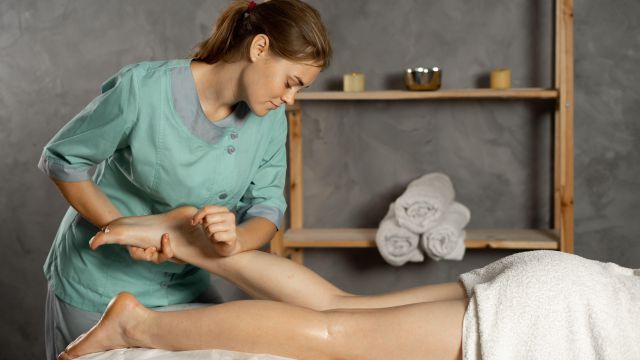
In the massage area of the legs and buttocks, the focus is on prominent bony points, superficial muscle courses and other structures that are important for orientation during a massage treatment or anamnesis. This is where anatomical knowledge of attachment and origin points or regions of muscles becomes essential in sports therapy, which is part of all our training courses.
Especially for sports that almost exclusively require strength and endurance of the lower extremities, such as running, cycling, soccer and long jump, a sports massage of these areas can be of great benefit. Disorders in the foot can also have an effect on the pelvis and spine, which can lead to pain in other parts of the body.
Knowing how to perform massages correctly in this very sensitive area is therefore essential in sports massage.
Shoulder & arms massage area
In the massage area of shoulders and arms, participants of the Diploma Sports Masseur course learn various self-massage techniques. From the hand technique to the finger technique to the pressure-movement technique, various techniques are presented. These not only have various applications, but also delay hand fatigue, allowing for a longer massage.
Massage using massage balls, massage fairies and fascia rolls is also an important part of the training.
Finally, implementation in specific sports is discussed. Using the case study of a golfer, a handball player and a tennis player, massage techniques after training or competition and common injuries are analyzed.
Classic taping and kinesio taping
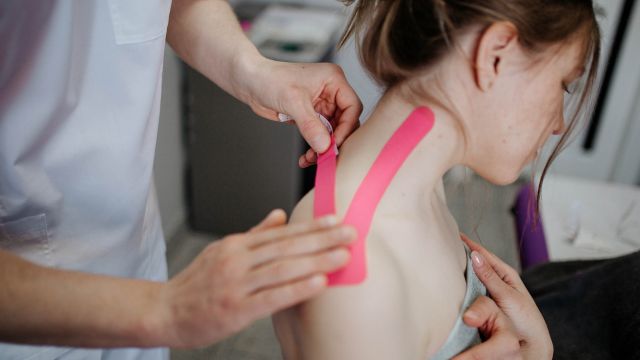
Functional taping is intended to relieve pain and support the muscles in the event of injuries. Kinesio taping is a special type of taping that promotes blood circulation and strengthens the muscles. Both types of taping can be used for many different sports.
The application is then very practice-oriented. From measuring to placing the bandage, participants learn all the important intermediate steps.
The trainers also learn how to apply ankle bandages, support bandages, relief bandages and much more. They also learn how to apply kinesiotape to specific muscles. Among other things, this helps with changes in tone, muscle control and the elimination of circulation restrictions.
Competition preparation, inter-stroke massage
Good massage practice
Special sports massage
Full body fatigue massage
Sports traumatology
In this part of the sports masseur course, participants learn how to prevent injuries through warm-up exercises and injury prevention.
Participants are given an overview of possible sports injuries to muscles, bones, cartilage, tendons and ligaments. The 18 most common sports injuries are also used to explain the symptoms, treatment and return to training.
Initial treatment using the PECH scheme rounds off this training subject: The PECH scheme teaches participants how to react correctly in an emergency. After all, quick and competent action is crucial in an emergency situation.
Massage area abdomen & chest
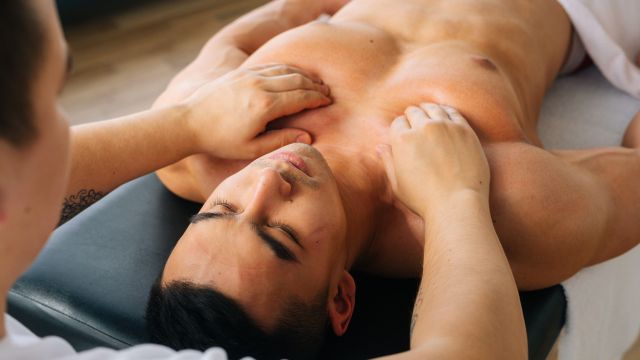
In the abdominal/chest massage subject of the sports masseur training course, both self-massage and functional massage are explained in more detail. The techniques taught are particularly valuable in the sports areas of climbing, boxing and weight training, as sporting activities are often associated with tension in this area.
Massages in the chest area also support the activation and strengthening of the auxiliary respiratory muscles.
The colon massage according to VOGLER and KRAUSS is also covered in this subject. This technique is a manual, anal pressure and gliding movement on the colon, which is performed at five anatomically defined points on the abdomen. It is used to create a balanced, normal muscle tone in the abdomen with an effect on the circulation and the autonomic nervous system.
As with all our training courses, whether distance learning, face-to-face courses or One2One lessons, it is important to us that what we learn is carried out safely. We therefore naturally also discuss in which cases the massage techniques should be modified or not performed at all.
Kinesiology deals with the analysis of movement itself, while biomechanics examines the anatomy and physiology of movement. It can help improve performance, prevent injuries, and support rehabilitation after injuries. It can also aid in understanding the causes of musculoskeletal complaints and injuries.
In this course, the fundamentals of human anatomy and physiology are linked to the demands of modern training. The lecture is divided into several parts, with the general kinesiology being initially addressed. Special emphasis is placed on the analysis of movement patterns. This multipart lecture serves a deeper understanding of how the human body functions. Movements are broken down into their components to analyze them thoroughly and make statements about the forces at work.
Our Professional Health Fitness & Personal Trainers can analyze and measure movements, understand the psychological and physical factors affecting peak performance, and independently determine the requirements of different sports.
Furthermore, everyday and sports-related movements and their affecting forces are examined, shedding light on the effects of incorrect posture/technique on the body.
To experience all this firsthand, videos of one's own technique are filmed and analyzed using various fitness apps. Kinesiology and biomechanics are two essential areas in the Professional Health Fitness Personal Trainer Certification when it comes to analyzing human movement.
Functional movement analysis
In the Functional Movement Analysis course unit, the focus is on the quality of everyday movements in old age. Participants learn to recognize and systematically analyse typical movement and posture patterns of older people, such as reduced arm swing, balance weaknesses or gait instability.
In addition to practical observation, they will learn how to safely carry out and evaluate functional tests such as the "chair-rise test" or the "timed-up-and-go test". From this, targeted training measures can be derived to improve mobility, strength and coordination in everyday life.
Particular attention is paid to formulating individual training goals from real everyday movements such as getting up from a chair, walking or reaching for objects and creating a mini-training plan based on these observations. This practice-oriented unit creates the basis for effective and needs-oriented training planning for older people.
Relaxation techniques
At the beginning of the session, a recap of what stress is and its significance for the body is provided. Various types of stress, their causes, and the effects of stress are discussed, with detailed focus on stress management.
Relaxation techniques are an important complement to training and can help calm the body and mind, reducing stress. Therefore, they expand the repertoire of a holistic coaching trainer. There are many different relaxation techniques that people can use to relax and improve their physical and mental health.
One of the most well-known relaxation techniques covered in the course is progressive muscle relaxation according to Jacobson. In this method, individual muscle groups in the body are consciously tensed and then relaxed. This technique helps to release muscle tension and relax the body. Another popular relaxation technique is autogenic training. This method helps calm the mind and reduce stress through breathing techniques and communication with the subconscious. The mind and body are closely interconnected-if one is under too much tension, the other suffers!
By regularly integrating relaxation techniques into training, it can help bring the body and mind into balance and reduce stress.
Training adjustments during regeneration
Reintegration, reintegration, return to sport or load build-up
Functional anatomy in vivo
functional strength exercises
Functional Training refers to an approach to strength training that incorporates multiple muscle groups, movement patterns that reflect real human movement in the real world and place a high value on core musculature involvement in training exercises. Multiple muscles are trainined at once, usually with a focus on entire muscle chains, in order to improve coordination between muscle groups alongside strength. Creating more stable and economical movement patterns that use the entire range of motion and strengthen the core are major goals.
Functional Strength Training is especially important because we want our clients and athletes to be able to use acquired strength for everyday movements and activity, or for the complex movement patterns necessary for any sport. This type of training is also appropriate for any age group and has applications in almost every type of sport, leisure activity, rehabilitation and injury prevention.
Some functional training methods utilize balance-challenging techniques and tools, small equipment that requires more core involvement for traditional movements, like medicine balls, sandbags and aquabags, or simply rely on bodyweight exercises.
In this course subject participants will learn about various training tools such as sling/TRX, gymnastics/balance ball, medicine and slam balls, sandbags, heavy/battle ropes and more. Bodyweight exercises are also a foundation of functional training, as certain bodyweight exercises can be used to expose functional weakness in even very "well-trained" athletes, and in order to build these abilities from the ground up. Muscle chains and some exercises which can be used to focus on specific ones are introduced.
Introduction to Sensomotoric Training
The human body is a complex system of muscles, tendons, joints and bones that is constantly in motion. Every movement we make triggers a reaction that affects other areas of the body.
Sensorimotor training is a method that trains precisely these reaction chains in the body. Targeted training of the senses (e.g. sense of balance, touch, sight and hearing) and motor skills (muscle strength, coordination, mobility) improves the interaction between body and mind.
What is sensorimotor training? Sensorimotor training is a method that originates from the field of physiotherapy. Sensorimotor regulation is the brain's ability to control motor skills and perception. Sensorimotor training can optimize movement sequences and improve motor skills. It is used in physiotherapy for neurological disorders, such as after a stroke.
However, sensorimotor training can also be used in competitive sport and fitness to improve motor skills.
This content is therefore developed in the sensorimotor training course for fitness trainers, in which participants perform practice-oriented strengthening exercises using unstable surfaces such as wobble boards, foam, exercise balls, ropes or slings and much more.
The unstable surfaces train proprioception, i.e. the perception of one's own body and its movements. The exercises challenge balance, coordination and strength and are therefore particularly effective.
Findings and medical history (prevention)
Module Trigger point massage
Basics of trigger point massage
This subject teaches the basic concepts of trigger point massage. Participants will learn the definition and history of trigger points, including the origin and development of the concept and the contributions of key individuals.
The physiological basis and functioning of trigger points will be covered in detail. This includes muscle anatomy and physiology as well as the neurological aspects and pain transmission.
An important part of this subject is the differentiation between the various types of trigger points. It explains what active and latent trigger points are and how primarytrigger points differ from secondary trigger points.
In addition, the symptoms and the effects of trigger points on the human body are explained. This includes the various pain symptoms and patterns as well as the effects on the musculoskeletal system and general well-being.
Diagnostics and assessment (trigger point massage)
This subject deals with the methods for diagnosing and assessing trigger points. Participants will learn various techniques for identifying trigger points, including palpation techniques and the use of anatomical landmarks.
Another important component is questioning and taking a medical history. This involves taking a detailed patient history, supplemented by the use of questionnaires and standardized assessment tools.
Trigger point massage techniques
This subject teaches the various trigger point massage techniques that are essential for the effective treatment of trigger points. Participants learn direct pressure techniques that focus on the application of constant and intermittent pressure and the combination with other manual techniques.
Stroking and stretching techniques are also covered. These techniques are integrated into a comprehensive massage protocol and include both dynamic and static stretching.
Another important part of this subject is the use of aids such as balls and rollers. The selection of suitable aids is explained as required and supplemented by practical demonstrations and exercises.
Finally, self-massage techniques for clients are taught. Participants will learn how to instruct clients in self-treatment and receive safety and application advice to ensure safe and effective self-massage.
This subject provides participants with a wide range of techniques to effectively treat trigger points and assist clients in self-care.
Practical exercises and case studies
This subject focuses on practical exercises and the analysis of case studies. Participants put the techniques they have learned into practice in group exercises and partner work. The practical application of the techniques is practiced in the group and there is partner work for mutual feedback.
The analysis of case studies is another essential component. Real case studies are presented and discussed, with a focus on diagnosis and treatment planning.
Particular emphasis is placed on practical application to different muscle groups. Specific techniques are taught for commonly affected muscle groups such as the neck, back and shoulders.
There are also individual treatments and supervision. Participants work individually under the supervision of an experienced therapist and develop and implement a treatment plan.
Finally, the exercises are rounded off with reflection and feedback. There is an exchange of experiences and insights, and the techniques are adapted and optimized.
Available course variations
Certified sports masseur & sports rehabilitation
GEWÄHLTClassroom Courses
€ 3.740,00
Highlights
Language of Instruction
EN
Course Module
Group attendance course
Fitness Fundamentals
online
Fitness basics (presence)
Optionally bookable
Fitness Fundamentals Full HD Video Lessons
314
Course Module Full HD Video Lessons
postable
Learning Type / Learning Method
Course Modality
online/presence
Study Method
visual/motor
Auditory & Visual Learning Style
well suited
Communicative & Kinesthetic Learning Style
well suited
Study Timeframe
flexible + dates
Study Support (# all-inclusive)
Text & Presentation PDFs
Lectures Bookable as Classroom Units
Support via Online Campus, E-mail, Chat, Tel.
WhatsApp & On-site Support
Test/Dummy Exam
Bonus Modules
NADA Austria
Altitude Training - Prof. Dr. Weineck
contain
Exam/Completion
Fitness Fundamentals Theory Exams Online
Final Exam
Flexible date
Certificate in DE, EN or ES
Certificate accepted worldwide & never expires
Academy Account (# all-inclusive)
Lifetime Access to Online Campus
Free Demo Account / Trial Package
Certificate Copy as Downloadable PDF
Certificate with Verification via QR-Code
Financial Aid
Financial Aid/Grant Opportunities
up to 100%
Paid Educational Leave (AT)
Grants for Businesses
Grants for Self-Employed Persons
Course Advising
non-binding
Cost Estimate for Financial Aid Provider
Benefits
Job Openings Mailing List
Comprehensive Training Opportunities
Absolute Best Price & Service Offer
GEWÄHLTClassroom Courses
€ 3.740,00
Highlights
Language of Instruction
EN
Course Module
Group attendance course
Fitness Fundamentals
online
Fitness basics (presence)
Optionally bookable
Fitness Fundamentals Full HD Video Lessons
314
Course Module Full HD Video Lessons
postable
Learning Type / Learning Method
Course Modality
online/presence
Study Method
visual/motor
Auditory & Visual Learning Style
well suited
Communicative & Kinesthetic Learning Style
well suited
Study Timeframe
flexible + dates
Study Support (# all-inclusive)
Text & Presentation PDFs
Lectures Bookable as Classroom Units
Support via Online Campus, E-mail, Chat, Tel.
WhatsApp & On-site Support
Test/Dummy Exam
Bonus Modules
NADA Austria
Altitude Training - Prof. Dr. Weineck
contain
Exam/Completion
Fitness Fundamentals Theory Exams Online
Final Exam
Flexible date
Certificate in DE, EN or ES
Certificate accepted worldwide & never expires
Academy Account (# all-inclusive)
Lifetime Access to Online Campus
Free Demo Account / Trial Package
Certificate Copy as Downloadable PDF
Certificate with Verification via QR-Code
Financial Aid
Financial Aid/Grant Opportunities
up to 100%
Paid Educational Leave (AT)
Grants for Businesses
Grants for Self-Employed Persons
Course Advising
non-binding
Cost Estimate for Financial Aid Provider
Benefits
Job Openings Mailing List
Comprehensive Training Opportunities
Absolute Best Price & Service Offer
Basic information on the learning variants:
The training content is the same for each learning variant
The examination period, duration of training and examination procedure are independent of the learning variant
You can upgrade from distance learning to face-to-face or individual tuition. Individual module blocks can also be booked
With the "face-to-face course" learning option, you can book and complete individual blocks in private lessons
The final certificate does not differ, regardless of which learning variant you have completed the course in
Your Academy account and the learning content will stay with you for the rest of your life
Career afterwards - how to continue after training
What does a sports masseur & sports rehabilitation trainer do?
A qualified sports masseur & sports rehabilitation trainer not only accompanies athletes with classic sports and fatigue-relieving massages, but also supports them in prevention, functional training and reintegration after breaks. This includes support during various training and regeneration phases, the use of kinesiotaping and functional bandages as well as targeted measures from sports rehabilitation to keep athletes fit and healthy. This allows you to expand your field of activity well beyond traditional sports massage.
Where do sports massage therapists with rehabilitation work?
This training opens up a wide range of opportunities for you: in fitness and personal training, in sports clubs, at competitions or camps, in studios and training centers. You will be able to support clients not only with massage, but also with functional tests, rehabilitation-oriented training impulses and preventative measures. This will make you a sought-after expert in holistic sports care.
If you would like to become self-employed, please note that a professional license (e.g. massage therapist) is required for commercial massage practice. However, the diploma ideally expands your portfolio and is a strong unique selling point, especially in combination with a trainer or basic massage training.
What does a sports masseur & sports rehabilitation trainer earn?
Income depends on the area of activity. In a permanent position, the salary ranges from around €1,600 to €4,000 gross per month - often supplemented by tax-free tips. In self-employment, hourly rates of between €60 and €130 can realistically be achieved, depending on specialization and the range of services offered. The extended area of expertise "sports rehabilitation" in particular makes it possible to achieve higher hourly rates and a broader clientele.
How can Flexyfit help me find a job?
You will regularly find job advertisements from gyms, clubs and training centers on our Sportkarriere platform. There you can apply directly for jobs such as fitness trainers, course instructors, studio staff or specialized roles in the field of regeneration and sports rehabilitation.
Funding & educational leave - how it works
Can I get funding for my training?
There are a variety of funding options for training at the Flexyfit Sports Academy. State-specific and EU funding as well as tax-related options form the basis for this.
However, we would like to point out that the respective funding body is solely responsible for deciding on the allocation or amount of funding.
We will be happy to help you find a suitable funding body and compile all the course information you need for a funding application. You must submit the application itself to the funding bodies.
Depending on the funding institution, the training costs are either paid directly after the funding application has been confirmed (e.g. AMS) or reimbursed in full or in part after successful completion of the training (e.g. waff). Please contact the funding institutions yourself to find out how the funding works.
Can I take educational leave for the course?
Yes, the majority of our courses are suitable for educational leave.
If you want to continue your education without terminating your employment, you can arrange educational leave with your employer. This means that you will be released from work for the duration of your training.
Plan your educational leave with us now! We will be happy to clarify your individual training requirements with you in a personal, non-binding consultation.
How does educational leave work?
You can take your educational leave for a maximum of 1 year within 4 years - there are 3 options:
Educational leave spread over 12 months
split educational leave, but each part must last at least 2 months. The parts must be taken within 4 years.
Educational leave with part-time educational leave spread over 2 years
It is important that your employer agrees to you taking educational leave. You must provide evidence of the training plans issued by us to the extent of 20 hours per week in the case of full-time educational leave, or at least 10 hours in the case of part-time educational leave.
You must regularly provide evidence of the progress of your training. For example, in the form of examinations or confirmation of attendance, which you will receive from us.
What types of massage, differences and training are there?
Massage is a health technique that is practiced worldwide in many different forms. These variations are often named after their country of origin, such as Ayurvedic massage, or after the specific area of the body being treated, such as head massage, neck and shoulder massage or back massage. Some massages are named after the developer of the technique, such as Terrier's manipulative massage, others after the method used, such as lymphatic drainage, reflexology, or the aids used, such as honey massage, bamboo massage or hot stone massage. There are also massages that are named after their purpose, such as prenatal massage (pregnancy massage), healing massage or sports massage.
The training options in this area are just as varied. They range from healing massage to Chinese Tuina massage, Japanese Shiatsu massage, Thai massage and Hawaiian Lomi Lomi Nui massage, to name just a few examples. Each of these massage techniques requires specific knowledge and skills, which you can learn in our specialized courses.
Some types of massage named after country of origin
Which countries are the origins of the various forms of massage?
There are many different types of massage, named after their area of origin. Here are some well-known examples:
Thai massage (Thailand): This massage combines acupressure, Ayurvedic principles and yoga positions to promote the flow of energy in the body.
Swedish massage (Sweden): A widely used technique characterized by long, gliding strokes, kneading, friction, tapping and vibration.
Tibetan massage (Tibet): This massage is based on the principles of Tibetan medicine and uses special oils and techniques to harmonize body and mind.
Hawaiian Lomi Lomi Massage (Hawaii): This massage uses large, flowing movements, often performed with the forearms, to promote deep relaxation and healing.
Balinese Massage (Bali, Indonesia): A combination of gentle stretches, acupressure and aromatherapy oils known for its relaxing and revitalizing effects.
Shiatsu (Japan): A Japanese technique that applies pressure to specific body points to regulate the flow of energy and restore balance to the body.
Tuina (China): A traditional Chinese massage that uses pressure, stretching and manipulation to release blockages in the energy flow and promote health.
Ayurvedic massage (India): This form of massage uses warm herbal oils and techniques based on the principles of Ayurvedic medicine to cleanse and revitalize the body and mind.
Korean hand massage (Korea): A specialized technique that focuses on the palms of the hands and stimulates reflex zones to improve overall health.
These massage techniques reflect the cultural and medical traditions of their countries of origin and offer different approaches to promoting health and well-being.
Some types of massage that target specific areas of the body
Which massages target which areas of the body?
There are many types of massages that target specific areas of the body. Here are some examples:
Head massage: this massage focuses on the head, face and neck to relieve tension and improve circulation. It can also help with headaches and migraines.
Neck and shoulder massage: This massage targets the muscles in the neck and shoulder area to relieve tension and pain often caused by stress or poor posture.
Back massage: A massage that focuses on the back area and is often used to relieve back pain and relax the back muscles.
Foot reflexology: This technique stimulates specific points on the feet that correspond with different organs and body parts to promote overall well-being.
Hand massage: A massage that targets the hands to relieve tension and promote circulation. It can be particularly helpful for people who work a lot with their hands.
Abdominal massage: This massage focuses on the abdominal area and can alleviate digestive problems and support the function of the internal organs.
Facial massage: This massage promotes blood circulation and relaxation of the facial muscles and can also help to improve the appearance of the skin.
Chest massage: This technique can help to open the airways and improve breathing by relaxing the muscles in the chest area.
Leg and foot massage: This form of massage aims to relax and improve circulation in the legs and feet, which is particularly beneficial after long periods of standing or walking.
Full body massage: This comprehensive massage treats all the main areas of the body to promote complete relaxation and well-being.
Each of these massages can be customized to the specific needs and preferences of the individual to specifically relieve tension and improve health.
Massage techniques named after their inventors or developers
There are various massage techniques that are named after their inventors or developers
There are various massage techniques that are named after their inventors or developers. Here are some examples:
Manipulative massage according to Terrier: This technique was developed by Dr. James Terrier and combines manual therapy with massage to improve the mobility and function of the musculoskeletal system.
Rolfing (according to Ida Rolf): Structural integration technique developed by Dr. Ida Rolf that aims to reorganize connective tissue and improve posture.
Alexander Technique (according to F. M. Alexander): This method, developed by Frederick Matthias Alexander, focuses on improving posture and movement patterns through conscious control and awareness of the body.
Bowen therapy (according to Tom Bowen): A gentle technique developed by Tom Bowen that uses light, precise holds to stimulate the body's self-healing powers.
Feldenkrais method (according to Moshe Feldenkrais): This technique, developed by Moshe Feldenkrais, combines gentle movements and awareness exercises to expand the movement repertoire and relieve pain.
Esalen massage (according to the Esalen Institute): This form of massage was developed at the Esalen Institute in California and combines various techniques to provide a deeply relaxing and integrative experience.
Lomi Lomi Nui (according to the traditional Hawaiian healers): This Hawaiian massage form was passed down from the Kahunas (traditional healers) and combines long, flowing movements with breathing techniques and rituals.
Trager method (according to Milton Trager): This technique, developed by Dr. Milton Trager, uses gentle, rhythmic movements to improve flexibility and release tension.
These massage techniques reflect the individual philosophies and approaches of their developers and offer a variety of ways to promote health and well-being.
There are many different types of massage, named after the technique used.
There are many different types of massage, named after the technique used. Here are some examples:
Acupressure massage: This technique is based on the principles of traditional Chinese medicine and uses pressure on specific points on the body to regulate the flow of energy and release blockages.
Deep tissue massage: This massage targets the deeper layers of the muscles and connective tissue to release chronic tension and adhesions.
Trigger point massage: This technique focuses on specific points in the muscles that can cause pain in other areas of the body. By applying pressure to these trigger points, pain can be relieved and muscle tension released.
Myofascial release: This technique aims to loosen the fascia (the connective tissue that surrounds the muscles) and improve their mobility. This is achieved through slow, deep pressure and stretching.
Shiatsu: A Japanese form of massage that uses pressure, stretching and other techniques to promote balance in the body and regulate the flow of energy.
Sports massage: This technique is specially tailored to the needs of athletes and uses various methods to improve performance, prevent injuries and promote regeneration.
Aromatherapy massage: This massage combines gentle, relaxing techniques with essential oils to promote both physical and mental relaxation.
Hot Stone Massage: This technique uses heated basalt stones placed on specific areas of the body or incorporated into the massage to relax muscles and promote circulation.
Thai yoga massage: This technique combines elements of Thai massage and yoga. The therapist uses stretches, pressure and movements to harmonize the flow of energy and improve flexibility.
Lymphatic drainage: This gentle technique aims to improve lymphatic flow and reduce swelling by stimulating the lymph nodes and vessels.
Reflexology: This technique stimulates specific reflex zones on the feet, hands or ears that correspond with other parts of the body to promote overall well-being.
Each of these techniques has specific applications and can be customized to meet the needs and preferences of the individual.
There are many types of massage that are named after the products used.
There are many types of massage that are named after the products used. Here are some examples:
Hot stone massage: This massage uses heated basalt stones that are placed on specific areas of the body or integrated into the massage to relax the muscles and promote blood circulation.
Aromatherapy massage: This massage combines gentle, relaxing techniques with essential oils that are individually selected to promote both physical and mental relaxation.
Herbal stamp massage: This technique uses warm stamps filled with herbs to massage the skin while utilizing the beneficial properties of the herbs.
Chocolate massage: Warm chocolate is applied to the skin and massaged in to nourish the skin and provide a sensual experience.
Honey massage: This technique uses honey, which is applied to the skin and massaged in using special strokes and movements to stimulate circulation and nourish the skin.
Salt massage: This massage uses salt as an exfoliant to remove dead skin cells and revitalize the skin.
Ice or cryomassage: This technique uses cold objects or ice to reduce inflammation, relieve pain and promote circulation.
Cupping massage: This uses cupping glasses that are placed on the skin and gently moved to stimulate circulation and relieve muscle tension.
Soap massage: This form of massage uses foaming soap that is applied to the body and massaged in, often in combination with a steam bath, to cleanse and refresh the skin.
Bamboo massage: This technique uses bamboo sticks to apply pressure and stretch to the muscles, which can have a particularly deeply relaxing and revitalizing effect.
Ayurvedic oil massage (Abhyanga): This traditional Indian massage uses warm herbal oils applied generously to the body and massaged in to promote health and well-being.
These massage techniques offer a variety of approaches that can achieve specific therapeutic effects through the use of different remedies.
There are many different types of massage, which are named after their purpose
There are many different types of massage, named after their purpose. Here are some examples:
Remedial massage (therapeutic massage): This form of massage aims to treat specific health problems, such as muscle tension, pain, injury or chronic illness. It is often performed by trained therapists and can be part of a medical treatment plan.
Sports massage: This technique is specifically tailored to the needs of athletes. It is used to improve performance, prevent injuries, soothe sore muscles and speed up recovery after sporting activities.
Relaxation massage: This massage aims to promote physical and mental relaxation. It uses gentle, calming techniques to reduce stress and increase general well-being.
Pregnancy massage (prenatal massage): This specialized massage is designed for pregnant women and aims to relieve typical discomforts such as back pain, swelling and tension. It is tailored to the special needs and restrictions during pregnancy.
Lymphatic drainage: This gentle massage aims to improve lymph flow and reduce swelling. It is often used to treat lymphoedema or after operations.
Reflexology: This technique stimulates specific reflex zones on the feet, hands or ears that correspond to various organs and body parts. It aims to promote general well-being and support the function of the internal organs.
Rehabilitation massage: This form of massage is often used after injury or surgery to promote healing, improve mobility and restore muscle function.
Circulatory massage: This technique aims to improve circulation and support the function of the cardiovascular system. It can also help to reduce swelling and promote blood flow.
Wellness massage: This form of massage is designed to promote general well-being and care for the body and mind. It often combines different techniques to provide a complete relaxation experience.
Pain relief massage: This technique focuses on relieving chronic pain or specific pain points through targeted massage strokes and pressure techniques.
Energetic massage: This massage aims to restore the energetic balance in the body. It can include techniques such as Reiki or chakra balancing to harmonize the flow of energy.
Each of these massage techniques is designed to meet specific needs and goals, whether to treat physical ailments, promote relaxation or support overall well-being.
Get in touch with us. Wir helfen gerne weiter.
Bis zu 100 % Kursförderung möglich!
Lass dir deine Weiterbildung fördern und starte jetzt durch. Wir beraten dich kostenlos & unverbindlich zu deinen Fördermöglichkeiten - telefonisch oder persönlich.
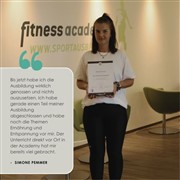
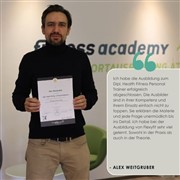
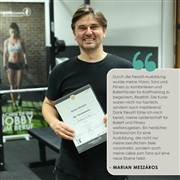
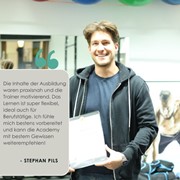
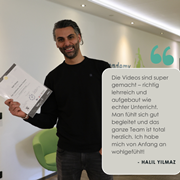
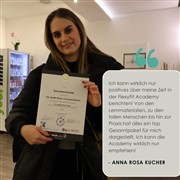
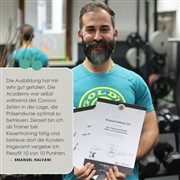
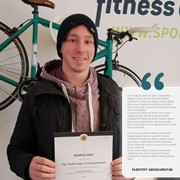
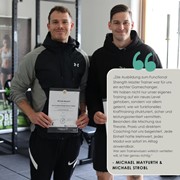
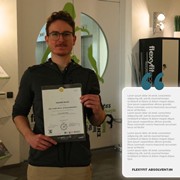
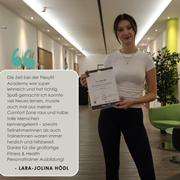
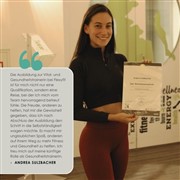
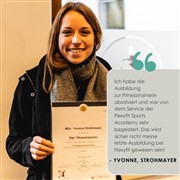
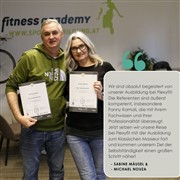
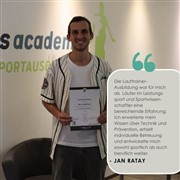
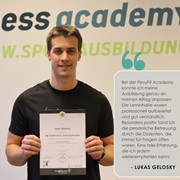
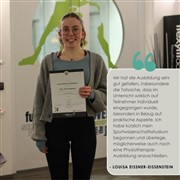
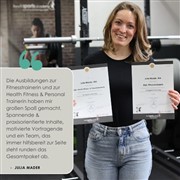
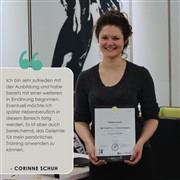
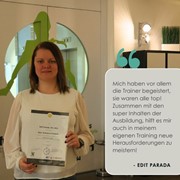
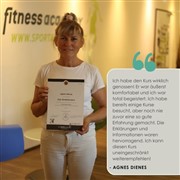
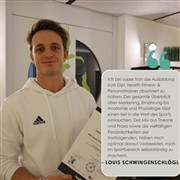
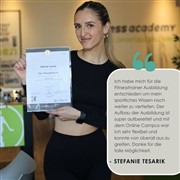
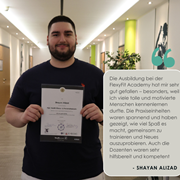
Great training and super nice people. You can tell how much emphasis is placed on conveying the necessary knowledge to the course participants in an understandable way. I was even kindly allowed to take a course completely free of charge after there were somewhat problematic and disruptive participants in my group. I will 100% take more courses with you in the future because learning is extremely fun, especially thanks to the friendly staff!
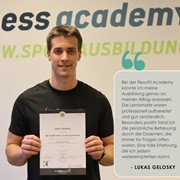
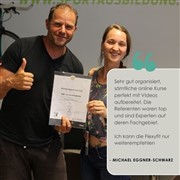
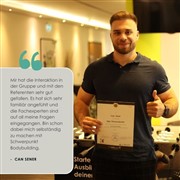
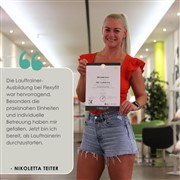
The entire flexyfit team is extremely friendly, prompt and helpful. The lecturers are competent and respond to the course participants. All learning materials were provided clearly and in sufficient detail. The additional videos mean there is something for every type of learner. All in all, the training and exam went well. I can definitely recommend flexyfit and will be happy to book and recommend further training courses with you again!
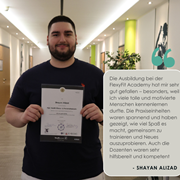
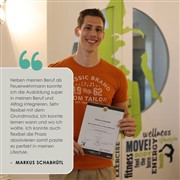
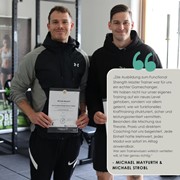
I really enjoyed training to become a B-license fitness trainer there. The teaching materials provided are great and flawless. I learned a lot of new things there and always enjoyed what I was doing. The team is great and is always there for you if you have any questions!
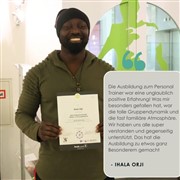
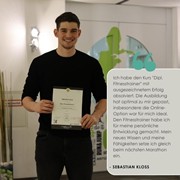
The best thing that could have happened to me is this academy. Access to participants is excellent. All employees are very competent, very professional and very friendly. A person can learn so much that it is indescribably good. I would recommend it to everyone. When I arrived in Austria I was looking for something like this and luckily I found this academy and signed up for the course without hesitation. Everything we get in return is worth 100 times more than what we pay. Indescribable experience, indescribable people, once again and 1000 times I say: Thank you for everything, thank you for this indescribable experience. THANK YOU, THANK YOU, THANK YOU
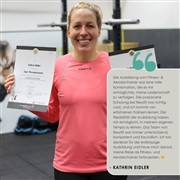
I was able to learn a lot of new things as part of my training at the Flexyfit Academy and was able to take on a new, demanding challenge with my chosen course. The structure of the training courses is very understandable and clear, so that you can master the distance learning course on your own without any problems. If there were any questions, ambiguities or isolated problems, the Academy team was always quick to help and we could always find a common solution. Here and there I would have liked a little more practical relevance. Nevertheless, I always felt very comfortable, had great speakers and with my degree as a qualified medical sports coach, many new doors are now open to me :)
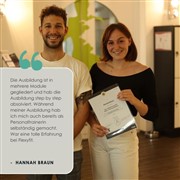
I was able to complete my chosen course very well and quickly. The team is very quick and courteous and you are always offered a good solution if there are any uncertainties. I will book again when I get the chance and can recommend the academy!
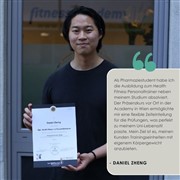
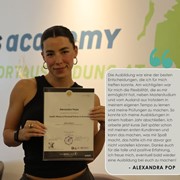
Training at Flexyfit was the best decision; I learned a lot about sport and nutrition. The support was always there, very competent and nice staff/trainers. I will definitely recommend the Academy. Especially thanks to Melanie, Sarah and Daniel
A really demanding training, great material, the videos are great, the script complements it well. The structure is very sensible and you can find your way around easily. I just find the proportionality of the yoga license compared to the Pilates license unfavorable. Many more exams are required for the yoga license. The final exam for the yoga license is also significantly more difficult; in my opinion, questions need to be reconsidered.
Thank you Flexyfit - very competent, great documents and support. The practical exercises in Innsbruck were TOP - thank you Matthias. I can only recommend. I will continue. 😉
Very high quality training! The Flexyfit Academy tried very hard to answer and explain in detail all the questions that arose during the training. Can I definitely recommend!
Absolutely satisfied! I chose distance learning because I couldn't be there in person, and I highly recommend it! Everything worked smoothly, contact was quick and a solution was always found if there were any problems. The team is super friendly and the profile overview is very clear. A small suggestion: It would be helpful if users who are inactive for a long time received a reminder or if an app were available so that they could learn on the go.
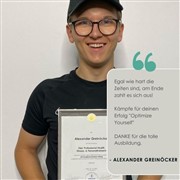
I was very positively surprised by the training! The distance learning course was very uncomplicated and the service was also perfect! The materials were very good and I learned a lot! I can recommend it with a clear conscience! Update 2024: Now that I have completed my third training course, I can only confirm my first assessment! As a full-time worker, it was a great opportunity for me to do part-time training that corresponds to my passion! I regularly read books on the subject of sport and health, and I have to say that the training courses everywhere are very good and up to date! That surprised me somewhat positively! =) Thanks to Flexyfit I can now turn my hobby into a career! So another clear recommendation from me!
A great training program that is offered there, with a very friendly and competent team. It was a pleasure to learn with your very well prepared videos and scripts. I'm already looking forward to my next training. I'm already looking forward to my next training. I can only highly recommend it, I definitely give it 5 stars.
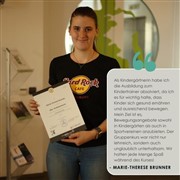
I did the children's trainer training at Flexyfit. From the very beginning you receive great support and the communication is perfect. Everyone is hardworking and friendly. Everything worked perfectly online and on site. It definitely won't be the last training or workshop I do with you. I am looking forward to meet you again. Thanks to Daniel, Melanie and Beno :-)
Flexible learning made easy :) Very competent and friendly. Very quick answers to questions and I would recommend Flexyfit to anyone who wants to do training in the sports sector 💪🏾
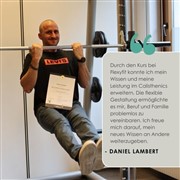
I have already completed two correspondence courses and I can say that continuing my education with the Flexyfit courses is simply fun. You learn at your own pace and are flexible in terms of time and location.
I have now completed two training courses at the Flexyfit Academy and would do it again in a heartbeat. If possible, I recommend the face-to-face courses, they simply result in a really exciting exchange. Service and support are top and all needs are taken into account. Mini drawback: the online learning system is not entirely straight-forward, but you get used to it quickly.
➕ Good institute with a great online academy and a wide range of training options. I have already completed 3 training courses there. I like the modular structure, so that various basic modules can also be used for other training courses. ➖ Unfortunately, the price structure has been adjusted so that (basic) modules that have already been completed can no longer be deducted from the price. A pity.
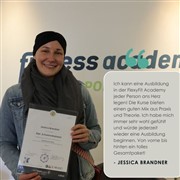
I have already completed two training courses at the Flexyfit Sports Academy and am completely satisfied! A super nice team, the organization and documents are top - can only be recommended ;)
Great team! The organization of the training is uncomplicated and very competent. The speakers are professional and experienced and bring a good mix of theory and practice. Overall, only recommended.
Incredibly friendly team, always available, incredibly helpful and trying very hard to find a solution for everything. The learning videos and scripts are well prepared and easy to follow. I was personally able to learn the most from the really good tutors in the practical part. Overall, you get a very good overview and insight into the relevant subject areas. The course also showed me personally where I would like to orient myself further and which areas I would like to deepen in depth. In addition: well-equipped teaching halls and very attractive rooms - everything is very inviting and familiar. Every now and then you see someone from the team just coming back from running or the weight room - that makes you feel right away! (Training: Dipl. Medical Sports Supervisor)
I am very satisfied, I had a TOP professor (which is not a given these days). I think it's great that as a nutrition trainer you also have to learn anatomical subjects (it's called sports competence). The support was great too. Very helpful team! All in all I'm very satisfied.
Super fast and nice service! Every question answered immediately and in a pleasant and appreciative way! What would be better would be more time for face-to-face teaching!
My training at Flexyfit Sport Academy... I received the best support and advice from the most competent, friendly and successful team. Many thanks to the top team (office, speakers and coaches). It was a great pleasure for me to walk with you on the path to realizing my own goals.
For all coaches who want to absorb detailed knowledge in one or more areas. I'm just very enthusiastic about the Flexyfit Sport Acamedy and felt like I was in great hands with the trainers. The enthusiasm was so palpable even during the Zoom workshops. Regardless of whether you prefer to read the script or watch the accompanying videos, there is a medium for every type of learner and the learning material is extremely well prepared. And should any questions arise, the “Customer Service” is there super quickly and responds after a few hours or is there to give advice.
Simply great and very, very nice. All the employees from the Flexyfit Sports Academy team are so nice, courteous and helpful. Help is available within minutes to an hour if questions arise while learning online. It's a lot to learn, but it shows that trainer training, no matter the subject, requires a certain foundation and I personally think it's exactly right. For me, this shows quality and that not every self-proclaimed professional is also a connoisseur and expert. Be careful with who and where you train! It is our body and every person should pay attention to it and have the “right” trainer with specialist knowledge at their side. I can only recommend Flexyfit Sports Academy. Many thanks to all Flexyfit Sports Academy employees, you are great!!!!!
Incredibly helpful staff! Even worked especially for me on public holidays and made appointments, very accommodating and supportive. Absolutely recommended and happy :)
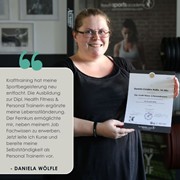
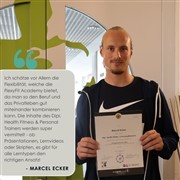
The training (Dipl. Health Fitness & Personal Trainer) is really great, if I had a problem I was always helped very quickly. The videos in conjunction with the scripts are very helpful and well designed, the training overall is well structured, including the intermediate exams, practice tasks, etc. This consolidates what you have learned even better! The lecturers are also very competent and my two examiners were very friendly and relaxed, so there was no reason to be nervous. All in all highly recommended!
Excellent training opportunities and outstanding experiences: I had the pleasure of completing three different training courses at the Flexyfit Sports Academy, and it is without a doubt a first-class facility for the further development of sporting skills. Here are my personal reasons why I find the Flexyfit Sports Academy so exceptional: Outstanding Trainers: The trainers I have met are first class. Everyone has extensive knowledge and experience in their respective areas and always responds to the individual needs of the participants. The training was tailor-made for me and extremely effective. Diverse training offers: The Academy offers a wide range of training suitable for various fitness goals. No matter whether you are striving to build strength, flexibility or endurance, you will find the right program here. State-of-the-art facilities: The facilities at Flexyfit Sports Academy are first class and equipped with state-of-the-art equipment. They ensure an optimal training experience and enable participants to get the best out of themselves. An inspiring community: The atmosphere in the academy is motivating and supportive. You feel like you are part of a committed community that has a common goal: making progress in sports and fitness. Excellent value for money: The quality of the training you receive is in excellent relation to the cost. It is an investment for health and well-being. I can fully recommend the Flexyfit Sports Academy. The training I completed here exceeded my expectations. If you are looking for a place where you can achieve your sporting goals, this is the place. The Academy deserves top marks and I look forward to further training in the future.
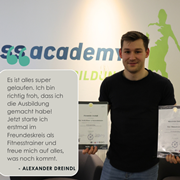
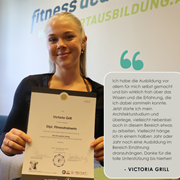
The training to become a qualified fitness trainer was very instructive and interesting. The modules are carefully structured and go from theory to practice. The whole training was uncomplicated. Service perfect, I can only recommend the Academy. Melanie and Sarah thank you for everything! Simply great!
You will shortly receive a newsletter confirmation email to:
Please also check your SPAM folder
We wish you a flexytastic day
* Required fields
You will receive our training brochureby email.
Thank you
You will shortly receive an email with your download link to the brochure at:
Please also check your SPAM folder
We wish you a flexytastic day
The protection of your personal data is of particular concern to us. I agree that my details will be used for contacting me. I have read the privacy policy and agree to it.
Quality you can trust
More than
41.745Satisfied graduates - fromGreat Britain
and
19 other countries, have placed their trust in us since 2007.
⚽ WM-Aktion: Sichere dir jetzt limitierte Bildungsgutscheine bis zum Finale!
You will shortly receive a newsletter confirmation email to:
Please also check your SPAM folder
We wish you a flexytastic day
* Required fields
You will receive our training brochureby email.
Thank you
You will shortly receive an email with your download link to the brochure at:
Please also check your SPAM folder
We wish you a flexytastic day
The protection of your personal data is of particular concern to us. I agree that my details will be used for contacting me. I have read the privacy policy and agree to it.
Course Contents
Details
About cookies Cookies are small text files that are used by websites to enhance the user experience.
The law allows us to store cookies on your device if they are strictly necessary for the operation of this website. For all other types of cookies, we need your consent. This website uses different types of cookies. Some cookies are set by third parties that appear on our pages. You can change or withdraw your consent at any time via the cookie statement on our website.
In our privacy policy you can find out more about who we are, how you can contact us and how we process personal data.
6
Necessary cookies help to make a website usable by enabling basic functions such as page navigation and access to secure areas of the website. The website cannot function properly without these cookies.
This cookie is used to distinguish between humans and bots. This is beneficial for the website to generate valid reports on the use of its website.
_cfuvid
This cookie is part of Cloudflare's services - including load balancing, providing website content and providing a DNS connection for website operators.
This cookie is used internally by the owners of the website when content is uploaded or renewed on the website.
XSRF-TOKEN
Ensures browsing security for visitors by preventing cross-site request forgery. This cookie is essential for the security of the website and the visitor.
This cookie is used to distinguish between humans and bots. This is beneficial for the website to create valid reports about the use of your website.
rc::c
This cookie is used to distinguish between humans and bots.
3
Preference cookies allow a website to remember information that affects the way a website behaves or looks, such as your preferred language or the region you are in.
Collects data about the user's visits to the website, such as which pages have been read.
15
Marketing cookies are used to follow visitors on websites. The intention is to show ads that are relevant and engaging to the individual user and therefore more valuable to publishers and third party advertisers.
Used to track visitors across multiple websites to present relevant advertising based on the visitor's preferences.
_uetsid
Collects data on visitor behavior across multiple websites to present more relevant advertising - This also allows the website to limit the number of times the same advertisement is displayed.
_uetsid_exp
Contains the expiry date for the cookie with the corresponding name.
_uetvid
Used to track visitors across multiple websites to present relevant advertising based on the visitor's preferences.
_uetvid
Used to track visitors across multiple websites to present relevant advertising based on the visitor's preferences.
_uetvid_exp
Contains the expiry date for the cookie with the corresponding name.
MSPTC
This cookie registers visitor data. The information is used to optimize the relevance of advertising.
MUID
Widely used by Microsoft as a unique user ID. The cookie enables user tracking by synchronizing the ID in many Microsoft domains.
Used by Google DoubleClick to register and report the user's actions on the website after viewing or clicking on one of the provider's ads, with the purpose of measuring the effectiveness of an advertisement and displaying targeted advertising to the user.
pagead/1p-conversion/#/
Pending
pagead/1p-user-list/#
Used to track whether the visitor has shown interest in certain products or events on multiple websites and how the visitor navigates between websites - This is used to measure advertising effort and facilitates the payment of referral fees between websites.
test_cookie
Used to check whether the user's browser supports cookies.

























 Course Plan
 BK
BK
 Registration











 Switch WhatsApp®"
And you will be forwarded directly to the WhatsApp® app.
Switch WhatsApp®"
And you will be forwarded directly to the WhatsApp® app.