Ich bin mit Flexifit sehr zufrieden.
E-Mails werden immer schnell und hilfreich beantwortet und auch telefonisch bekommt man freundliche und kompetente Auskünfte.
Ich habe auch an den Kursen teilgenommen und fand die Kurse sehr gut organisiert und interessant.
Die Vortragenden waren professionell und hilfsbereit.
Insgesamt bin ich sehr zufrieden und kann Flexifit nur weiterempfehlen.
vor 28 Tagen
Schnelle und unkompliziert Hilfe! Der Kontakt war immer außerordentlich hilfsbereit und freundlich.
24.04.2026
Super Kundendienst
21.04.2026
Fundierte Ausbildung, aussagekräftige Skripten und Videos, toller Support!
13.04.2026
Schnell und nicht aufwendig!
01.04.2026
Sehr umfangreiche und interessante Ausbildung.
Sehr nette und kompetente Referenten.
25.03.2026
Die Inhalte sind echt toll wie auch die Trainer. Es ist unkompliziert online eine Ausbildung neben Arbeit und Kindern zu verrichten.
Wenn eine Ausbildung dann wieder über flexifit
13.03.2026
Sehr nettes und kompetentes Team. Tolle Ausbildungen. Danke Euch 🙏🏽🫶🏽
06.03.2026
Bei Rückfragen zu einem Kurs, die ich über die Chat-Funktion gestellt habe, habe ich sofort Antwort bekommen und das Angebot für ein spontanes Telefonat. Da fühlt man sich gleich mal gut aufgehoben.
Nach dem Telefonat habe ich mich gut abgeholt gefühlt und zusätzlich alle besprochenen Punkte per Email schriftlich auch noch erhalten.
Großartig!! Das war der Auslöser, dass ich den Kurs auch sofort gebucht habe
14.02.2026
Kundenservice vorab zur Bestellung durch Melanie - sämtliche Fragen wurden umfassend und sehr rasch beantwortet
10.02.2026
Eine super tolle learning Plattform. Fragen egal welches Thema werden sehr schnell beantwortet.Note 1
05.02.2026
Tolles Service!
04.02.2026
Perfekte Unterlagen, unkompliziertes Verfahren und sehr gute Kursauswahl
29.01.2026
I got every info on time. Thank you
28.01.2026
Friendly and very helpful staff.
Thank you
23.01.2026
Passt alles! Super Firma, mit tollem Kundenservice!
19.01.2026
Habe den online Zugang für den Demozugang sehr rasch bekommen, Ansprechpartnerin hat nachgefragt, ob ich fragen habe, online Campus macht einen sehr guten Eindruck auf mich
18.01.2026
Mein Yoga Kurs war sehr umfangreich, und man konnte schnell hineinfinden.
Das Team war auch sehr nett
PHP - Basics & Advanced: The comprehensive path to professional web development
Our "PHP Basics & Advanced" course is the ideal step for anyone who wants to get to grips with PHP programming in full. The two modules IT Competence and PHP Basics are already part of the course. Of course, the in-depth PHP module can also be booked separately if the basics have already been completed. This course offers an in-depth learning experience that will introduce you to the advanced techniques and best practices of PHP programming. You will be able to develop, optimize and secure complex web applications and take your skills as a PHP developer to a professional level.
What can you expect from our training?
To begin with, we will introduce you to setting up an optimal development environment, including the installation and configuration of PHP, web servers and IDEs. You will learn to debug efficiently and optimize your PHP applications for better performance, while best practices will help you write clean and secure code. You will deepen your knowledge of object-oriented programming by learning advanced OOP concepts and how to work with files. You will also discover the world of PHP frameworks such as Laravel and Symfony and develop modular, reusable components. You will expand your knowledge of complex data structures and design patterns, which will help you to write structured and extensible code. Finally, you will learn how to manage sessions, validate data and develop secure applications, including encryption and persistent storage of data to ensure the integrity and security of your applications.
Target group
The "PHP Basics & Advanced" training course is aimed at those interested in learning the full scope of PHP as well as participants who already have a good grasp of the basics of PHP programming and would like to deepen their knowledge.
Basic IT knowledge is recommended, but not a prerequisite
Minimum age 18 years (for participants under 18 years, written parental consent is required for registration)
Access to an internet-enabled device
Access to a stable internet connection
Certificate of completion
Our certificates are valid worldwide and are issued in different versions. On request, you can receive our certificate in several languages, with country-specific information and with or without printed grades.
All of these variants are available to you free of charge for a lifetime for downloading from your online campus. In addition, depending on the learning package you have purchased, you will receive a certificate of your choice, which will be issued on special high-quality embossed paper.
The following certificate is awarded:
"PHP - Basics & Advanced"
Do you have specific questions about the training?
We will be happy to help you by phone, e-mail or chat.
Detailed Course Contents
Extent of learning
525 E |
Volume
EDK
187
IT competence
PL
288
Presence | Self-study
RE
8
Literature research
TE
30
Practical realization
AE
12
Additional tasks & examinations
Our training courses are generally eligible for funding. The relevant funding body will decide whether you are eligible for funding.
We will be happy to support you in compiling all the necessary course information you need for your funding application.
Of course, we will be on hand to advise you throughout the entire process and support you from the initial inquiry to the submission of your application. Contact us - we will make sure that you are as well prepared as possible!
Hier findest du eine ausführliche Übersicht aller enthaltenen Module, Fächer und Kapitel. Entdecke den gesamten Aufbau und Umfang der Ausbildung und verschaffe dir einen klaren Einblick in die vermittelten Inhalte.
Module IT competence
Basic knowledge of EDP
The subject "Basic IT knowledge" teaches basic knowledge and concepts of electronic data processing. It offers a comprehensive introduction to the world of computer technology, operating systems, networks and much more.
A computer is an electronic device that is used to process data. It performs calculations, stores and processes information. There are different types of computers, including personal computers (PCs), servers and embedded systems. Each type has specific applications and functions.
An operating system manages the hardware and software resources of a computer. It enables the execution of applications and ensures communication between hardware and software. The best-known operating systems include Windows, macOS and Linux, although each operating system has its own characteristics and areas of application.
Code can be translated by either compilers or interpreters. Compilers convert the entire code into machine language, while interpreters execute the code line by line. The fetch-decode-execute cycle describes the process by which the processor fetches, decodes and executes instructions.
A process is a program that is being executed. The management of processes includes the allocation of resources and the monitoring of their execution. Multitasking enables the simultaneous execution of several processes, whereby process scheduling determines which processes are executed when and for how long.
Hardware is controlled by special software known as drivers. Drivers enable communication between the operating system and hardware components by forwarding specific commands and data.
This module provides a solid foundation in the basic principles of electronic data processing and prepares students to understand and apply more complex concepts in IT.
Software
The subject "Software" provides an overview of the different types of software, their availability on different devices, the production and distribution processes and the communication between software programs.
There are two main categories of software: system software, such as operating systems and drivers, and application software, such as word processing programs and games. Software is available on various devices, including desktop computers, mobile devices and embedded systems. There is both platform-independent software and platform-specific applications.
Software is produced using various development processes such as agile and the waterfall model. Version control and continuous integration/deployment (CI/CD) are crucial for efficient software development. Software can be distributed on-premises, cloud-based or as a mobile app.
Software communicates with each other via interfaces such as APIs and webhooks. These enable the integration of services and real-time notification between different applications.
This module comprehensively prepares participants to understand and use software in practice.
Databases
The subject "Databases" provides a basic introduction to the concepts and applications of databases. It aims to provide participants with a sound understanding of the different types of databases, their benefits and the most commonly used database systems. Here are the main topics covered in this module:
What are databases? A database is a structured collection of data. There are relational databases, which organize data into tables with relationships, and non-relational databases, which are more flexible and are often used for specific applications such as big data.
Why do you need databases? Databases offer efficient data management, fast queries and increased data security. They are essential for applications such as customer databases, financial systems and warehouse management.
The most commonly used databases:
MySQL: Open source, widely used for web applications. PostgreSQL: Advanced functions and SQL support. Oracle Database: Highly scalable, for large companies. Microsoft SQL Server: Integrated into the Windows environment. MongoDB: NoSQL database for unstructured data. SQLite: Lightweight, ideal for mobile applications. This module provides a solid foundation for understanding and using databases.
Tools
The subject "Tools" offers a comprehensive insight into the various tools and environments used for the development and use of modern software solutions. This includes basic development tools, the use of the command line, version control and an introduction to artificial intelligence (AI). This section is supplemented by knowledge checks and practical tasks.
Understanding the working environment Students will be introduced to basic development tools, including text editors such as Visual Studio Code and Sublime Text, and integrated development environments (IDEs) such as PyCharm and Eclipse. They will learn the basic command line commands used for navigation and file management. In addition, you will receive an introduction to version control with Git and learn the basic commands for managing code versions.
Artificial intelligence The basic concepts of artificial intelligence are explained, including definitions and different areas such as machine learning and neural networks. Participants will learn about use cases and examples of the application of AI in everyday life and discuss the benefits and challenges of AI technologies.
This module prepares participants to work effectively with modern development tools and to develop a fundamental understanding of artificial intelligence.
Security IT competence
The subject "Security" provides basic knowledge in the areas of data protection, authentication and cyber security. It covers the following topics:
Data protection basics
Data protection basics: protection of personal data.
Important laws and regulations: GDPR and its requirements.
Measures to protect privacy: Techniques for securing privacy.
Authentication basics
Definition and meaning: identity verification for security.
Various methods: passwords, biometric procedures, multi-factor authentication.
Best practices: Secure authentication systems.
Cyber Security & Hacking
Basics: Protection against digital threats.
Common threats: Phishing, malware, DDoS attacks.
Security measures: Use of firewalls and antivirus software.
This module prepares participants for the secure handling of data and systems.
Introduction to electronic data processing (EDP)
The subject "Introduction to electronic data processing (EDP)" teaches basic knowledge and the importance of data processing in various areas of life. Students learn about the historical development and practical applications.
Importance and necessity of data processing Data processing is indispensable in almost all areas of modern life. It enables the efficient management and analysis of large amounts of data, improves decision-making and optimizes business processes. In today's digital world, the ability to process data is an essential prerequisite for success in many professions and industries.
History of data processing The history of data processing goes back a long way, from the first mechanical calculating machines to modern computers. Important milestones include the invention of punch card machines, the development of the first computers in the 1940s and the rapid development of technology in the 20th and 21st centuries. This evolution has fundamentally changed the way we process and use data.
Examples from practice Healthcare: Electronic patient records enable efficient management of patient data and improve the quality of medical care through quick access to relevant information.
Business: Companies use data processing to optimize business processes, customer management and for data-driven marketing strategies.
Science: In research, large amounts of data are analyzed in order to gain scientific knowledge and drive innovation, for example in genome research or climate modelling.
Coding
The subject "Coding " teaches basic and advanced concepts of programming and software development. It aims to provide participants with a sound understanding of the various programming languages, principles and techniques. In addition, what has been learned is consolidated through knowledge tests and practical tasks. Here are the main topics covered in this module:
Programming languages and how they work Participants will learn the basic principles and concepts of programming languages. An overview of high-level and low-level programming languages will be given, with the differences between these types clearly highlighted. High-level languages such as Python and Java are compared to machine-oriented languages such as Assembly.
From Visual Programming to 0 and 1 This section covers the range of programming from visual programming languages to machine-oriented languages. Examples of visual programming languages, such as Scratch, and machine-oriented languages, such as Assembly, are presented. The different levels of programming and their applications are explained.
Fundamentals of programming The basic concepts of programming are taught here. These include the syntax and semantics of programming languages, the declaration and use of variables and data types (such as integer, float, string, boolean), as well as the use of arithmetic, logical and comparison operators.
Design patterns Design patterns are proven solution patterns for recurring problems in software development. Participants learn the definition and purpose of design patterns and are given examples of common patterns such as singleton, factory and observer. The application and advantages of design patterns in software development are also discussed.
Control structures This section covers the basic control structures in programming, including conditions and branching with if, else and elif statements as well as loops such as for and while loops. The importance of loop control using break and continue is also explained.
Functions and modularity Participants will learn how to define and call functions, including parameters, return values and code reusability. The basic principles of modularity and the division of code into manageable, reusable modules are also covered.
Basic data structures This section provides a basic understanding of data structures such as lists, arrays, dictionaries, hashmaps, tuples and sets. Students will learn how to create, access and modify these structures.
Simple algorithms and problem solving Participants are introduced to basic sorting algorithms such as bubble sort and selection sort. They will also learn about search algorithms such as linear and binary search. Systematic problem-solving strategies and debugging methods are discussed.
Object-oriented programming (OOP) The basic principles of object-oriented programming are taught, including classes, objects, attributes and methods. Concepts such as inheritance, polymorphism and encapsulation are fundamentally explained and illustrated with simple examples.
Simple projects and practical applications Participants put their knowledge into practice in small, practical projects, such as the development of a calculator, a to-do list or a simple game. Finally, simple techniques for checking and improving your own code through code reviews are covered.
Module PHP for beginners: Basics made easy
Grundlagen und Einführung in PHP
In diesem Unterrichtsfach werden die Teilnehmer in die Programmiersprache PHP eingeführt, von den frühen Versionen PHP5 bis hin zu den neuesten Entwicklungen in PHP8. Der Kurs beginnt mit einer historischen Übersicht über PHP, um die Entwicklung und die wichtigsten Verbesserungen in den verschiedenen Versionen zu verstehen.
Die ersten Schritte mit PHP umfassen die Einrichtung einer Entwicklungsumgebung, einschließlich der Installation eines Webservers und der Erstellung erster PHP-Skripte. Dies bildet die Grundlage für alle weiteren Programmierarbeiten.
Ein wesentlicher Teil des Kurses ist die grundlegende Syntax von PHP und die Verwendung von Variablen. Die Teilnehmer lernen, wie man Variablen deklariert und verwendet, um Daten zu speichern und zu verarbeiten. Es werden die verschiedenen Datentypen und deren Anwendung erläutert.
Der Kurs behandelt auch Kontrollstrukturen in PHP, wie `if`, `else`, `switch` sowie Schleifen wie `for`, `while` und `do-while`. Diese Strukturen sind entscheidend, um den Programmfluss zu steuern und komplexe logische Abläufe zu implementieren.
Zum Schluss wird die Ein- und Ausgabe von Daten behandelt. Die Teilnehmer erfahren, wie sie Benutzereingaben entgegennehmen und verarbeiten können sowie wie sie Informationen und Ergebnisse ausgeben, um dynamische und interaktive Webseiten zu erstellen.
Functions and data structures (PHP basics)
In this subject, students will learn the basic techniques and concepts for defining and using functions as well as manipulating and processing data structures in PHP.
First, students will learn how to define and use functions in PHP. They will learn how to create functions to make code reusable and modular. This also includes an understanding of function parameters and return values in order to solve complex tasks efficiently.
Another focus is on string manipulation and the associated functions. Participants learn various methods for processing, analyzing and transforming character strings. This includes functions for searching, replacing, splitting and formatting strings.
It also covers arrays and their processing. Students will learn how to create, search and manipulate arrays to manage lists of data. Basic and advanced array functions are presented to perform various tasks such as sorting, filtering and combining arrays.
Object-oriented programming with PHP
In this subject, students will learn the principles and concepts of object-oriented programming (OOP) in PHP to take their programming skills to an advanced level.
The course begins with the basics of OOP in PHP. Participants will be introduced to the object-oriented mindset and learn how OOP helps to make code more reusable, modular and maintainable.
An essential part of the course is the creation and use of classes and objects. Participants will learn how to define classes and instantiate objects to represent real-world entities and their relationships in code.
Another focus is on the concepts of inheritance, interfaces and traits. Participants will learn how inheritance is used to transfer properties and methods from one class to another, increasing the reusability and extensibility of the code. They will also learn how interfaces are used to define common interfaces for classes and how traits are used to include reusable code in multiple classes.
Finally, access control and visibility are covered. Students will learn the importance of access modifiers (public, private, protected) and understand how they control visibility and access to properties and methods inside and outside of classes.
Databases and connections to PHP
In this class, students will learn how to use relational databases with PHP to create dynamic and database-driven web applications.
The course begins with an introduction to relational databases. Students will gain a basic understanding of database concepts, the structure of tables, relationships between tables, and the meaning of key terms such as primary key and foreign key.
An essential part of the course is the comparison between MySQLi and PDO, two common extensions for interacting with MySQL databases in PHP. Participants will learn the advantages and disadvantages of both methods in order to make informed decisions about which method to use in their projects.
Participants will learn how to create and manage database connections. This includes setting up secure connections to the database and handling connection errors.
It also covers basic CRUD operations (Create, Read, Update, Delete) that form the basis for working with databases. Participants will learn how to:
Insert data into the database (Create)
Retrieve data from the database (Read)
Update data in the database (Update)
Delete data from the database (Delete)
Practical exercises and examples will enable participants to apply these techniques in their own PHP applications.
Web 2.0 technologies and MVC
In this class, students will learn the key technologies and patterns that support modern web applications, specifically Web 2.0 technologies and the MVC pattern.
The course begins with an overview of Web 2.0 technologies. Participants will learn how these technologies improve the interactivity and usability of websites and what role they play in modern web development.
A key component is AJAX (Asynchronous JavaScript and XML) and asynchronous data processing. Participants will learn how to use AJAX to load and send data in the background without reloading the page, resulting in a better user experience.
Another important aspect is RESTful APIs and microservices. Participants will learn how to create and use RESTful APIs to develop scalable and flexible web services. It also explains the concept of microservices, which allows applications to be broken down into smaller, independent services that are easier to manage and scale.
It provides an introduction to the MVC (Model-View-Controller) pattern. Participants will learn how the MVC pattern structures development and facilitates the separation of data, user interface and business logic. It is explained how the MVC pattern helps to keep the code clean and maintainable.
Finally, the implementation of a simple MVC system is covered. Participants put what they have learned into practice by developing a small project that uses the MVC pattern. They will learn how to create and connect models, views and controllers to build a complete web application.
Security, design and data processing
In this subject, participants will learn the essential aspects of security, design and data processing in PHP applications.
It starts with the basics of web security. Students will gain an understanding of key security principles and how to secure their PHP applications. Protection against common vulnerabilities, including SQL injection, cross-site scripting (XSS) and cross-site request forgery (CSRF) will be covered in detail. Through practical examples, participants will learn how to implement secure code practices and effectively prevent security vulnerabilities.
Another focus is on structuring and best practices in PHP development. Participants will learn how to structure their applications logically and efficiently to improve maintainability and scalability. This also includes techniques for modularization and the application of best practices in code design.
The processing of JSON and XML is also covered. Participants will learn how to process data in JSON and XML format to exchange data between server and client. This includes parsing and generating JSON and XML as well as using these formats in API integrations.
Another important aspect is the integration of HTML5, CSS3, JavaScript and Bootstrap in PHP applications. Participants will learn how to use modern front-end technologies to create appealing and user-friendly user interfaces. The interaction between PHP and frontend technologies to develop dynamic and interactive web applications will be emphasized.
Module PHP Advanced: From advanced to professional
Introduction and development environment
In this subject, students will learn the basic techniques and tools required to build and manage an effective development environment.
It begins with the setup and familiarization of the development environment. Students will learn how to select and set up a suitable development environment for their needs. This includes the installation and configuration of Integrated Development Environments (IDEs) such as Visual Studio Code, PhpStorm or other popular tools that support the development process.
An essential part is the setup and use of debuggers. Participants will learn how to set up and use debuggers in their development environment to effectively find and fix bugs in code. This includes setting breakpoints, stepping through code and checking variable values at runtime.
Another important aspect is server configuration and management. Participants will learn how to set up and configure a local development server to test their applications. They will learn how to install and configure web servers such as Apache or Nginx and how to set up database servers such as MySQL or PostgreSQL. They will also learn basic management tasks to operate and maintain their servers efficiently.
Complex data structures and design patterns (PHP)
In this subject, participants learn the basic and advanced techniques for working with complex data structures and proven design patterns in software development.
It starts with an introduction to complex data structures. Students will learn how to use and implement advanced data structures such as maps, sets, stacks, queues and graphs. These data structures offer advanced possibilities for efficient data management and manipulation that go beyond simple arrays and objects.
An essential part of the course is the use and implementation of design patterns. Participants will learn what design patterns are and how they can solve common problems in software development. The design patterns covered include
Singleton Pattern: Ensures that a class has only one instance and provides a global access point to that instance.
Observer Pattern: Defines a one-to-many dependency between objects so that when one object changes state, all dependent objects are notified and automatically updated.
Factory Pattern: Provides an interface for creating objects where the specific classes do not need to be specified.
Decorator Pattern: Enables the dynamic addition of behavior to objects by wrapping them in decorative classes.
It also emphasizes best practices for clean and maintainable code. Participants will learn techniques for structuring and organizing their code to make it more readable and easier to maintain. These include principles such as DRY (Don't Repeat Yourself), KISS (Keep It Simple, Stupid), and SOLID principles (Single Responsibility, Open/Closed, Liskov Substitution, Interface Segregation, Dependency Inversion).
Through practical exercises and examples, participants will be able to apply complex data structures and design patterns in their own projects and write high-quality code.
Advanced OOP and files
In this subject, students expand their knowledge of object-oriented programming (OOP) and learn advanced techniques for working with files and regular expressions.
It begins with an in-depth exploration of OOP concepts. Students will build on the fundamentals of OOP and learn advanced techniques such as abstract classes, interfaces and polymorphism. These techniques help to create more flexible and reusable code structures.
Another focus is on advanced techniques in OOP. Participants will learn how to integrate design patterns such as singleton, factory, observer and decorator into their projects. In addition, concepts such as dependency injection and inversion of control are introduced in order to improve the maintainability and testability of the code.
Working with files is an essential part of the course. Participants will learn how to read, write and edit files in various formats. This also includes handling file errors and ensuring data security.
It also covers the manipulation of date and time. Participants will learn how to process, format and calculate date and time values in their applications. This includes dealing with different time zones and the use of libraries to simplify date and time manipulation.
Finally, the use and benefits of regular expressions are covered. Participants will learn how to use regular expressions to recognize patterns in text and efficiently search and manipulate text data. Practical examples and exercises will help participants put the theoretical concepts into practice and master the use of regular expressions in their projects.
Frameworks and modular development
In this subject, students will learn the basics and advanced concepts of using PHP frameworks and the modular development approach.
It begins with an introduction to PHP frameworks. Students will learn what PHP frameworks are, why they are used in development, and the benefits they offer. Frameworks covered include popular options such as Laravel, Symfony, CodeIgniter and Zend Framework. Participants will learn about the basic features and architecture of these frameworks.
Another important aspect is the modular development approach. Participants will learn how to divide their code into modules to better organize, reuse and maintain it. This approach makes it easier to work on large projects and promotes teamwork. It explains how to create, integrate and manage modules.
It also offers a comparison of different frameworks and their possible uses. Participants will learn how to choose the most suitable framework for their project based on criteria such as performance, scalability, community support and specific requirements. The comparison includes:
Laravel: Known for its elegant syntax, extensive libraries and strong community support.
Symfony: Highlighted for its flexibility, extensive feature set and strong compliance with best practices.
CodeIgniter: Appreciated for its simplicity, small size and fast learning curve.
Zend Framework: Praised for its extensibility and professional architecture, suitable for complex and enterprise-wide applications.
Practical exercises and projects will enable participants to put what they have learned into practice. They will have the opportunity to develop their own applications with the frameworks presented and apply the modular approach.
Debugging, performance and best practices
In this class, students will learn how to debug, optimize and develop their PHP applications according to best practices. They will learn how to use debugging tools such as Xdebug and integrated debuggers in IDEs to find and fix errors. Profiling tools such as XHProf or Blackfire will be introduced to analyze performance and identify bottlenecks.
Participants will learn performance optimization methods, including caching, database optimization and efficient resource usage.
They will be shown how to recognize and avoid typical sources of errors and security gaps. Best practices such as DRY, KISS and SOLID are taught in order to better structure and organize the code. Finally, participants put what they have learned into practice by designing and developing a web application with Laravel.
Sessions, validators, encryption and persistence
In this class, students will learn the essential techniques for managing sessions, implementing validation, applying encryption techniques, and managing data persistence in PHP applications.
Students will learn how to use sessions to store user-related data across different page views. This includes creating, managing and terminating sessions as well as understanding the security aspects that need to be considered when using sessions.
Another focus is on the implementation and use of validators. Participants will learn how to validate input data to ensure that the data conforms to the expected formats and rules. This includes creating their own validation functions as well as using existing validation libraries to ensure data integrity.
It also covers encryption techniques and security aspects. Participants will learn how to use encryption to protect sensitive data. This includes implementing encryption and decryption functions as well as applying security best practices to ensure the security of data in their applications. Topics such as hashing, symmetric and asymmetric encryption are also covered.
Another important part of the course is data persistence and data management. Participants will learn how to store and manage data persistently to keep it available across different application sessions. This includes working with databases and other storage media, as well as implementing CRUD (Create, Read, Update, Delete) operations to manage data efficiently.
Available course variations
PHP basics & consolidation
GEWÄHLTClassroom Courses
€ 2.690,00
Highlights
Language of Instruction
EN
Course Module
Classroom course Webinar
IT competence (presence)
IT competence (online)
EDP competence Full HD learning videos
Learning Type / Learning Method
Course Modality
Presence
Study Method
communicative
Auditory & Visual Learning Style
suitable
Communicative & Kinesthetic Learning Style
recommended
Study Timeframe
Flexible
Study Support (# all-inclusive)
Text & Presentation PDFs
Lectures Bookable as Classroom Units
Support via Online Campus, E-mail, Chat, Tel.
WhatsApp & On-site Support
Test/Dummy Exam
Exam/Completion
EDK Intermediate Examination Online
Final Exam
Flexible date
Certificate in DE, EN or ES
Certificate accepted worldwide & never expires
Academy Account (# all-inclusive)
Lifetime Access to Online Campus
Free Demo Account / Trial Package
Certificate Copy as Downloadable PDF
Certificate with Verification via QR-Code
Financial Aid
Financial Aid/Grant Opportunities
up to 100%
Paid Educational Leave (AT)
Grants for Businesses
Grants for Self-Employed Persons
Course Advising
non-binding
Cost Estimate for Financial Aid Provider
Benefits
Job Openings Mailing List
Comprehensive Training Opportunities
Absolute Best Price & Service Offer
GEWÄHLTClassroom Courses
€ 2.690,00
Highlights
Language of Instruction
EN
Course Module
Classroom course Webinar
IT competence (presence)
IT competence (online)
EDP competence Full HD learning videos
Learning Type / Learning Method
Course Modality
Presence
Study Method
communicative
Auditory & Visual Learning Style
suitable
Communicative & Kinesthetic Learning Style
recommended
Study Timeframe
Flexible
Study Support (# all-inclusive)
Text & Presentation PDFs
Lectures Bookable as Classroom Units
Support via Online Campus, E-mail, Chat, Tel.
WhatsApp & On-site Support
Test/Dummy Exam
Exam/Completion
EDK Intermediate Examination Online
Final Exam
Flexible date
Certificate in DE, EN or ES
Certificate accepted worldwide & never expires
Academy Account (# all-inclusive)
Lifetime Access to Online Campus
Free Demo Account / Trial Package
Certificate Copy as Downloadable PDF
Certificate with Verification via QR-Code
Financial Aid
Financial Aid/Grant Opportunities
up to 100%
Paid Educational Leave (AT)
Grants for Businesses
Grants for Self-Employed Persons
Course Advising
non-binding
Cost Estimate for Financial Aid Provider
Benefits
Job Openings Mailing List
Comprehensive Training Opportunities
Absolute Best Price & Service Offer
Basic information on the learning variants:
The training content is the same for each learning variant
The examination period, duration of training and examination procedure are independent of the learning variant
You can upgrade from distance learning to face-to-face or individual tuition. Individual module blocks can also be booked
With the "face-to-face course" learning option, you can book and complete individual blocks in private lessons
The final certificate does not differ, regardless of which learning variant you have completed the course in
Your Academy account and the learning content will stay with you for the rest of your life
Areas of application and possibilities with PHP capabilities
PHP is a versatile, server-side scripting language that is used in many areas of web development. With a sound knowledge of PHP, you will be able to create and manage dynamic and interactive web applications.
Web development
Dynamic websites: Creating websites that respond to user input and generate content dynamically.
Content management systems (CMS): Extension and customization of popular CMS such as WordPress, Joomla and Drupal.
E-commerce websites: Development of online stores using platforms such as Magento and WooCommerce.
Web applications: Development of complex web applications such as social networks and user portals.
Database connection
Database interactions: Seamless connection with databases such as MySQL, PostgreSQL and SQLite to perform CRUD operations.
Data processing: Efficiently manage and analyze large amounts of data.
API development
RESTful APIs: Development of APIs for data exchange between applications and platforms.
Integration of third-party APIs: Use of external APIs to integrate additional functionalities.
Automation and scripting
Automation tasks: Automation of recurring tasks such as report generation and e-mail dispatch.
Scripting: Management and maintenance of web servers and databases.
Security applications
User authentication: Development of secure login systems and protection of user data.
Data security: Implementation of security measures such as encryption and protection against SQL injection and XSS.
With these capabilities, PHP provides the tools to realize a variety of web projects, from simple websites to complex web applications and APIs.
Funding & educational leave - how it works
Can I get funding for my training?
At the Flexyfit EDV Academy, you have a wide range of options for funding your training. There are various funding programs at federal state and EU level as well as tax incentives that serve as a basis. Please note, however, that the decision on the allocation and amount of funding is the sole responsibility of the respective funding body. We will be happy to help you find a suitable funding body and provide you with all the course information you need to apply for funding. You must submit the application itself to the relevant funding body.
How does the funding work?
Depending on the funding institution, your training will be financed either through direct assumption of costs after confirmation of the funding application (e.g. AMS) or through full or partial reimbursement after successful completion of the training (e.g. Waff). We recommend that you contact the relevant funding institutions in person to find out about individual funding options.
Can I take educational leave for the course?
Yes, the majority of our courses are suitable for educational leave. If you would like to continue your education without terminating your employment, you can arrange educational leave with your employer. You will be released from work for the duration of the training.
Plan your educational leave with us now! We will be happy to clarify your individual training requirements with you in a personal, non-binding consultation .
How does educational leave work?
You can take your educational leave for a maximum of 1 year within 4 years. There are 3 ways in which you can arrange this:
Educational leave over a period of 12 months in one go
split up, whereby each part must last at least 2 months. The parts must be taken within 4 years.
Educational leave with part-time educational leave extending over 2 years
Please note that this is a general summary and it is advisable to check with the relevant bodies or authorities for further details and conditions. Your employer's consent is essential for educational leave. You must submit the training plans issued by us, which require 20 hours per week for full-time educational leave or at least 10 hours per week for part-time educational leave. It is also necessary to provide regular proof of the progress of your training, for example through examinations or attendance certificates issued by us.
Registration: Register for your desired training either online or via a registration form.
Confirmation and access data: Once you have registered, you will receive confirmation of your registration and the access data for your Online Academy account by e-mail.
Start of training: Depending on the course option, your training starts immediately or at a time of your choice.
Learning materials: In your Online Academy account you will find all the course materials, information and online learning videos that are available to you for learning.
Learning phase: The learning phase varies depending on the course variant. You can either take part in face-to-face phases or rely entirely on e-learning.
Exams: You decide when you are ready for the exams. Regular examination dates take place at the respective examination locations.
Learning control system: During your training, you will take multiple-choice intermediate and final exams.
Certificate/certificate: If you pass the exams successfully, you will receive your certificate or diploma.
Prerequisites for participation in the IT courses
No special prerequisites are required to take part in our IT courses. Our courses are designed to teach all the basic skills from the ground up. Whether you already have previous knowledge or are a complete beginner, our training is suitable for everyone.
A particular highlight is our basic IT skills module, which forms the basis for all our training courses. This module is already included in each of our training courses, so you can be sure that you will acquire the necessary IT skills right from the start. You will be introduced to the subject matter step by step so that you can acquire the necessary IT knowledge and skills safely and effectively.
Are the courses also suitable for working people?
Yes, our training courses are ideal for working people. Thanks to the flexible structure and our wide range of course options, you can easily integrate further training into your working day. We offer various course formats, including: Evening courses Face-to-face webinars Weekend courses With this wide range of course options, you are sure to find a format that suits your schedule. This allows you to combine your professional development with your work commitments.
Can I start the course at any time or are there fixed starting dates?
Yes, you can start your training at any time. The basic IT competence module can be completed flexibly via e-learning so that you can start immediately.
However, there are fixed attendance dates for the specialist modules of the courses. You can set the start date for your training individually, only the specialist modules follow fixed dates. This combination allows you a flexible start and at the same time structured further training.
Is there a way to get support in case of difficulties?
Yes, there are several support options available to you in the event of difficulties:
Support ticket: you can create a support ticket in your Online Campus at any time.
Telephone contact: Our team is available by phone to help you with any questions or problems.
Live chat: Use our chat to get support quickly and easily
.
The Flexyfit Academy team is always available to ensure that your training runs smoothly.
Is there a maximum number of participants per course?
There is no limit to the number of participants for the IT competence module, so anyone interested can take part.
However, for the specialist modules with on-site presence or face-to-face webinars, the number of participants is limited to a maximum of 15. This limit ensures that we can respond to each participant individually and create an optimal learning environment.
When booking a course, you can choose between different packages: Basic, Premium or VIP.
Basic package: This package contains all the necessary content and resources to successfully complete the course. It offers everything you need to successfully complete the course.
Premium and VIP packages: These packages offer additional extras, such as several exam attempts per subject, a training voucher or access to live webinars from the IT skills module. You can choose the package that best suits your needs.
You will find a detailed list of the individual packages directly in the shopping cart of the desired course. Simply click on "Your learning package benefits" to find out more.
Is it possible to pay in installments?
Yes, we offer the option of paying in installments for our courses.
Classroom courses:
A deposit of 600€ is required.
For course costs from 1.000€ to 2.000€ you can pay in 5 monthly installments.
For course costs from €2,001 to €3,000, you can pay in 10 monthly installments.
For course costs over €3,000, 15 monthly installments are possible, without interest or additional fees.
Distance learning courses:
No down payment is required.
You can pay the course costs in at least 6 monthly installments.
Can the invoice be made out to the company?
Yes, that is of course possible. Simply provide us with your company's invoice details and we will issue the invoice according to the requested information.
Can I get funding for my training?
Yes, our training courses are generally eligible for funding. A wide range of training and further education grants are offered nationwide for companies and private individuals. The Flexyfit Academy is a certified training institute, which recognizes the high quality and transparency of our institution.
This means that you also have the opportunity to apply for individual funding for our IT training and further education courses. However, the respective funding institute will decide whether you are granted funding. On request, we will be happy to provide you with all the course information you need for your funding application. You must submit the application itself directly to the relevant funding body.
We will be happy to advise you on current funding opportunities for your planned further training measures and provide you with comprehensive support:
In designing an individual training plan
In evaluating further training opportunities that are eligible for funding
In the preparation of a customized offer or cost estimate
Our team is on hand to guide you through the entire process and ensure that you can submit all the necessary evidence for your funding application.
Are there any discount campaigns?
Yes, we regularly offer discount campaigns. These include direct booking options for online courses and discounts on vouchers that can be redeemed for face-to-face courses, webinars and workshops.
Visit our discount page regularly or ask our employees about the current offers.
Are the IT training courses suitable for educational leave?
Yes, our IT training courses are ideally suited for educational leave . The Flexyfit Academy offers a wide range of courses that meet the requirements for educational leave.
We support you in selecting and planning the right training so that you can make the most of your time on educational leave.
Please contact us for further information and individual advice.
Who can take educational leave?
In principle, all employees who meet certain requirements can take educational leave. These include
Employment relationship: You must be in a valid employment relationship.
Duration of employment: You must have been employed by the same employer for at least six months without interruption.
Agreement with the employer: Educational leave must be agreed between you and your employer. This is not a unilaterally enforceable measure.
Duration of educational leave: Educational leave can be agreed for a period of at least two months up to a maximum of twelve months within a four-year period.
Educational measures: During educational leave, you must take part in recognized training measures that last at least 20 hours per week.
It is advisable to find out about the exact requirements and possibilities at an early stage and to clarify the details with your employer. You can also obtain further information from the Chamber of Labor or the AMS (Public Employment Service).
What else is important to know?
You will need an education plan to apply for educational leave. We will be happy to help you draw one up for your individual needs. Simply arrange a telephone or personal consultation with us.
As soon as you have decided to train with us, we will issue you with the necessary confirmation of registration, which you will need to submit your application for educational leave.
Our team will be on hand to advise you throughout the entire process to ensure that everything runs smoothly.
Get in touch with us. Wir helfen gerne weiter.
Bis zu 100 % Kursförderung möglich!
Lass dir deine Weiterbildung fördern und starte jetzt durch. Wir beraten dich kostenlos & unverbindlich zu deinen Fördermöglichkeiten - telefonisch oder persönlich.
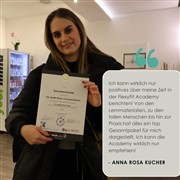
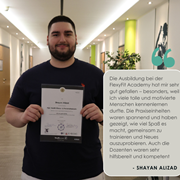
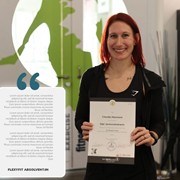
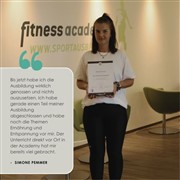
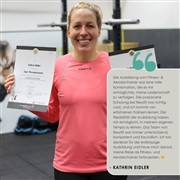
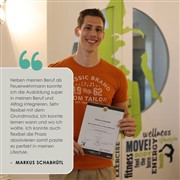
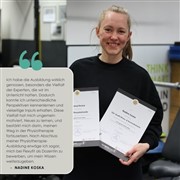
Great training and super nice people. You can tell how much emphasis is placed on conveying the necessary knowledge to the course participants in an understandable way. I was even kindly allowed to take a course completely free of charge after there were somewhat problematic and disruptive participants in my group. I will 100% take more courses with you in the future because learning is extremely fun, especially thanks to the friendly staff!
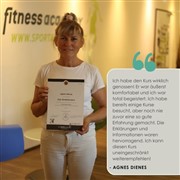
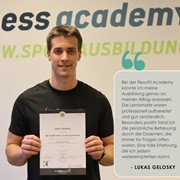
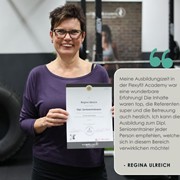
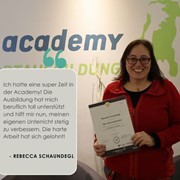
The entire flexyfit team is extremely friendly, prompt and helpful. The lecturers are competent and respond to the course participants. All learning materials were provided clearly and in sufficient detail. The additional videos mean there is something for every type of learner. All in all, the training and exam went well. I can definitely recommend flexyfit and will be happy to book and recommend further training courses with you again!
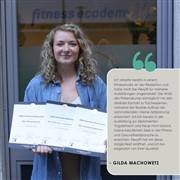
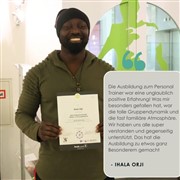
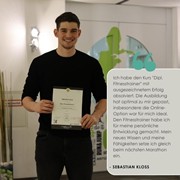
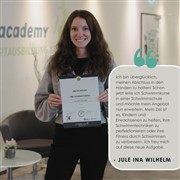
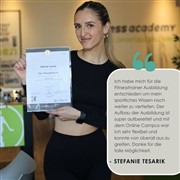
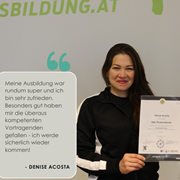
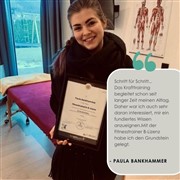
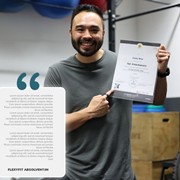
I really enjoyed training to become a B-license fitness trainer there. The teaching materials provided are great and flawless. I learned a lot of new things there and always enjoyed what I was doing. The team is great and is always there for you if you have any questions!
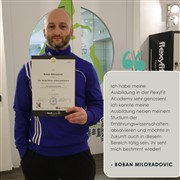
The best thing that could have happened to me is this academy. Access to participants is excellent. All employees are very competent, very professional and very friendly. A person can learn so much that it is indescribably good. I would recommend it to everyone. When I arrived in Austria I was looking for something like this and luckily I found this academy and signed up for the course without hesitation. Everything we get in return is worth 100 times more than what we pay. Indescribable experience, indescribable people, once again and 1000 times I say: Thank you for everything, thank you for this indescribable experience. THANK YOU, THANK YOU, THANK YOU
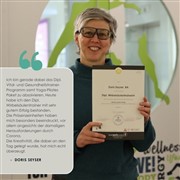
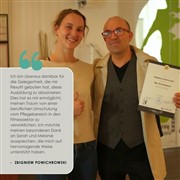
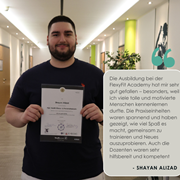
I was able to learn a lot of new things as part of my training at the Flexyfit Academy and was able to take on a new, demanding challenge with my chosen course. The structure of the training courses is very understandable and clear, so that you can master the distance learning course on your own without any problems. If there were any questions, ambiguities or isolated problems, the Academy team was always quick to help and we could always find a common solution. Here and there I would have liked a little more practical relevance. Nevertheless, I always felt very comfortable, had great speakers and with my degree as a qualified medical sports coach, many new doors are now open to me :)
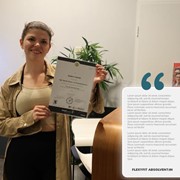
I was able to complete my chosen course very well and quickly. The team is very quick and courteous and you are always offered a good solution if there are any uncertainties. I will book again when I get the chance and can recommend the academy!
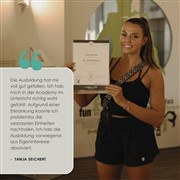
Training at Flexyfit was the best decision; I learned a lot about sport and nutrition. The support was always there, very competent and nice staff/trainers. I will definitely recommend the Academy. Especially thanks to Melanie, Sarah and Daniel
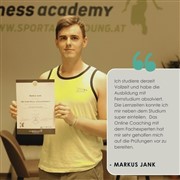
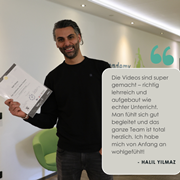
A really demanding training, great material, the videos are great, the script complements it well. The structure is very sensible and you can find your way around easily. I just find the proportionality of the yoga license compared to the Pilates license unfavorable. Many more exams are required for the yoga license. The final exam for the yoga license is also significantly more difficult; in my opinion, questions need to be reconsidered.
Thank you Flexyfit - very competent, great documents and support. The practical exercises in Innsbruck were TOP - thank you Matthias. I can only recommend. I will continue. 😉
Very high quality training! The Flexyfit Academy tried very hard to answer and explain in detail all the questions that arose during the training. Can I definitely recommend!
Absolutely satisfied! I chose distance learning because I couldn't be there in person, and I highly recommend it! Everything worked smoothly, contact was quick and a solution was always found if there were any problems. The team is super friendly and the profile overview is very clear. A small suggestion: It would be helpful if users who are inactive for a long time received a reminder or if an app were available so that they could learn on the go.
I was very positively surprised by the training! The distance learning course was very uncomplicated and the service was also perfect! The materials were very good and I learned a lot! I can recommend it with a clear conscience! Update 2024: Now that I have completed my third training course, I can only confirm my first assessment! As a full-time worker, it was a great opportunity for me to do part-time training that corresponds to my passion! I regularly read books on the subject of sport and health, and I have to say that the training courses everywhere are very good and up to date! That surprised me somewhat positively! =) Thanks to Flexyfit I can now turn my hobby into a career! So another clear recommendation from me!
A great training program that is offered there, with a very friendly and competent team. It was a pleasure to learn with your very well prepared videos and scripts. I'm already looking forward to my next training. I'm already looking forward to my next training. I can only highly recommend it, I definitely give it 5 stars.
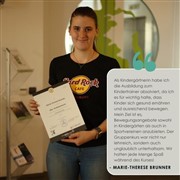
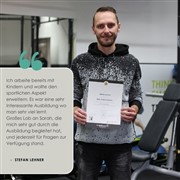
I did the children's trainer training at Flexyfit. From the very beginning you receive great support and the communication is perfect. Everyone is hardworking and friendly. Everything worked perfectly online and on site. It definitely won't be the last training or workshop I do with you. I am looking forward to meet you again. Thanks to Daniel, Melanie and Beno :-)
Flexible learning made easy :) Very competent and friendly. Very quick answers to questions and I would recommend Flexyfit to anyone who wants to do training in the sports sector 💪🏾
I have already completed two correspondence courses and I can say that continuing my education with the Flexyfit courses is simply fun. You learn at your own pace and are flexible in terms of time and location.
I have now completed two training courses at the Flexyfit Academy and would do it again in a heartbeat. If possible, I recommend the face-to-face courses, they simply result in a really exciting exchange. Service and support are top and all needs are taken into account. Mini drawback: the online learning system is not entirely straight-forward, but you get used to it quickly.
➕ Good institute with a great online academy and a wide range of training options. I have already completed 3 training courses there. I like the modular structure, so that various basic modules can also be used for other training courses. ➖ Unfortunately, the price structure has been adjusted so that (basic) modules that have already been completed can no longer be deducted from the price. A pity.
I have already completed two training courses at the Flexyfit Sports Academy and am completely satisfied! A super nice team, the organization and documents are top - can only be recommended ;)
Great team! The organization of the training is uncomplicated and very competent. The speakers are professional and experienced and bring a good mix of theory and practice. Overall, only recommended.
Incredibly friendly team, always available, incredibly helpful and trying very hard to find a solution for everything. The learning videos and scripts are well prepared and easy to follow. I was personally able to learn the most from the really good tutors in the practical part. Overall, you get a very good overview and insight into the relevant subject areas. The course also showed me personally where I would like to orient myself further and which areas I would like to deepen in depth. In addition: well-equipped teaching halls and very attractive rooms - everything is very inviting and familiar. Every now and then you see someone from the team just coming back from running or the weight room - that makes you feel right away! (Training: Dipl. Medical Sports Supervisor)
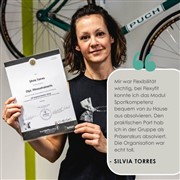
I am very satisfied, I had a TOP professor (which is not a given these days). I think it's great that as a nutrition trainer you also have to learn anatomical subjects (it's called sports competence). The support was great too. Very helpful team! All in all I'm very satisfied.
Super fast and nice service! Every question answered immediately and in a pleasant and appreciative way! What would be better would be more time for face-to-face teaching!
My training at Flexyfit Sport Academy... I received the best support and advice from the most competent, friendly and successful team. Many thanks to the top team (office, speakers and coaches). It was a great pleasure for me to walk with you on the path to realizing my own goals.
For all coaches who want to absorb detailed knowledge in one or more areas. I'm just very enthusiastic about the Flexyfit Sport Acamedy and felt like I was in great hands with the trainers. The enthusiasm was so palpable even during the Zoom workshops. Regardless of whether you prefer to read the script or watch the accompanying videos, there is a medium for every type of learner and the learning material is extremely well prepared. And should any questions arise, the “Customer Service” is there super quickly and responds after a few hours or is there to give advice.
Simply great and very, very nice. All the employees from the Flexyfit Sports Academy team are so nice, courteous and helpful. Help is available within minutes to an hour if questions arise while learning online. It's a lot to learn, but it shows that trainer training, no matter the subject, requires a certain foundation and I personally think it's exactly right. For me, this shows quality and that not every self-proclaimed professional is also a connoisseur and expert. Be careful with who and where you train! It is our body and every person should pay attention to it and have the “right” trainer with specialist knowledge at their side. I can only recommend Flexyfit Sports Academy. Many thanks to all Flexyfit Sports Academy employees, you are great!!!!!
Incredibly helpful staff! Even worked especially for me on public holidays and made appointments, very accommodating and supportive. Absolutely recommended and happy :)
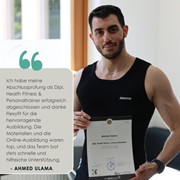
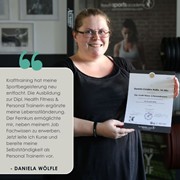
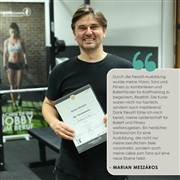
The training (Dipl. Health Fitness & Personal Trainer) is really great, if I had a problem I was always helped very quickly. The videos in conjunction with the scripts are very helpful and well designed, the training overall is well structured, including the intermediate exams, practice tasks, etc. This consolidates what you have learned even better! The lecturers are also very competent and my two examiners were very friendly and relaxed, so there was no reason to be nervous. All in all highly recommended!
Excellent training opportunities and outstanding experiences: I had the pleasure of completing three different training courses at the Flexyfit Sports Academy, and it is without a doubt a first-class facility for the further development of sporting skills. Here are my personal reasons why I find the Flexyfit Sports Academy so exceptional: Outstanding Trainers: The trainers I have met are first class. Everyone has extensive knowledge and experience in their respective areas and always responds to the individual needs of the participants. The training was tailor-made for me and extremely effective. Diverse training offers: The Academy offers a wide range of training suitable for various fitness goals. No matter whether you are striving to build strength, flexibility or endurance, you will find the right program here. State-of-the-art facilities: The facilities at Flexyfit Sports Academy are first class and equipped with state-of-the-art equipment. They ensure an optimal training experience and enable participants to get the best out of themselves. An inspiring community: The atmosphere in the academy is motivating and supportive. You feel like you are part of a committed community that has a common goal: making progress in sports and fitness. Excellent value for money: The quality of the training you receive is in excellent relation to the cost. It is an investment for health and well-being. I can fully recommend the Flexyfit Sports Academy. The training I completed here exceeded my expectations. If you are looking for a place where you can achieve your sporting goals, this is the place. The Academy deserves top marks and I look forward to further training in the future.
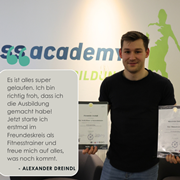
The training to become a qualified fitness trainer was very instructive and interesting. The modules are carefully structured and go from theory to practice. The whole training was uncomplicated. Service perfect, I can only recommend the Academy. Melanie and Sarah thank you for everything! Simply great!
You will shortly receive a newsletter confirmation email to:
Please also check your SPAM folder
We wish you a flexytastic day
* Required fields
You will receive our training brochureby email.
Thank you
You will shortly receive an email with your download link to the brochure at:
Please also check your SPAM folder
We wish you a flexytastic day
The protection of your personal data is of particular concern to us. I agree that my details will be used for contacting me. I have read the privacy policy and agree to it.
Quality you can trust
More than
41.740Satisfied graduates - fromSweden
and
19 other countries, have placed their trust in us since 2007.
You will shortly receive a newsletter confirmation email to:
Please also check your SPAM folder
We wish you a flexytastic day
* Required fields
You will receive our training brochureby email.
Thank you
You will shortly receive an email with your download link to the brochure at:
Please also check your SPAM folder
We wish you a flexytastic day
The protection of your personal data is of particular concern to us. I agree that my details will be used for contacting me. I have read the privacy policy and agree to it.
Course Contents
Details
About cookies Cookies are small text files that are used by websites to enhance the user experience.
The law allows us to store cookies on your device if they are strictly necessary for the operation of this website. For all other types of cookies, we need your consent. This website uses different types of cookies. Some cookies are set by third parties that appear on our pages. You can change or withdraw your consent at any time via the cookie statement on our website.
In our privacy policy you can find out more about who we are, how you can contact us and how we process personal data.
6
Necessary cookies help to make a website usable by enabling basic functions such as page navigation and access to secure areas of the website. The website cannot function properly without these cookies.
This cookie is used to distinguish between humans and bots. This is beneficial for the website to generate valid reports on the use of its website.
_cfuvid
This cookie is part of Cloudflare's services - including load balancing, providing website content and providing a DNS connection for website operators.
This cookie is used internally by the owners of the website when content is uploaded or renewed on the website.
XSRF-TOKEN
Ensures browsing security for visitors by preventing cross-site request forgery. This cookie is essential for the security of the website and the visitor.
This cookie is used to distinguish between humans and bots. This is beneficial for the website to create valid reports about the use of your website.
rc::c
This cookie is used to distinguish between humans and bots.
3
Preference cookies allow a website to remember information that affects the way a website behaves or looks, such as your preferred language or the region you are in.
Collects data about the user's visits to the website, such as which pages have been read.
15
Marketing cookies are used to follow visitors on websites. The intention is to show ads that are relevant and engaging to the individual user and therefore more valuable to publishers and third party advertisers.
Used to track visitors across multiple websites to present relevant advertising based on the visitor's preferences.
_uetsid
Collects data on visitor behavior across multiple websites to present more relevant advertising - This also allows the website to limit the number of times the same advertisement is displayed.
_uetsid_exp
Contains the expiry date for the cookie with the corresponding name.
_uetvid
Used to track visitors across multiple websites to present relevant advertising based on the visitor's preferences.
_uetvid
Used to track visitors across multiple websites to present relevant advertising based on the visitor's preferences.
_uetvid_exp
Contains the expiry date for the cookie with the corresponding name.
MSPTC
This cookie registers visitor data. The information is used to optimize the relevance of advertising.
MUID
Widely used by Microsoft as a unique user ID. The cookie enables user tracking by synchronizing the ID in many Microsoft domains.
Used by Google DoubleClick to register and report the user's actions on the website after viewing or clicking on one of the provider's ads, with the purpose of measuring the effectiveness of an advertisement and displaying targeted advertising to the user.
pagead/1p-conversion/#/
Pending
pagead/1p-user-list/#
Used to track whether the visitor has shown interest in certain products or events on multiple websites and how the visitor navigates between websites - This is used to measure advertising effort and facilitates the payment of referral fees between websites.
test_cookie
Used to check whether the user's browser supports cookies.







































 Course Plan
 BK
BK
 Registration
















 Switch WhatsApp®"
And you will be forwarded directly to the WhatsApp® app.
Switch WhatsApp®"
And you will be forwarded directly to the WhatsApp® app.


