Icon call
Hotline
Send mail icon
Online Request
Connective tissue massage

Certified connective tissue masseur

€ 890,00 | Classroom Courses
Flexible learning - our possible learning options for the course:

Important informations

Certified connective tissue masseur

Course info Investment
Investment:890,00 Including Exam Fees and Study Materials
Course info Funding opportunities
Installment Plans Available
No Interest, No Fees
Course info Institute
Information Event
Course info Start at any time
Entry possible at any time
Course info Duration of training
Course Upgrades
Add Another Course
Course info Academy account
Academy account forever
learning materials available for life
Course info Money-back guarantee
Money-back guarantee
14 days right of withdrawal (according to the Distance Selling Act)
Course info scientific content
Sound scientific content
Certificate valid worldwide & unlimited in time

Recognized & Certified

TUEV Iso 9001 logo carrier certificate ZFU Seal of Quality Certificate Trusted Shops SVG Icon Flexyfit Academy for 19 years

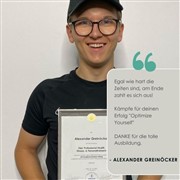
Our graduates, partners & friends say

Our team will be happy to advise you at any time by phone, chat or in person

Tablet photo carousel

Sports massage training: Behind every top athlete is a professional support team

Behind every top athlete is a professional support team (physiotherapists, sports masseurs and sports physicians).
Fitness and health are also becoming increasingly important for many recreational athletes. A sports massage is essential for an active athlete. Sports massage is of great importance both before and after a competition or intensive sporting activity.

The most important thing a sports masseur has to do is loosen up the athlete's muscles. The massage relaxes the muscles and improves blood circulation. As a result, the muscles recover more quickly and injuries are prevented. A sports massage should also be individually tailored to the respective athlete and their needs.

Incidentally, this training can be optimally supplemented with other courses such as fitness trainer, personal trainer or medical sports supervisor.

The course is aimed at the following people: Sports enthusiasts, athletes, people who have already completed a basic course in classical massage, commercial masseurs, medical masseurs, medical-technical specialists, therapeutic masseurs, sports scientists/sports teachers, physiotherapists or people who already work in medicine.

Factsheet on the course
course

Extent of learning

309 E

4

EQF level

The training is based on EQF level 4 »

course

Course start

Possible immediately

training-cost

Education costs

€ 890,00

» Our Course Packages

learning-varient

Learning variant

Classroom Courses

Available

Languages

DE
Graduate hat Flexyfit

All course dates

Find your classroom course

Loader Icon
Connective tissue massage

Everything at a glance!

Certified connective tissue masseur

Certified sports masseur - Support athletes during training & regeneration

The helping hand of the fitness industry

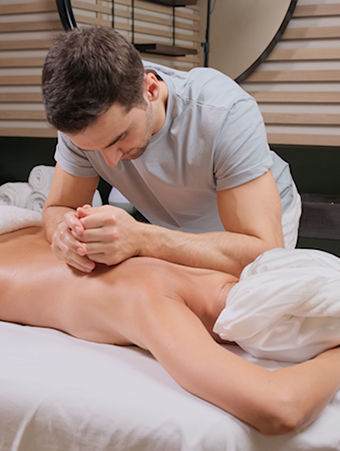
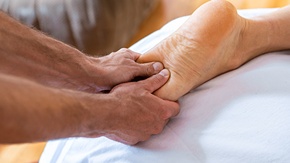
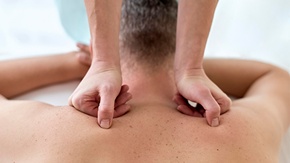
Sports massage describes a special form of massage adapted to the requirements of sport. The aim of a massage is to promote blood circulation in specific areas of the body and to activate or relax. This goal is achieved by applying certain techniques to the affected parts of the body.

As a sports masseur, you support athletes in their training by using pre-activity massages to improve their blood circulation, loosen their muscles and induce a heightened state of alertness.

After training, you support athletes with fatigue relief massages / post-activity massages. This relaxing massage is used to calm the body and is applied after sporting activity. In addition to improved regeneration, the aim is to help athletes cope physically and mentally with their performance.

What can you expect from our training?

As a sports masseur, it is important for the care of athletes to know about the changes to the body caused by sport. You will therefore learn how sports massages optimize the metabolic processes in the muscles and shorten the regeneration time after exercise.

Both massage and self-massage will be covered in this module. A distinction is made between pre-activity massages and fatigue-relieving massages. We will show you the correct application and dosage of grips, how to carry out functional tests and much more.

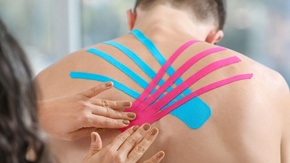
Taping is also an essential part of this training. Both functional taping and kinesiotaping are intensively practiced and applied.

Conditions of participation

  • Online or written registration
  • Minimum age 18 years (for participants under 18 years, written parental consent is required for registration)

Certificate of completion

Our certificates are valid worldwide and are issued in different versions. On request, you can receive our certificate in several languages (DE, EN, ES), with country-specific information and with or without printed grades.

These variants are all available to download online free of charge. You will also receive a certificate of your choice printed on special embossed paper.

The following certificate is awarded (in several languages DE, EN, ES):

Österreich Fahne Schweiz Fahne ItalienFahne
"Diploma Sports Masseur"

Deutschland Fahne Lichtenstein Fahne Schweden Fahne
"Sports masseur A-license"

Do you have specific questions about the training?

We are happy to help you by phone, e-mail or chat . However, you may find the answer to your question in our general FAQ or sports masseur FAQ.

Detailed Course Contents

Extent of learning

309 E | Volume

MKP

200

Massage expertise

PL

4

Presence | Self-study

RE

5

Literature research

LE

60

Self-study (learning units)

TE

30

Practical realization

AE

10

Additional tasks & examinations

Our training courses are generally eligible for funding. The relevant funding body will decide whether you are eligible for funding.

We will be happy to support you in compiling all the necessary course information you need for your funding application.

Of course, we will be on hand to advise you throughout the entire process and support you from the initial inquiry to the submission of your application. Contact us - we will make sure that you are as well prepared as possible!

Module Massage expertise

Show all chapters of the subjects

TAB Teaching content
Anatomy

We educate the best trainers in the fitness branch. From start to finish of the education - and beyond!- we support and guide our students.

Functional anatomy is a foundation necessary for all trainers in exercise, fitness and sports. This subject provides a comprehensive introduction to the anatomy of the human body and a wellspring of important knowledge.

The course is constructed to present the information in an interesting and comprehensible manner and features different learning approaches appropriate for Fitness and Personal Trainers.
 
The goal is, to understand the relationship between movement patterns, the human body and relevant anatomical terminology.


  • CELL SCIENCE (CYTOLOGY)
    • General structure of the cell
  • TISSUE SCIENCE (HISTOLOGY)
    • Epithelial tissue
  • CONNECTIVE, SUPPORTING & MUSCLE TISSUE
    • The connective tissue
    • The supporting tissue
    • Muscle tissue
  • NERVE TISSUE
    • Functional and structural demarcation
    • Structure of a nerve cell
    • Auxiliary structures of the nervous tissue
    • Task of the nervous tissue
  • ORIENTATION ON THE HUMAN BODY
    • Main axes and planes
    • Position and direction designations
  • BONE THEORY (OSTEOLOGY)
    • Types of bone
    • Truncus
    • Upper extremity
    • Lower extremity
  • JOINTS
    • Types of joints
    • Auxiliary devices of the joints
    • Description of joint movement
    • Joint shapes
    • The most important joints
  • STRIATED MUSCLE
    • Structure
    • Classification of muscle types
    • Auxiliary devices of the active musculoskeletal system
  • M. TRAPEZIUS (TRAPEZIUS MUSCLE)
  • M. RHOMBOIDEUS MAJOR (LARGE RHOMBOID MUSCLE)
  • M. SERRATUS ANTERIOR (ANTERIOR SAW MUSCLE)
  • M. DELTOIDEUS (DELTOID MUSCLE)
  • M. PECTORALIS MAJOR (LARGE CHEST MUSCLE)
  • M. LATISSIMUS DORSI (BROAD BACK MUSCLE)
  • THE ROTATOR CUFF
    • M. infraspinatus (infraspinatus muscle)
    • M. supraspinatus (upper latissimus muscle)
    • M. teres minor (small round muscle)
    • M. subscapularis (lower shoulder blade muscle)
    M. TERES MAJOR (LARGE ROUND MUSCLE)
  • M. BICEPS BRACHII (TWO-HEADED ARM FLEXOR)
  • M. BRACHIALIS (ARM FLEXOR)
  • M. BRACHIORADIALIS (UPPER ARM RADIAL MUSCLE)
  • M. TRICEPS BRACHII (THREE-HEADED ARM EXTENSOR)
  • M. ILIOPSOAS (LUMBAR MUSCLE)
    • M. psoas major and m. psoas minor
    • M. iliacus (iliac muscle)
    M. GLUTEUS MAXIMUS (LARGE GLUTEAL MUSCLE)
  • M. GLUTEUS MEDIUS (MIDDLE GLUTEAL MUSCLE)
  • M. GLUTEUS MINIMUS (SMALL GLUTEAL MUSCLE)
  • M. TENSOR FASCIAE LATAE (HAMSTRING MUSCLE)
  • M. QUADRICEPS FEMORIS (FOUR-HEADED THIGH MUSCLE)
  • M. BICEPS FEMORIS (TWO-HEADED THIGH MUSCLE)
  • M. SEMIMEMBRANOSUS (PLATE TENDON MUSCLE)
  • M. SEMITENDINOSUS (SEMI-TENDINOUS MUSCLE)
  • M. SARTORIUS (SARTORIUS MUSCLE)
  • M. PECTINEUS (RIDGE MUSCLE)
  • M. GRACILIS (SLENDER MUSCLE)
  • M. ADDUCTOR LONGUS (LONG THIGH EXTENSOR)
  • M. ADDUCTOR BREVIS (SHORT THIGH EXTENSOR)
  • M. ADDUCTOR MAGNUS (LARGE THIGH EXTENSOR)
  • M. GASTROCNEMIUS (TWIN CALF MUSCLE)
  • M. SOLEUS (CLOD MUSCLE)
  • M. TIBIALIS ANTERIOR (ANTERIOR SHIN MUSCLE)
  • M. TIBIALIS POSTERIOR (POSTERIOR SHIN MUSCLE)
  • M. RECTUS ABDOMINIS (STRAIGHT ABDOMINAL MUSCLE)
  • M. OBLIQUUS INTERNUS ABDOMINIS (INTERNAL OBLIQUE ABDOMINAL MUSCLE)
  • M. OBLIQUUS EXTERNUS ABDOMINIS (EXTERNAL OBLIQUE ABDOMINAL MUSCLE)
  • M. TRANSVERSUS ABDOMINIS (TRANSVERSE ABDOMINAL MUSCLE)
  • M. QUADRATUS LUMBORUM (QUADRANGULAR LUMBAR MUSCLE)
  • DIAPHRAGM (DIAPHRAGM)
  • BACK STRETCHER
  • VOCABULAR LIST
Professional ethics and professionalism

The subject"Professional Ethics and Professionalism" in the basic massage skills module teaches essential ethical principles and rules of conduct that are essential for a professional massage practice. The course begins with an introduction to professional ethics, covering in detail the ethical principles and their importance in practice. Participants will learn how to deal with ethical dilemmas and make decisions that are in the best interest of their clients.

Another important aspect is dealing with clients, data protection and confidentiality. The training covers guidelines for dealing with clients in a professional manner, adhering to data protection guidelines and maintaining confidentiality. It emphasizes the importance of trust and respect in the relationship with clients and how these values can be upheld through professional practice.

In addition, fundamentals of professional demeanor and effective communication strategies are taught. Participants will learn how to maintain a professional appearance and build a successful relationship with their clients. Communication strategies for dealing with clients, including techniques for conflict management and resolution, are also covered. This subject emphasizes the development of a professional attitude and the ability to act appropriately and ethically in a variety of situations.


  • ETHICAL PRINCIPLES AND RULES OF CONDUCT IN MASSAGE PRACTICE
    • Introduction to professional ethics
    • Ethical principles and their importance in practice
    • Dealing with ethical dilemmas
  • DEALING WITH CLIENTS, DATA PROTECTION AND CONFIDENTIALITY
    • Dealing professionally with clients
    • Data protection guidelines and confidentiality
    • Importance of trust and respect
  • PROFESSIONAL APPEARANCE AND COMMUNICATION
    • Basics of professional appearance
    • Communication strategies for a successful client relationship
    • Conflict management and resolution
Ergonomics and self-care

The"Ergonomics and self-care" subject in the basic massage skills module focuses on correct posture and ergonomics for therapists to avoid strain and injury. The importance of ergonomics in massage practice is emphasized and techniques for avoiding strain are taught. Practical exercises to improve posture are also a key part of this module.

In addition, self-care and recovery techniques for therapists are taught. The importance of self-care is emphasized as it is crucial for the long-term health and performance of therapists. Self-massage techniques and relaxation exercises are introduced to help therapists take care of themselves. Strategies for recovery and injury prevention are also covered to ensure sustainable practice and protect therapists' health.


  • CORRECT POSTURE AND ERGONOMICS FOR MASSEURS
    • The importance of ergonomics in massage practice
    • Techniques to avoid overloading
    • Practical exercises to improve posture
  • TECHNIQUES FOR SELF-CARE AND REGENERATION
    • Importance of self-care for therapists
    • Self-massage techniques and relaxation exercises
    • Strategies for recovery and injury prevention
TAB Teaching content
First aid & sports injuries
Since injuries are a daily occurrence in sports, it is important to know about the causes and consequences of the most common injuries. In case of an emergency the personal trainer must be able to react quickly and correctly.

In addition, the understanding of various injury patterns helps to be able to avoid them from happening.

  • FIRST AID
    • Recognizing an emergency situation
    • Resuscitation procedure
    • Selected risk factors
    • Thermal problems
  • SPORTS INJURIES - EMERGENCIES
    • Open fracture
    • Basilar skull fracture
    • Spinal injury
  • SPORTS INJURIES OF THE ACTIVE MOVEMENT APPARATUS
    • Differentiation: Acute injuries and overuse injuries
    • P-E-C-H principle
    • Bruise
    • Contusion
    • Muscle strain/muscle fiber tear/muscle tear
    • Myogelosis
    • Overuse injuries to the active musculoskeletal system
  • SPORTS INJURIES OF THE PASSIVE MUSCULOSKELETAL SYSTEM
    • Fractures and fracture types
    • Joint injuries
Hygiene and safety

The subject"Hygiene" in the basic massage competence module deals comprehensively with the essential hygiene standards and safety measures in massage practice.

It begins with the importance of hygiene in massage practice, followed by detailed hygiene guidelines and their implementation. Participants are given practical tips for maintaining hygiene to ensure a safe and clean working environment.

Another focus is on safety measures. Safety precautions for everyday practice are presented here, including specific protective measures for massage therapists and clients.


  • HYGIENE STANDARDS AND PRACTICES IN THE MASSAGE PRACTICE
    • The importance of hygiene in massage practice
    • Hygiene guidelines and their implementation
    • Practical tips for maintaining hygiene
  • safety measures and precautions
    • Safety precautions for everyday practice
    • Protective measures for massage therapists and clients
Customer management and marketing

The subject"Client management and practice management" in the basic massage skills module provides essential knowledge for the successful operation of a massage practice. It begins with building and maintaining a client file, emphasizing the importance of a well-maintained client file. Participants will learn techniques to effectively manage client data and comply with data protection and legal requirements.

Another focus is the design and maintenance of the working environment. Here, participants learn how to design the massage area in the best possible way to create a welcoming atmosphere. High standards of hygiene and cleanliness are taught, and the need for regular maintenance and care of massage rooms and equipment is emphasized.

The third area of the subject focuses on marketing and customer retention. The basics of marketing for massage practices are explained and participants develop strategies for attracting and retaining customers. The use of social media and other digital marketing tools to increase the reach and awareness of the practice will also be addressed.

This subject provides comprehensive training in client management, practice management and marketing to ensure the successful operation and growth of your massage practice.


  • SETTING UP AND MAINTAINING A CLIENT FILE
    • The importance of a well-maintained client file
    • Techniques for the effective management of client data
    • Data protection and legal requirements
  • DESIGN AND MAINTENANCE OF THE WORKING ENVIRONMENT
    • Optimization of the massage area
    • Hygiene and cleanliness standards
    • Maintenance and care of massage rooms and equipment
  • MARKETING AND CUSTOMER LOYALTY
    • Basics of marketing for massage practices
    • Strategies for attracting and retaining customers
    • Use of social media and other marketing tools
Massage techniques and grips

In the "Massage Techniques and Practices" subject, basic massage techniques are taught using online learning videos. These videos provide participants with a comprehensive introduction to the various techniques and allow them to familiarize themselves with the basics at their own pace. In the practical module "Massage techniques and hygiene", these techniques are then intensively practiced and deepened on site.

Participants have the opportunity to familiarize themselves with the various massage techniques through the instructional videos and learn them step by step. This prepares them optimally for the practical exercises. They can apply what they have learned on site and improve it with direct guidance from experienced instructors and trainers.


  • DIFFERENT MASSAGE TECHNIQUES (STROKING, KNEADING, TAPPING, RUBBING, VIBRATION)
    • Basics of the different massage techniques
    • Technical execution and practical application
    • How the techniques work on the body
  • PRACTICAL EXERCISES FOR APPLYING THE TECHNIQUES
    • Instructions for practical exercises
    • Application of the techniques in different scenarios
  • ADAPTING THE TECHNIQUES TO DIFFERENT PARTS OF THE BODY
    • Anatomical principles of the different parts of the body
    • Adaptation of techniques to specific areas of the body
Pathology in massage

The "Pathology" subject in the basic massage skills module provides essential knowledge that is essential for safe and effective massage practice.

The basics of pathology and common conditions are covered, including:

  • Introduction to pathology
  • Key pathologies that need to be considered during massage
  • Effects of various conditions on the body and musculature

In addition, participants will learn about the indications and contraindications for massage:

  • Definition and meaning of indications and contraindications
  • Recognition and assessment of indications
  • Identification of contraindications and how to deal with them

Another important aspect is recognizing and dealing with medical emergencies during a massage, including

  • Common medical emergencies
  • Emergency management and immediate action
  • Collaboration with medical professionals

  • BASICS OF PATHOLOGY AND COMMON DISEASES
    • Introduction to pathology
    • Important clinical pictures that must be taken into account during massage
    • Effects of various diseases on the body and muscles
  • INDICATIONS AND CONTRAINDICATIONS FOR MASSAGE
    • Definition and meaning of indications and contraindications
    • Recognition and assessment of indications
    • Identifying contraindications and how to deal with them
  • RECOGNIZING AND DEALING WITH MEDICAL EMERGENCIES DURING A MASSAGE
    • Common medical emergencies during massage
    • Emergency management and immediate action
    • Collaboration with medical professionals
TAB Teaching content
Physiology

A working understanding of human physiology and therefore the relationships between the various functions of the human body is crucial for anyone working in the exercise and fitness field. It is a requisite knowledge for the sufficient practice of their profession.

This course makes the relationships within the human organism graspable for everyone. Take a deep-dive into the human body and learn the functions of our organism for your new profession in fitness.

In this subject you will get a close look at energy metabolism needed for muscle activation, the circulatory system and the pulmonary system.

Any high quality education in fitness and exercise begins with the foundations of anatomy and physiology.


  • WHAT IS PHYSIOLOGY?
  • THE CARDIOVASCULAR SYSTEM
    • The heart - shape and position
    • Anatomy of the heart
    • The excitation and stimulation system
    • How the heart works
    • The vascular system
    • The circulatory system
    • Important parameters of the cardiovascular system
    • Adaptation reactions of the cardiovascular system
    • Regulation of the circulatory system
    • Diseases of the cardiovascular system
  • THE BLOOD
    • Composition of the blood
    • Blood group properties
  • THE IMMUNE SYSTEM
    • Immune response
    • The lymphatic system
    • Lymphatic organs
  • LUNGS AND RESPIRATION
    • The respiratory system
    • The upper respiratory tract
    • The lower respiratory tract
    • Functions of the respiratory system
    • Disorders of the respiratory system
  • THE ACID-BASE BALANCE
    • Respiratory regulation
    • Metabolic regulation
    • Disorders of the acid-base balance
  • THE NERVOUS SYSTEM
    • Spatial classification of the nervous system
    • Functional classification of the nervous system
    • Reflexes
    • Origin of a movement
    • Analyzers
  • DIGESTION
    • The digestive organs
    • Physiology of nutrition
  • ENERGY METABOLISM AND ENERGY SUPPLY
    • Adenosine triphosphate (ATP)
    • Energy supply pathways
    • Metabolic diseases and disorders
  • ENDOCRINOLOGY
    • Hormones
    • The pituitary gland
  • MUSCLE PHYSIOLOGY
    • Tissue and organ
    • Molecular mechanism of muscle contraction
    • Smooth and striated muscles
    • Origin, insertion and movement possibilities
    • Direction of movement, function and innervation
    • Proprioception
    • Static (postural) and dynamic (movement) musculature
Psychological basics (massage)

The subject"Psychological basics" in the basic massage skills module provides essential knowledge of psychology, which is crucial for dealing professionally with clients in massage practice.

Participants gain basic knowledge of psychology, particularly in dealing with stress, relaxation and emotional reactions. The introduction to the psychological aspects of massage helps participants to understand how to deal with stress and emotional reactions of clients. Techniques to promote relaxation and well-being are also taught.

Another focus is on communication skills and building a therapeutic relationship. The importance of communication in massage practice is emphasized and how to build and maintain a therapeutic relationship is taught. Empathy and maintaining a professional distance when dealing with clients play an important role.

This subject provides in-depth training in the areas of psychological knowledge and communication skills to create a trusting and supportive environment for clients and promote their well-being.


  • BASIC KNOWLEDGE OF PSYCHOLOGY, ESPECIALLY IN DEALING WITH STRESS, RELAXATION AND EMOTIONAL REACTIONS
    • Introduction to the psychological aspects of massage
    • Dealing with stress and emotional reactions of clients
    • Techniques to promote relaxation and well-being
  • COMMUNICATION SKILLS AND BUILDING A THERAPEUTIC RELATIONSHIP
    • Importance of communication in massage practice
    • Building and maintaining a therapeutic relationship
    • Empathy and professional distance in dealing with clients

Module Connective tissue massage

Show all chapters of the subjects

Anatomical & physiological basics

Working with connective tissue massage requires more than technique: you need to understand how the body is organized "in depth" and why certain stimuli on the surface can trigger reflex effects throughout the entire organism. In this subject, you will build the anatomical and physiological foundation necessary for safe, effective and responsible connective tissue work.


You will learn about the structure of the skin, subcutis and connective tissue and understand the functions of these layers and how they interact with each other. This will enable you to better assess tissue reactions, apply treatment techniques in a more targeted manner and correctly classify the effect of connective tissue massage.


A central focus is the classification of dermatomes, myotomes and viscerotomes. You will learn how these segments relate to nerve supply, muscles and organ connections and why they are so important in reflexology work. You will also deepen your knowledge of the autonomic nervous system and learn how reflex arcs work. It is precisely these neurophysiological connections that form the basis for connective tissue stimuli to have a regulating effect.


This subject provides you with the necessary orientation to not only "copy" later practical content, but to understand it technically and remain confident in its application.


  • INTRODUCTION TO THE ANATOMICAL BASICS

    • Importance of anatomy and physiology for connective tissue massage
    • Relationship between structure and function
    • Relevance for safe and effective work


    STRUCTURE OF THE SKIN

    • Layers of the skin
    • Functions of the skin in the organism
    • Sensory and protective functions


    HYPODERMIS (SUBCUTIS)

    • Structure and composition
    • Connection between skin and deeper tissue layers
    • Significance for mobility and tension


    STRUCTURE OF THE CONNECTIVE TISSUE

    • Fibers, basic substance and cells
    • Elasticity, stability and adaptability
    • Role of connective tissue in the organism as a whole


    DERMATOME

    • Definition and segmental classification
    • Connection between skin areas and nerves
    • Significance for connective tissue massage


    MYOTOME

    • Assignment of muscle groups to segments
    • Functional correlations
    • Relevance for tension and pain


    VISCEROTOMES

    • Relationship between organs and skin zones
    • Reflex connections via the nervous system
    • Significance for reflex treatments


    AUTONOMIC NERVOUS SYSTEM

    • Sympathetic and parasympathetic nervous system
    • Control of involuntary bodily functions
    • Influence on tension, blood circulation and organ activity


    REFLEX ARCHES

    • Structure and function of reflex arcs
    • Stimulus reception, processing and response
    • Significance for the effect of connective tissue massage


Treatment setup & practice integration (BGM)

A connective tissue massage works best when it is not only technically correct, but also follows a clear concept. In this course, you will learn how to structure connective tissue massages and integrate them into your everyday practice in such a way that they can be planned, understood and carried out professionally.


You will deal with the sensible structure of treatment: How to choose the right duration and intensity, how to plan a series and how to adapt the treatment to different goals and symptoms. This will help you develop confidence in practical implementation - regardless of whether you offer individual sessions or plan treatments as a recurring concept.


Another focus is professional customer communication. You will learn how to explain treatments clearly, manage expectations realistically and formulate your approach in such a way that customers can clearly understand the benefits and the process. You will also practise proper documentation so that your work remains structured and you can better assess progress and reactions.


You will also learn how connective tissue massage can be combined with other massage techniques - as a supplement, focus or useful component within a holistic offer. This will enable you to clearly position your service portfolio and present yourself professionally on the market.


  • STRUCTURED TREATMENT STRUCTURE

    • Preparation and attunement
    • Development of a sensible treatment sequence
    • Conclusion and post-treatment rest


    TREATMENT DURATION & SERIES PLANNING

    • Individual treatment vs. treatment series
    • Adaptation to the goal and symptoms
    • Planning in everyday commercial practice


    CLIENT COMMUNICATION

    • Initial consultation and expectation management
    • Clarification of effects and limitations
    • Dealing professionally with feedback


    COMBINATION WITH OTHER MASSAGE TECHNIQUES

    • Sensible combination with classic massage
    • Integration into existing treatment concepts
    • Added value through combined applications


    PRACTICE ORGANIZATION & DOCUMENTATION

    • Brief protocols and treatment notes
    • Quality assurance in everyday life
    • Legal certainty and traceability
    • Professional appearance as a connective tissue masseur
Grip techniques for connective tissue massage

In connective tissue massage, technique makes all the difference: it determines how effective a treatment is, how safely you work and how professional the result is. In this practice-intensive course, you will systematically learn the most important grip techniques in connective tissue massage and practise their correct application.


You will practise key techniques such as pulling techniques, pushing techniques and rolling techniques and develop a good feel for what superficial and deeper connective tissue feels like and how you can work on it specifically. You will learn to perceive tissue reactions, recognize tension lines and control the quality of your grip so that the treatment remains precise and controlled.


Another focus is the correct dosage of stimulation: you learn to adapt the intensity and speed to your constitution, sensitivity and the aim of the treatment. Your own ergonomics are just as important. You train a strength-saving way of working, a stable body position and clean movement sequences so that you can work healthily in the long term.


This subject gives you the technical confidence to apply connective tissue massage precisely, effectively and responsibly in practice.


  • INTRODUCTION TO GRIPPING TECHNIQUES

    • Importance of the technique for effect and safety
    • Special features of connective tissue massage
    • Difference to classic massage techniques


    BASICS OF MANUAL WORK

    • Working in superficial and deeper tissue
    • Perception of tension and resistance
    • Rhythm, tempo and treatment flow


    TRAINING TECHNIQUES

    • Execution and hand position
    • Areas of application in connective tissue massage
    • Effect on tissue and nervous system


    PUSHING TECHNIQUES

    • Technique and direction of movement
    • Stimulation and dosage
    • Typical areas of application


    ROLLING TECHNIQUES

    • Preparation and execution
    • Working on different areas of the body
    • Tissue reactions and adaptation


    DOSAGE & STIMULATION INTENSITY

    • Light, medium and intensive stimuli
    • Perception of the feedback from the tissue
    • Adaptation to constitution and objectives


    WORKING POSITION & ERGONOMICS

    • Own posture during treatment
    • Gentle and efficient work
    • Prevention of overload and fatigue


    COMBINATION OF GRIP TECHNIQUES

    • Sensible sequence of techniques
    • Transitions between the grips
    • Building a coherent treatment
    • Partner work with guidance
    • Development of safety and routine
Basics of connective tissue massage

Connective tissue massage is much more than a manual grip technique: it is considered to have a particularly deep effect on the autonomic nervous system via the skin and fascia. In this course, you will learn how this method came about, why it has established itself in manual therapy and why it is still an integral part of many treatment concepts today.


You will receive a structured overview of the theoretical principles of connective tissue massage and its particular mode of action. One focus is on the reflective connections between the skin, connective tissue and internal organs: you will understand how targeted stimuli in the tissue can have a regulating effect on the entire organism and why the perception of tension, traction and tissue reaction is so important.


You will also learn how connective tissue massage differs from traditional massage - both in terms of the aim and quality of the grip and the way in which the body can react to the treatment. This will give you a sound basis for understanding the following practical subjects and classifying the method professionally.


  • INTRODUCTION TO CONNECTIVE TISSUE MASSAGE

    • Significance and areas of application of connective tissue massage
    • Importance within manual forms of therapy
    • Objectives of this subject


    ORIGINS AND HISTORY

    • Historical development of connective tissue massage
    • Origin and medical background
    • Further development and current forms of application


    FUNDAMENTALS OF CONNECTIVE TISSUE

    • Structure and function of connective tissue
    • Connection between skin, fascia and organs
    • Role of the autonomic nervous system


    EFFECTS OF CONNECTIVE TISSUE MASSAGE

    • Mechanical and reflex effects
    • Influence on blood circulation and metabolism
    • Regulation via the nervous system


    REFLECTIVE CONNECTIONS

    • Skin-organ reflex zones
    • Segmental connections
    • Significance for targeted treatment approaches


    DIFFERENTIATION FROM CLASSIC MASSAGE

    • Differences in technique and objectives
    • Perception and pressure intensity
    • Areas of application and effectiveness goals


    SAFETY & BASIC RULES

    • Responsible use
    • Initial information on indications and contraindications
    • Preparation for practical training
    • Key messages of connective tissue massage
Indications & contraindications (BGM)

Professional connective tissue work begins with a clear decision: When is a connective tissue massage appropriate - and when is it not? In this course, you will learn how to classify typical areas of application for connective tissue massage and how to plan treatments responsibly.


You will look at the complaints for which the method is frequently used - for example, back pain, circulatory disorders or functional organ problems. It's not about "scheme F", but about a firm understanding of the goals that can be pursued with reflective work and how to make treatment decisions in everyday practice in a comprehensible way.


It is just as important to deal with the limitations of the method. You will learn to recognize contraindications, correctly assess warning signals and take responsibility in a commercial context. As a result, you will develop confidence in identifying situations in which treatment is not suitable or referral to medical professionals is necessary.


This subject strengthens your professionalism and is a key foundation for a safe, responsible day-to-day practice with connective tissue massage.


  • IMPORTANCE OF INDICATIONS IN CONNECTIVE TISSUE MASSAGE

    • Targeted and responsible use
    • Assessment of complaints and reactions
    • Role of the connective tissue masseur in the commercial sector


    TYPICAL COMPLAINTS

    • Back and spinal complaints
    • Functional organ complaints
    • Circulatory disorders and vegetative symptoms
    • Tension and stress conditions


    THE AIMS OF CONNECTIVE TISSUE MASSAGE

    • Influence on vegetative regulation
    • Promotion of blood circulation and metabolism
    • Support of relaxation processes


    LIMITS OF THE METHOD

    • Differentiation from medical and therapeutic measures
    • Complaints that need to be clarified by a doctor
    • Realistic objectives in practice


    CONTRAINDICATIONS

    • Absolute and relative contraindications
    • Acute illnesses and inflammations
    • Special caution for certain groups of people


    SAFETY & RESPONSIBILITY

    • Careful medical history in a commercial setting
    • Recognizing warning signs
    • Dealing professionally with responsibility
    • Safety as the basis of every application
    • Clarity about possibilities and limits
Practical application - body areas (BGM)

In this practical subject, knowledge becomes real application: You will apply the grip techniques you have learned in connective tissue massage to different areas of the body and develop confidence in the process, grip quality and treatment structure.


You will work intensively on typical focus areas such as the back and pelvic area, the shoulder/neck area and the extremities. You will learn to recognize common areas of tension and irritation, interpret tissue reactions correctly and dose the treatment so that it remains effective and controlled at the same time.


An important part of the course is understanding the connections: you will learn how individual areas of the body are functionally connected and why tension patterns often occur across several regions. You will also learn how to create smooth transitions so that the treatment does not appear "piecemeal" but as a coherent overall experience.


The structure of a complete treatment is central - from preparation to structured implementation and conclusion. This will give you a clear practice routine that you can later adopt directly into your everyday studio or practice routine.


  • INTRODUCTION TO THE REGIONAL APPLICATION

    • Objectives of the practical work
    • Special features of connective tissue massage on different areas of the body
    • Safety and preparation for treatment


    BACK & PELVIC REGION

    • Anatomical orientation
    • Typical areas of tension and irritation
    • Handle sequences and treatment direction


    SHOULDER & NECK AREA

    • Special features of sensitive structures
    • Technique dosage and stimulation intensity
    • Effect on tension and vegetative regulation


    TREATMENT OF THE EXTREMITIES

    • Work on arms and legs
    • Connection to segmental relationships
    • Integration into the overall treatment


    TRANSITIONS BETWEEN BODY AREAS

    • Logical sequence of treatment
    • Harmonious transitions
    • Holistic treatment flow


    STRUCTURE OF A COMPLETE TREATMENT

    • Preparation, main part and conclusion
    • Time management and treatment structure
    • Adaptation to symptoms and objectives


    PRACTICAL EXERCISE SEQUENCES

    • Partner work and guidance
    • Perception of tissue reactions
    • Consolidation of the grip technique
    • Optimization of your own way of working
    • Preparation for everyday practice

Available course variations

Certified connective tissue masseur

Basic information on the learning variants:

  • The training content is the same for each learning variant
  • The examination period, duration of training and examination procedure are independent of the learning variant
  • You can upgrade from distance learning to face-to-face or individual tuition. Individual module blocks can also be booked
  • With the "face-to-face course" learning option, you can book and complete individual blocks in private lessons
  • The final certificate does not differ, regardless of which learning variant you have completed the course in
  • Your Academy account and the learning content will stay with you for the rest of your life
Icon star

Funding & educational leave - how it works

Can I get funding for my training?

There are a variety of funding options for training at the Flexyfit Sports Academy. State-specific and EU funding as well as tax-related options form the basis for this.

However, we would like to point out that the respective funding body is solely responsible for deciding on the allocation or amount of funding.

We will be happy to help you find a suitable funding body and compile all the course information you need for a funding application. You must submit the application itself to the funding bodies.

All relevant funding bodies at a glance

How does the funding work?

Depending on the funding institution, the training costs are either paid directly after the funding application has been confirmed (e.g. AMS) or reimbursed in full or in part after successful completion of the training (e.g. waff). Please contact the funding institutions yourself to find out how the funding works.

Can I take educational leave for the course?

Yes, the majority of our courses are suitable for educational leave.

If you want to continue your education without terminating your employment, you can arrange educational leave with your employer. This means that you will be released from work for the duration of the training.

Plan your educational leave with us now! We will be happy to clarify your individual training requirements with you in a personal, non-binding consultation.

How does educational leave work?

You can take your educational leave for a maximum of 1 year within 4 years - there are 3 options:

  • Educational leave spread over 12 months
  • Educational leave split up, but each part must last at least 2 months. The parts must be taken within 4 years.
  • Educational leave with part-time educational leave spread over 2 years

It is important that your employer agrees to you taking educational leave. You must provide evidence of the training plans issued by us to the extent of 20 hours per week in the case of full-time educational leave, or at least 10 hours in the case of part-time educational leave.

You must regularly provide evidence of the progress of your training. For example, in the form of examinations or confirmation of attendance, which you will receive from us.

Career afterwards - how to continue after training

What does a sports masseur do?

A sports masseur looks after athletes and supports them in the areas of performance and regeneration. In addition to sports massage and fatigue relief massage, the areas of responsibility also include classic and kinesiotaping. Sports masseurs are also trained in the field of sports traumatology and competition preparation.

Where do sports masseurs work?

As a sports masseur, you can also use the sports massage alongside your work as a fitness and personal trainer to look after your clients in the areas of massage, activation or regeneration after training. If you want to become self-employed with the training, you would also need the medical masseur or therapeutic masseur.


What does a masseur earn?

There is a fairly broad salary range for masseurs in the fitness and health prevention sector. The gross income in a permanent position ranges from €1,400 to €4,000 per month, depending on the employer. This is often supplemented by tips, which do not have to be taxed.

In self-employment, the hourly rate naturally depends on the services you offer. Between €50 and €120 per hour for sports massages is a realistic range. However, if you are self-employed, you may also need premises.

How can Flexyfit help me find a job?

We regularly list job advertisements from fitness studios on our Sportkarriere platform. There you can apply directly for jobs as a fitness trainer, branch manager, instructor or studio employee.

sportkarriere.eu

General information about massage

Massage techniques Some types of massage named after country of origin Some types of massage that target specific areas of the body Massage techniques named after their inventors or developers Types of massage named after the technique used Types of massage named after the products used Types of massage named after their purpose

Certified sports masseur - Support athletes during training & regeneration

The helping hand of the fitness industry

Sports massage describes a special form of massage adapted to the requirements of sport. The aim of a massage is to promote blood circulation in specific areas of the body and to activate or relax. This goal is achieved by applying certain techniques to the affected parts of the body.

As a sports masseur, you support athletes in their training by using pre-activity massages to improve their blood circulation, loosen their muscles and induce a heightened state of alertness.

After training, you support athletes with fatigue relief massages / post-activity massages. This relaxing massage is used to calm the body and is applied after sporting activity. In addition to improved regeneration, the aim is to help athletes cope physically and mentally with their performance.

What can you expect from our training?

As a sports masseur, it is important for the care of athletes to know about the changes to the body caused by sport. You will therefore learn how sports massages optimize the metabolic processes in the muscles and shorten the regeneration time after exercise.

Both massage and self-massage will be covered in this module. A distinction is made between pre-activity massages and fatigue-relieving massages. We will show you the correct application and dosage of grips, how to carry out functional tests and much more.

Taping is also an essential part of this training. Both functional taping and kinesiotaping are intensively practiced and applied.

Conditions of participation

  • Online or written registration
  • Minimum age 18 years (for participants under 18 years, written parental consent is required for registration)

Certificate of completion

Our certificates are valid worldwide and are issued in different versions. On request, you can receive our certificate in several languages (DE, EN, ES), with country-specific information and with or without printed grades.

These variants are all available to download online free of charge. You will also receive a certificate of your choice printed on special embossed paper.

The following certificate is awarded (in several languages DE, EN, ES):

Österreich Fahne Schweiz Fahne ItalienFahne
"Diploma Sports Masseur"

Deutschland Fahne Lichtenstein Fahne Schweden Fahne
"Sports masseur A-license"

Do you have specific questions about the training?

We are happy to help you by phone, e-mail or chat . However, you may find the answer to your question in our general FAQ or sports masseur FAQ.

Detailed Course Contents

Extent of learning

309 E | Volume

MKP

200

Massage expertise

PL

4

Presence | Self-study

RE

5

Literature research

LE

60

Self-study (learning units)

TE

30

Practical realization

AE

10

Additional tasks & examinations

Our training courses are generally eligible for funding. The relevant funding body will decide whether you are eligible for funding.

We will be happy to support you in compiling all the necessary course information you need for your funding application.

Of course, we will be on hand to advise you throughout the entire process and support you from the initial inquiry to the submission of your application. Contact us - we will make sure that you are as well prepared as possible!

Module Massage expertise

Show all chapters of the subjects

TAB Teaching content
Anatomy

We educate the best trainers in the fitness branch. From start to finish of the education - and beyond!- we support and guide our students.

Functional anatomy is a foundation necessary for all trainers in exercise, fitness and sports. This subject provides a comprehensive introduction to the anatomy of the human body and a wellspring of important knowledge.

The course is constructed to present the information in an interesting and comprehensible manner and features different learning approaches appropriate for Fitness and Personal Trainers.
 
The goal is, to understand the relationship between movement patterns, the human body and relevant anatomical terminology.


  • CELL SCIENCE (CYTOLOGY)
    • General structure of the cell
  • TISSUE SCIENCE (HISTOLOGY)
    • Epithelial tissue
  • CONNECTIVE, SUPPORTING & MUSCLE TISSUE
    • The connective tissue
    • The supporting tissue
    • Muscle tissue
  • NERVE TISSUE
    • Functional and structural demarcation
    • Structure of a nerve cell
    • Auxiliary structures of the nervous tissue
    • Task of the nervous tissue
  • ORIENTATION ON THE HUMAN BODY
    • Main axes and planes
    • Position and direction designations
  • BONE THEORY (OSTEOLOGY)
    • Types of bone
    • Truncus
    • Upper extremity
    • Lower extremity
  • JOINTS
    • Types of joints
    • Auxiliary devices of the joints
    • Description of joint movement
    • Joint shapes
    • The most important joints
  • STRIATED MUSCLE
    • Structure
    • Classification of muscle types
    • Auxiliary devices of the active musculoskeletal system
  • M. TRAPEZIUS (TRAPEZIUS MUSCLE)
  • M. RHOMBOIDEUS MAJOR (LARGE RHOMBOID MUSCLE)
  • M. SERRATUS ANTERIOR (ANTERIOR SAW MUSCLE)
  • M. DELTOIDEUS (DELTOID MUSCLE)
  • M. PECTORALIS MAJOR (LARGE CHEST MUSCLE)
  • M. LATISSIMUS DORSI (BROAD BACK MUSCLE)
  • THE ROTATOR CUFF
    • M. infraspinatus (infraspinatus muscle)
    • M. supraspinatus (upper latissimus muscle)
    • M. teres minor (small round muscle)
    • M. subscapularis (lower shoulder blade muscle)
    M. TERES MAJOR (LARGE ROUND MUSCLE)
  • M. BICEPS BRACHII (TWO-HEADED ARM FLEXOR)
  • M. BRACHIALIS (ARM FLEXOR)
  • M. BRACHIORADIALIS (UPPER ARM RADIAL MUSCLE)
  • M. TRICEPS BRACHII (THREE-HEADED ARM EXTENSOR)
  • M. ILIOPSOAS (LUMBAR MUSCLE)
    • M. psoas major and m. psoas minor
    • M. iliacus (iliac muscle)
    M. GLUTEUS MAXIMUS (LARGE GLUTEAL MUSCLE)
  • M. GLUTEUS MEDIUS (MIDDLE GLUTEAL MUSCLE)
  • M. GLUTEUS MINIMUS (SMALL GLUTEAL MUSCLE)
  • M. TENSOR FASCIAE LATAE (HAMSTRING MUSCLE)
  • M. QUADRICEPS FEMORIS (FOUR-HEADED THIGH MUSCLE)
  • M. BICEPS FEMORIS (TWO-HEADED THIGH MUSCLE)
  • M. SEMIMEMBRANOSUS (PLATE TENDON MUSCLE)
  • M. SEMITENDINOSUS (SEMI-TENDINOUS MUSCLE)
  • M. SARTORIUS (SARTORIUS MUSCLE)
  • M. PECTINEUS (RIDGE MUSCLE)
  • M. GRACILIS (SLENDER MUSCLE)
  • M. ADDUCTOR LONGUS (LONG THIGH EXTENSOR)
  • M. ADDUCTOR BREVIS (SHORT THIGH EXTENSOR)
  • M. ADDUCTOR MAGNUS (LARGE THIGH EXTENSOR)
  • M. GASTROCNEMIUS (TWIN CALF MUSCLE)
  • M. SOLEUS (CLOD MUSCLE)
  • M. TIBIALIS ANTERIOR (ANTERIOR SHIN MUSCLE)
  • M. TIBIALIS POSTERIOR (POSTERIOR SHIN MUSCLE)
  • M. RECTUS ABDOMINIS (STRAIGHT ABDOMINAL MUSCLE)
  • M. OBLIQUUS INTERNUS ABDOMINIS (INTERNAL OBLIQUE ABDOMINAL MUSCLE)
  • M. OBLIQUUS EXTERNUS ABDOMINIS (EXTERNAL OBLIQUE ABDOMINAL MUSCLE)
  • M. TRANSVERSUS ABDOMINIS (TRANSVERSE ABDOMINAL MUSCLE)
  • M. QUADRATUS LUMBORUM (QUADRANGULAR LUMBAR MUSCLE)
  • DIAPHRAGM (DIAPHRAGM)
  • BACK STRETCHER
  • VOCABULAR LIST
Professional ethics and professionalism

The subject"Professional Ethics and Professionalism" in the basic massage skills module teaches essential ethical principles and rules of conduct that are essential for a professional massage practice. The course begins with an introduction to professional ethics, covering in detail the ethical principles and their importance in practice. Participants will learn how to deal with ethical dilemmas and make decisions that are in the best interest of their clients.

Another important aspect is dealing with clients, data protection and confidentiality. The training covers guidelines for dealing with clients in a professional manner, adhering to data protection guidelines and maintaining confidentiality. It emphasizes the importance of trust and respect in the relationship with clients and how these values can be upheld through professional practice.

In addition, fundamentals of professional demeanor and effective communication strategies are taught. Participants will learn how to maintain a professional appearance and build a successful relationship with their clients. Communication strategies for dealing with clients, including techniques for conflict management and resolution, are also covered. This subject emphasizes the development of a professional attitude and the ability to act appropriately and ethically in a variety of situations.


  • ETHICAL PRINCIPLES AND RULES OF CONDUCT IN MASSAGE PRACTICE
    • Introduction to professional ethics
    • Ethical principles and their importance in practice
    • Dealing with ethical dilemmas
  • DEALING WITH CLIENTS, DATA PROTECTION AND CONFIDENTIALITY
    • Dealing professionally with clients
    • Data protection guidelines and confidentiality
    • Importance of trust and respect
  • PROFESSIONAL APPEARANCE AND COMMUNICATION
    • Basics of professional appearance
    • Communication strategies for a successful client relationship
    • Conflict management and resolution
Ergonomics and self-care

The"Ergonomics and self-care" subject in the basic massage skills module focuses on correct posture and ergonomics for therapists to avoid strain and injury. The importance of ergonomics in massage practice is emphasized and techniques for avoiding strain are taught. Practical exercises to improve posture are also a key part of this module.

In addition, self-care and recovery techniques for therapists are taught. The importance of self-care is emphasized as it is crucial for the long-term health and performance of therapists. Self-massage techniques and relaxation exercises are introduced to help therapists take care of themselves. Strategies for recovery and injury prevention are also covered to ensure sustainable practice and protect therapists' health.


  • CORRECT POSTURE AND ERGONOMICS FOR MASSEURS
    • The importance of ergonomics in massage practice
    • Techniques to avoid overloading
    • Practical exercises to improve posture
  • TECHNIQUES FOR SELF-CARE AND REGENERATION
    • Importance of self-care for therapists
    • Self-massage techniques and relaxation exercises
    • Strategies for recovery and injury prevention
TAB Teaching content
First aid & sports injuries
Since injuries are a daily occurrence in sports, it is important to know about the causes and consequences of the most common injuries. In case of an emergency the personal trainer must be able to react quickly and correctly.

In addition, the understanding of various injury patterns helps to be able to avoid them from happening.

  • FIRST AID
    • Recognizing an emergency situation
    • Resuscitation procedure
    • Selected risk factors
    • Thermal problems
  • SPORTS INJURIES - EMERGENCIES
    • Open fracture
    • Basilar skull fracture
    • Spinal injury
  • SPORTS INJURIES OF THE ACTIVE MOVEMENT APPARATUS
    • Differentiation: Acute injuries and overuse injuries
    • P-E-C-H principle
    • Bruise
    • Contusion
    • Muscle strain/muscle fiber tear/muscle tear
    • Myogelosis
    • Overuse injuries to the active musculoskeletal system
  • SPORTS INJURIES OF THE PASSIVE MUSCULOSKELETAL SYSTEM
    • Fractures and fracture types
    • Joint injuries
Hygiene and safety

The subject"Hygiene" in the basic massage competence module deals comprehensively with the essential hygiene standards and safety measures in massage practice.

It begins with the importance of hygiene in massage practice, followed by detailed hygiene guidelines and their implementation. Participants are given practical tips for maintaining hygiene to ensure a safe and clean working environment.

Another focus is on safety measures. Safety precautions for everyday practice are presented here, including specific protective measures for massage therapists and clients.


  • HYGIENE STANDARDS AND PRACTICES IN THE MASSAGE PRACTICE
    • The importance of hygiene in massage practice
    • Hygiene guidelines and their implementation
    • Practical tips for maintaining hygiene
  • safety measures and precautions
    • Safety precautions for everyday practice
    • Protective measures for massage therapists and clients
Customer management and marketing

The subject"Client management and practice management" in the basic massage skills module provides essential knowledge for the successful operation of a massage practice. It begins with building and maintaining a client file, emphasizing the importance of a well-maintained client file. Participants will learn techniques to effectively manage client data and comply with data protection and legal requirements.

Another focus is the design and maintenance of the working environment. Here, participants learn how to design the massage area in the best possible way to create a welcoming atmosphere. High standards of hygiene and cleanliness are taught, and the need for regular maintenance and care of massage rooms and equipment is emphasized.

The third area of the subject focuses on marketing and customer retention. The basics of marketing for massage practices are explained and participants develop strategies for attracting and retaining customers. The use of social media and other digital marketing tools to increase the reach and awareness of the practice will also be addressed.

This subject provides comprehensive training in client management, practice management and marketing to ensure the successful operation and growth of your massage practice.


  • SETTING UP AND MAINTAINING A CLIENT FILE
    • The importance of a well-maintained client file
    • Techniques for the effective management of client data
    • Data protection and legal requirements
  • DESIGN AND MAINTENANCE OF THE WORKING ENVIRONMENT
    • Optimization of the massage area
    • Hygiene and cleanliness standards
    • Maintenance and care of massage rooms and equipment
  • MARKETING AND CUSTOMER LOYALTY
    • Basics of marketing for massage practices
    • Strategies for attracting and retaining customers
    • Use of social media and other marketing tools
Massage techniques and grips

In the "Massage Techniques and Practices" subject, basic massage techniques are taught using online learning videos. These videos provide participants with a comprehensive introduction to the various techniques and allow them to familiarize themselves with the basics at their own pace. In the practical module "Massage techniques and hygiene", these techniques are then intensively practiced and deepened on site.

Participants have the opportunity to familiarize themselves with the various massage techniques through the instructional videos and learn them step by step. This prepares them optimally for the practical exercises. They can apply what they have learned on site and improve it with direct guidance from experienced instructors and trainers.


  • DIFFERENT MASSAGE TECHNIQUES (STROKING, KNEADING, TAPPING, RUBBING, VIBRATION)
    • Basics of the different massage techniques
    • Technical execution and practical application
    • How the techniques work on the body
  • PRACTICAL EXERCISES FOR APPLYING THE TECHNIQUES
    • Instructions for practical exercises
    • Application of the techniques in different scenarios
  • ADAPTING THE TECHNIQUES TO DIFFERENT PARTS OF THE BODY
    • Anatomical principles of the different parts of the body
    • Adaptation of techniques to specific areas of the body
Pathology in massage

The "Pathology" subject in the basic massage skills module provides essential knowledge that is essential for safe and effective massage practice.

The basics of pathology and common conditions are covered, including:

  • Introduction to pathology
  • Key pathologies that need to be considered during massage
  • Effects of various conditions on the body and musculature

In addition, participants will learn about the indications and contraindications for massage:

  • Definition and meaning of indications and contraindications
  • Recognition and assessment of indications
  • Identification of contraindications and how to deal with them

Another important aspect is recognizing and dealing with medical emergencies during a massage, including

  • Common medical emergencies
  • Emergency management and immediate action
  • Collaboration with medical professionals

  • BASICS OF PATHOLOGY AND COMMON DISEASES
    • Introduction to pathology
    • Important clinical pictures that must be taken into account during massage
    • Effects of various diseases on the body and muscles
  • INDICATIONS AND CONTRAINDICATIONS FOR MASSAGE
    • Definition and meaning of indications and contraindications
    • Recognition and assessment of indications
    • Identifying contraindications and how to deal with them
  • RECOGNIZING AND DEALING WITH MEDICAL EMERGENCIES DURING A MASSAGE
    • Common medical emergencies during massage
    • Emergency management and immediate action
    • Collaboration with medical professionals
TAB Teaching content
Physiology

A working understanding of human physiology and therefore the relationships between the various functions of the human body is crucial for anyone working in the exercise and fitness field. It is a requisite knowledge for the sufficient practice of their profession.

This course makes the relationships within the human organism graspable for everyone. Take a deep-dive into the human body and learn the functions of our organism for your new profession in fitness.

In this subject you will get a close look at energy metabolism needed for muscle activation, the circulatory system and the pulmonary system.

Any high quality education in fitness and exercise begins with the foundations of anatomy and physiology.


  • WHAT IS PHYSIOLOGY?
  • THE CARDIOVASCULAR SYSTEM
    • The heart - shape and position
    • Anatomy of the heart
    • The excitation and stimulation system
    • How the heart works
    • The vascular system
    • The circulatory system
    • Important parameters of the cardiovascular system
    • Adaptation reactions of the cardiovascular system
    • Regulation of the circulatory system
    • Diseases of the cardiovascular system
  • THE BLOOD
    • Composition of the blood
    • Blood group properties
  • THE IMMUNE SYSTEM
    • Immune response
    • The lymphatic system
    • Lymphatic organs
  • LUNGS AND RESPIRATION
    • The respiratory system
    • The upper respiratory tract
    • The lower respiratory tract
    • Functions of the respiratory system
    • Disorders of the respiratory system
  • THE ACID-BASE BALANCE
    • Respiratory regulation
    • Metabolic regulation
    • Disorders of the acid-base balance
  • THE NERVOUS SYSTEM
    • Spatial classification of the nervous system
    • Functional classification of the nervous system
    • Reflexes
    • Origin of a movement
    • Analyzers
  • DIGESTION
    • The digestive organs
    • Physiology of nutrition
  • ENERGY METABOLISM AND ENERGY SUPPLY
    • Adenosine triphosphate (ATP)
    • Energy supply pathways
    • Metabolic diseases and disorders
  • ENDOCRINOLOGY
    • Hormones
    • The pituitary gland
  • MUSCLE PHYSIOLOGY
    • Tissue and organ
    • Molecular mechanism of muscle contraction
    • Smooth and striated muscles
    • Origin, insertion and movement possibilities
    • Direction of movement, function and innervation
    • Proprioception
    • Static (postural) and dynamic (movement) musculature
Psychological basics (massage)

The subject"Psychological basics" in the basic massage skills module provides essential knowledge of psychology, which is crucial for dealing professionally with clients in massage practice.

Participants gain basic knowledge of psychology, particularly in dealing with stress, relaxation and emotional reactions. The introduction to the psychological aspects of massage helps participants to understand how to deal with stress and emotional reactions of clients. Techniques to promote relaxation and well-being are also taught.

Another focus is on communication skills and building a therapeutic relationship. The importance of communication in massage practice is emphasized and how to build and maintain a therapeutic relationship is taught. Empathy and maintaining a professional distance when dealing with clients play an important role.

This subject provides in-depth training in the areas of psychological knowledge and communication skills to create a trusting and supportive environment for clients and promote their well-being.


  • BASIC KNOWLEDGE OF PSYCHOLOGY, ESPECIALLY IN DEALING WITH STRESS, RELAXATION AND EMOTIONAL REACTIONS
    • Introduction to the psychological aspects of massage
    • Dealing with stress and emotional reactions of clients
    • Techniques to promote relaxation and well-being
  • COMMUNICATION SKILLS AND BUILDING A THERAPEUTIC RELATIONSHIP
    • Importance of communication in massage practice
    • Building and maintaining a therapeutic relationship
    • Empathy and professional distance in dealing with clients

Module Connective tissue massage

Show all chapters of the subjects

Anatomical & physiological basics

Working with connective tissue massage requires more than technique: you need to understand how the body is organized "in depth" and why certain stimuli on the surface can trigger reflex effects throughout the entire organism. In this subject, you will build the anatomical and physiological foundation necessary for safe, effective and responsible connective tissue work.


You will learn about the structure of the skin, subcutis and connective tissue and understand the functions of these layers and how they interact with each other. This will enable you to better assess tissue reactions, apply treatment techniques in a more targeted manner and correctly classify the effect of connective tissue massage.


A central focus is the classification of dermatomes, myotomes and viscerotomes. You will learn how these segments relate to nerve supply, muscles and organ connections and why they are so important in reflexology work. You will also deepen your knowledge of the autonomic nervous system and learn how reflex arcs work. It is precisely these neurophysiological connections that form the basis for connective tissue stimuli to have a regulating effect.


This subject provides you with the necessary orientation to not only "copy" later practical content, but to understand it technically and remain confident in its application.


  • INTRODUCTION TO THE ANATOMICAL BASICS

    • Importance of anatomy and physiology for connective tissue massage
    • Relationship between structure and function
    • Relevance for safe and effective work


    STRUCTURE OF THE SKIN

    • Layers of the skin
    • Functions of the skin in the organism
    • Sensory and protective functions


    HYPODERMIS (SUBCUTIS)

    • Structure and composition
    • Connection between skin and deeper tissue layers
    • Significance for mobility and tension


    STRUCTURE OF THE CONNECTIVE TISSUE

    • Fibers, basic substance and cells
    • Elasticity, stability and adaptability
    • Role of connective tissue in the organism as a whole


    DERMATOME

    • Definition and segmental classification
    • Connection between skin areas and nerves
    • Significance for connective tissue massage


    MYOTOME

    • Assignment of muscle groups to segments
    • Functional correlations
    • Relevance for tension and pain


    VISCEROTOMES

    • Relationship between organs and skin zones
    • Reflex connections via the nervous system
    • Significance for reflex treatments


    AUTONOMIC NERVOUS SYSTEM

    • Sympathetic and parasympathetic nervous system
    • Control of involuntary bodily functions
    • Influence on tension, blood circulation and organ activity


    REFLEX ARCHES

    • Structure and function of reflex arcs
    • Stimulus reception, processing and response
    • Significance for the effect of connective tissue massage


Treatment setup & practice integration (BGM)

A connective tissue massage works best when it is not only technically correct, but also follows a clear concept. In this course, you will learn how to structure connective tissue massages and integrate them into your everyday practice in such a way that they can be planned, understood and carried out professionally.


You will deal with the sensible structure of treatment: How to choose the right duration and intensity, how to plan a series and how to adapt the treatment to different goals and symptoms. This will help you develop confidence in practical implementation - regardless of whether you offer individual sessions or plan treatments as a recurring concept.


Another focus is professional customer communication. You will learn how to explain treatments clearly, manage expectations realistically and formulate your approach in such a way that customers can clearly understand the benefits and the process. You will also practise proper documentation so that your work remains structured and you can better assess progress and reactions.


You will also learn how connective tissue massage can be combined with other massage techniques - as a supplement, focus or useful component within a holistic offer. This will enable you to clearly position your service portfolio and present yourself professionally on the market.


  • STRUCTURED TREATMENT STRUCTURE

    • Preparation and attunement
    • Development of a sensible treatment sequence
    • Conclusion and post-treatment rest


    TREATMENT DURATION & SERIES PLANNING

    • Individual treatment vs. treatment series
    • Adaptation to the goal and symptoms
    • Planning in everyday commercial practice


    CLIENT COMMUNICATION

    • Initial consultation and expectation management
    • Clarification of effects and limitations
    • Dealing professionally with feedback


    COMBINATION WITH OTHER MASSAGE TECHNIQUES

    • Sensible combination with classic massage
    • Integration into existing treatment concepts
    • Added value through combined applications


    PRACTICE ORGANIZATION & DOCUMENTATION

    • Brief protocols and treatment notes
    • Quality assurance in everyday life
    • Legal certainty and traceability
    • Professional appearance as a connective tissue masseur
Grip techniques for connective tissue massage

In connective tissue massage, technique makes all the difference: it determines how effective a treatment is, how safely you work and how professional the result is. In this practice-intensive course, you will systematically learn the most important grip techniques in connective tissue massage and practise their correct application.


You will practise key techniques such as pulling techniques, pushing techniques and rolling techniques and develop a good feel for what superficial and deeper connective tissue feels like and how you can work on it specifically. You will learn to perceive tissue reactions, recognize tension lines and control the quality of your grip so that the treatment remains precise and controlled.


Another focus is the correct dosage of stimulation: you learn to adapt the intensity and speed to your constitution, sensitivity and the aim of the treatment. Your own ergonomics are just as important. You train a strength-saving way of working, a stable body position and clean movement sequences so that you can work healthily in the long term.


This subject gives you the technical confidence to apply connective tissue massage precisely, effectively and responsibly in practice.


  • INTRODUCTION TO GRIPPING TECHNIQUES

    • Importance of the technique for effect and safety
    • Special features of connective tissue massage
    • Difference to classic massage techniques


    BASICS OF MANUAL WORK

    • Working in superficial and deeper tissue
    • Perception of tension and resistance
    • Rhythm, tempo and treatment flow


    TRAINING TECHNIQUES

    • Execution and hand position
    • Areas of application in connective tissue massage
    • Effect on tissue and nervous system


    PUSHING TECHNIQUES

    • Technique and direction of movement
    • Stimulation and dosage
    • Typical areas of application


    ROLLING TECHNIQUES

    • Preparation and execution
    • Working on different areas of the body
    • Tissue reactions and adaptation


    DOSAGE & STIMULATION INTENSITY

    • Light, medium and intensive stimuli
    • Perception of the feedback from the tissue
    • Adaptation to constitution and objectives


    WORKING POSITION & ERGONOMICS

    • Own posture during treatment
    • Gentle and efficient work
    • Prevention of overload and fatigue


    COMBINATION OF GRIP TECHNIQUES

    • Sensible sequence of techniques
    • Transitions between the grips
    • Building a coherent treatment
    • Partner work with guidance
    • Development of safety and routine
Basics of connective tissue massage

Connective tissue massage is much more than a manual grip technique: it is considered to have a particularly deep effect on the autonomic nervous system via the skin and fascia. In this course, you will learn how this method came about, why it has established itself in manual therapy and why it is still an integral part of many treatment concepts today.


You will receive a structured overview of the theoretical principles of connective tissue massage and its particular mode of action. One focus is on the reflective connections between the skin, connective tissue and internal organs: you will understand how targeted stimuli in the tissue can have a regulating effect on the entire organism and why the perception of tension, traction and tissue reaction is so important.


You will also learn how connective tissue massage differs from traditional massage - both in terms of the aim and quality of the grip and the way in which the body can react to the treatment. This will give you a sound basis for understanding the following practical subjects and classifying the method professionally.


  • INTRODUCTION TO CONNECTIVE TISSUE MASSAGE

    • Significance and areas of application of connective tissue massage
    • Importance within manual forms of therapy
    • Objectives of this subject


    ORIGINS AND HISTORY

    • Historical development of connective tissue massage
    • Origin and medical background
    • Further development and current forms of application


    FUNDAMENTALS OF CONNECTIVE TISSUE

    • Structure and function of connective tissue
    • Connection between skin, fascia and organs
    • Role of the autonomic nervous system


    EFFECTS OF CONNECTIVE TISSUE MASSAGE

    • Mechanical and reflex effects
    • Influence on blood circulation and metabolism
    • Regulation via the nervous system


    REFLECTIVE CONNECTIONS

    • Skin-organ reflex zones
    • Segmental connections
    • Significance for targeted treatment approaches


    DIFFERENTIATION FROM CLASSIC MASSAGE

    • Differences in technique and objectives
    • Perception and pressure intensity
    • Areas of application and effectiveness goals


    SAFETY & BASIC RULES

    • Responsible use
    • Initial information on indications and contraindications
    • Preparation for practical training
    • Key messages of connective tissue massage
Indications & contraindications (BGM)

Professional connective tissue work begins with a clear decision: When is a connective tissue massage appropriate - and when is it not? In this course, you will learn how to classify typical areas of application for connective tissue massage and how to plan treatments responsibly.


You will look at the complaints for which the method is frequently used - for example, back pain, circulatory disorders or functional organ problems. It's not about "scheme F", but about a firm understanding of the goals that can be pursued with reflective work and how to make treatment decisions in everyday practice in a comprehensible way.


It is just as important to deal with the limitations of the method. You will learn to recognize contraindications, correctly assess warning signals and take responsibility in a commercial context. As a result, you will develop confidence in identifying situations in which treatment is not suitable or referral to medical professionals is necessary.


This subject strengthens your professionalism and is a key foundation for a safe, responsible day-to-day practice with connective tissue massage.


  • IMPORTANCE OF INDICATIONS IN CONNECTIVE TISSUE MASSAGE

    • Targeted and responsible use
    • Assessment of complaints and reactions
    • Role of the connective tissue masseur in the commercial sector


    TYPICAL COMPLAINTS

    • Back and spinal complaints
    • Functional organ complaints
    • Circulatory disorders and vegetative symptoms
    • Tension and stress conditions


    THE AIMS OF CONNECTIVE TISSUE MASSAGE

    • Influence on vegetative regulation
    • Promotion of blood circulation and metabolism
    • Support of relaxation processes


    LIMITS OF THE METHOD

    • Differentiation from medical and therapeutic measures
    • Complaints that need to be clarified by a doctor
    • Realistic objectives in practice


    CONTRAINDICATIONS

    • Absolute and relative contraindications
    • Acute illnesses and inflammations
    • Special caution for certain groups of people


    SAFETY & RESPONSIBILITY

    • Careful medical history in a commercial setting
    • Recognizing warning signs
    • Dealing professionally with responsibility
    • Safety as the basis of every application
    • Clarity about possibilities and limits
Practical application - body areas (BGM)

In this practical subject, knowledge becomes real application: You will apply the grip techniques you have learned in connective tissue massage to different areas of the body and develop confidence in the process, grip quality and treatment structure.


You will work intensively on typical focus areas such as the back and pelvic area, the shoulder/neck area and the extremities. You will learn to recognize common areas of tension and irritation, interpret tissue reactions correctly and dose the treatment so that it remains effective and controlled at the same time.


An important part of the course is understanding the connections: you will learn how individual areas of the body are functionally connected and why tension patterns often occur across several regions. You will also learn how to create smooth transitions so that the treatment does not appear "piecemeal" but as a coherent overall experience.


The structure of a complete treatment is central - from preparation to structured implementation and conclusion. This will give you a clear practice routine that you can later adopt directly into your everyday studio or practice routine.


  • INTRODUCTION TO THE REGIONAL APPLICATION

    • Objectives of the practical work
    • Special features of connective tissue massage on different areas of the body
    • Safety and preparation for treatment


    BACK & PELVIC REGION

    • Anatomical orientation
    • Typical areas of tension and irritation
    • Handle sequences and treatment direction


    SHOULDER & NECK AREA

    • Special features of sensitive structures
    • Technique dosage and stimulation intensity
    • Effect on tension and vegetative regulation


    TREATMENT OF THE EXTREMITIES

    • Work on arms and legs
    • Connection to segmental relationships
    • Integration into the overall treatment


    TRANSITIONS BETWEEN BODY AREAS

    • Logical sequence of treatment
    • Harmonious transitions
    • Holistic treatment flow


    STRUCTURE OF A COMPLETE TREATMENT

    • Preparation, main part and conclusion
    • Time management and treatment structure
    • Adaptation to symptoms and objectives


    PRACTICAL EXERCISE SEQUENCES

    • Partner work and guidance
    • Perception of tissue reactions
    • Consolidation of the grip technique
    • Optimization of your own way of working
    • Preparation for everyday practice

Available course variations

Certified connective tissue masseur

Basic information on the learning variants:

  • The training content is the same for each learning variant
  • The examination period, duration of training and examination procedure are independent of the learning variant
  • You can upgrade from distance learning to face-to-face or individual tuition. Individual module blocks can also be booked
  • With the "face-to-face course" learning option, you can book and complete individual blocks in private lessons
  • The final certificate does not differ, regardless of which learning variant you have completed the course in
  • Your Academy account and the learning content will stay with you for the rest of your life
Icon star

Funding & educational leave - how it works

Can I get funding for my training?

There are a variety of funding options for training at the Flexyfit Sports Academy. State-specific and EU funding as well as tax-related options form the basis for this.

However, we would like to point out that the respective funding body is solely responsible for deciding on the allocation or amount of funding.

We will be happy to help you find a suitable funding body and compile all the course information you need for a funding application. You must submit the application itself to the funding bodies.

All relevant funding bodies at a glance

How does the funding work?

Depending on the funding institution, the training costs are either paid directly after the funding application has been confirmed (e.g. AMS) or reimbursed in full or in part after successful completion of the training (e.g. waff). Please contact the funding institutions yourself to find out how the funding works.

Can I take educational leave for the course?

Yes, the majority of our courses are suitable for educational leave.

If you want to continue your education without terminating your employment, you can arrange educational leave with your employer. This means that you will be released from work for the duration of the training.

Plan your educational leave with us now! We will be happy to clarify your individual training requirements with you in a personal, non-binding consultation.

How does educational leave work?

You can take your educational leave for a maximum of 1 year within 4 years - there are 3 options:

  • Educational leave spread over 12 months
  • Educational leave split up, but each part must last at least 2 months. The parts must be taken within 4 years.
  • Educational leave with part-time educational leave spread over 2 years

It is important that your employer agrees to you taking educational leave. You must provide evidence of the training plans issued by us to the extent of 20 hours per week in the case of full-time educational leave, or at least 10 hours in the case of part-time educational leave.

You must regularly provide evidence of the progress of your training. For example, in the form of examinations or confirmation of attendance, which you will receive from us.

Career afterwards - how to continue after training

What does a sports masseur do?

A sports masseur looks after athletes and supports them in the areas of performance and regeneration. In addition to sports massage and fatigue relief massage, the areas of responsibility also include classic and kinesiotaping. Sports masseurs are also trained in the field of sports traumatology and competition preparation.

Where do sports masseurs work?

As a sports masseur, you can also use the sports massage alongside your work as a fitness and personal trainer to look after your clients in the areas of massage, activation or regeneration after training. If you want to become self-employed with the training, you would also need the medical masseur or therapeutic masseur.


What does a masseur earn?

There is a fairly broad salary range for masseurs in the fitness and health prevention sector. The gross income in a permanent position ranges from €1,400 to €4,000 per month, depending on the employer. This is often supplemented by tips, which do not have to be taxed.

In self-employment, the hourly rate naturally depends on the services you offer. Between €50 and €120 per hour for sports massages is a realistic range. However, if you are self-employed, you may also need premises.

How can Flexyfit help me find a job?

We regularly list job advertisements from fitness studios on our Sportkarriere platform. There you can apply directly for jobs as a fitness trainer, branch manager, instructor or studio employee.

sportkarriere.eu

General information about massage

Massage techniques Some types of massage named after country of origin Some types of massage that target specific areas of the body Massage techniques named after their inventors or developers Types of massage named after the technique used Types of massage named after the products used Types of massage named after their purpose

Top ratings

Get free trial access now Try first, then study!

Merjem Duradbegovic
Michael Strobl
Julian Paltinger
Daniela Christine Wölfle
Zbigniew Powichrowski
Lukas Gelosky
Jule Ina Wilhelm
Yvonne Strohmayer
Merjem Duradbegovic
Michael Strobl
Julian Paltinger
Daniela Christine Wölfle
Zbigniew Powichrowski
Lukas Gelosky
Jule Ina Wilhelm
Yvonne Strohmayer
author-phto
Zoe Alina

2 weeks ago

Very well organized team, uncomplicated operation of online lessons, versatile informative script :) All in all top!

[+]

posted on

Google

author-phto
Susi Sorglos

2 weeks ago

I am very impressed with Flexyfit, always nice and helpful people. Very sympathetic. Thank you very much for your great support.

[+]

posted on

Google

author-phto
Anna Kober

3 weeks ago

Great training and super nice people. You can tell how much emphasis is placed on conveying the necessary knowledge to the course participants in an understandable way. I was even kindly allowed to take a course completely free of charge after there were somewhat problematic and disruptive participants in my group. I will 100% take more courses with you in the future because learning is extremely fun, especially thanks to the friendly staff!

[+]

posted on

Google

author-phto
Brigitte Moser

3 weeks ago

The entire flexyfit team is extremely friendly, prompt and helpful. The lecturers are competent and respond to the course participants. All learning materials were provided clearly and in sufficient detail. The additional videos mean there is something for every type of learner. All in all, the training and exam went well. I can definitely recommend flexyfit and will be happy to book and recommend further training courses with you again!

[+]

posted on

Google

author-phto
safa alj

a months ago

A great team - competent, friendly, always helpful and supportive - provided excellent support for the practical training. We recommend! :)

[+]

posted on

Google

Great support and extensive course content. We recommend!

[+]

posted on

Google

author-phto
Florian Reining

a months ago

I really enjoyed training to become a B-license fitness trainer there. The teaching materials provided are great and flawless. I learned a lot of new things there and always enjoyed what I was doing. The team is great and is always there for you if you have any questions!

[+]

posted on

Google

The best thing that could have happened to me is this academy. Access to participants is excellent. All employees are very competent, very professional and very friendly. A person can learn so much that it is indescribably good. I would recommend it to everyone. When I arrived in Austria I was looking for something like this and luckily I found this academy and signed up for the course without hesitation. Everything we get in return is worth 100 times more than what we pay. Indescribable experience, indescribable people, once again and 1000 times I say: Thank you for everything, thank you for this indescribable experience. THANK YOU, THANK YOU, THANK YOU

[+]

posted on

Google

author-phto
Magdalena Bartosch

a months ago

I was able to learn a lot of new things as part of my training at the Flexyfit Academy and was able to take on a new, demanding challenge with my chosen course. The structure of the training courses is very understandable and clear, so that you can master the distance learning course on your own without any problems. If there were any questions, ambiguities or isolated problems, the Academy team was always quick to help and we could always find a common solution. Here and there I would have liked a little more practical relevance. Nevertheless, I always felt very comfortable, had great speakers and with my degree as a qualified medical sports coach, many new doors are now open to me :)

[+]

posted on

Google

author-phto
Stefanie Graf

2 months ago

I was able to complete my chosen course very well and quickly. The team is very quick and courteous and you are always offered a good solution if there are any uncertainties. I will book again when I get the chance and can recommend the academy!

[+]

posted on

Google

Flexyfit® Courses Select your preferred course modality and find the fitness education that suits your interests

"Flexyfit - flexible learning, fit for the future."

Loader Icon

Please select a learning variant or enter a search text!


qualitaet

Quality you can trust

More than 40.795 Satisfied graduates - from Great Britain and 19 other countries, have placed their trust in us since 2007.