Sehr hilfsbereit bei Fragen, telefonischer Rückruf immer freundlich
vor 27 Tagen
Jede Frage wird schnell beantwortet und bestens erklärt, alles sehr unkompliziert!
10.07.2026
Die Flexyfity Academy ist so gut aufbereitet - die Videos, die Skripte, die Prüfungen - alles ist verständlich, gut strukturiert und es hat so viel Freude gemacht hier zu lernen. Bei technischen Problemen hat sich der Support innerhalb kürzester Zeit zurückgemeldet und ich habe mich stets bestens betreut gefühlt. Auch meine Prüfungsangst war schnell verflogen, weil die Prüfungsdozentin so nett gewesen ist. Ich freue mich schon jetzt auf weiter Kurse in der Academy und empfehle sie weiter.
09.07.2026
Super und unkomplizierter Service!
15.06.2026
Super Beratung, alles hat perfekt funktioniert. Sehr freundlicher und professioneller Service. Ich freue mich schon auf die Ausbildung und kann die Betreuung nur weiterempfehlen!
14.06.2026
Sehr höfliche und sehr schnelle Beratung.
19.05.2026
Ich bin mit Flexifit sehr zufrieden.
E-Mails werden immer schnell und hilfreich beantwortet und auch telefonisch bekommt man freundliche und kompetente Auskünfte.
Ich habe auch an den Kursen teilgenommen und fand die Kurse sehr gut organisiert und interessant.
Die Vortragenden waren professionell und hilfsbereit.
Insgesamt bin ich sehr zufrieden und kann Flexifit nur weiterempfehlen.
13.05.2026
Schnelle und unkompliziert Hilfe! Der Kontakt war immer außerordentlich hilfsbereit und freundlich.
24.04.2026
Super Kundendienst
21.04.2026
Fundierte Ausbildung, aussagekräftige Skripten und Videos, toller Support!
13.04.2026
Schnell und nicht aufwendig!
01.04.2026
Sehr umfangreiche und interessante Ausbildung.
Sehr nette und kompetente Referenten.
25.03.2026
Die Inhalte sind echt toll wie auch die Trainer. Es ist unkompliziert online eine Ausbildung neben Arbeit und Kindern zu verrichten.
Wenn eine Ausbildung dann wieder über flexifit
13.03.2026
Sehr nettes und kompetentes Team. Tolle Ausbildungen. Danke Euch 🙏🏽🫶🏽
06.03.2026
Bei Rückfragen zu einem Kurs, die ich über die Chat-Funktion gestellt habe, habe ich sofort Antwort bekommen und das Angebot für ein spontanes Telefonat. Da fühlt man sich gleich mal gut aufgehoben.
Nach dem Telefonat habe ich mich gut abgeholt gefühlt und zusätzlich alle besprochenen Punkte per Email schriftlich auch noch erhalten.
Großartig!! Das war der Auslöser, dass ich den Kurs auch sofort gebucht habe
14.02.2026
Kundenservice vorab zur Bestellung durch Melanie - sämtliche Fragen wurden umfassend und sehr rasch beantwortet
10.02.2026
Eine super tolle learning Plattform. Fragen egal welches Thema werden sehr schnell beantwortet.Note 1
Lash stylist training: learn the 1:1 eyelash extension technique
Start your training as a lash stylist - with sound knowledge and real practical experience
Become a Lash Stylist – Eyelash Extensions Using the Classic 1:1 Technique
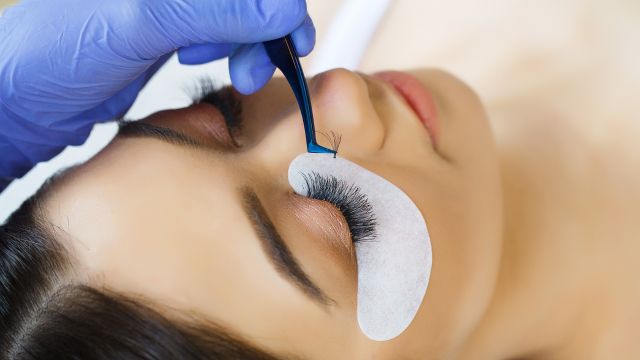
Want to get started in the beauty industry and learn how to apply eyelash extensions? Our Lash Stylist Training program teaches you the classic 1:1 technique step by step—in a practical, easy-to-understand way, with personalized guidance. Whether you’re new to the beauty industry or turning your hobby into a career, this foundational training provides a solid foundation for your work as a lash stylist.
What You’ll Learn in the Training Program
Classic 1:1 technique —professional eyelash extensions step by step
Hygiene & Safety —the highest standards for your clients
Materials – eyelashes, adhesive, tools, and care products
Adhesive technique – safe application and perfect adhesion
Styling options – natural looks and personalized customization
Hands-On Training – Working with Real Models
Who is this training for?
Beginners in the beauty industry who want to launch their professional careers
Beauty enthusiasts who want to turn their hobby into a career
Estheticians who want to expand their services
Self-employed individuals planning to open their own lash studio or offer mobile services
Course Structure, Modules & Locations
The training program combines a solid foundation of basic knowledge, beauty expertise, and technical skills. It includes a basic module on beauty skills, an e-learning module on anatomy and hygiene, and the specialized module on eyelash extensions using the 1:1 technique.
You’ll complete the theory portion flexibly via e-learning, while the practical training takes place in person at one of our locations in Vienna, Linz, Graz, or Innsbruck —working on real models and receiving personalized feedback from experienced trainers.
Your Career as a Lash Stylist
After graduation, you can work independently (once you’ve obtained the appropriate business license)—in your own studio, on the go, or from home—or as an employee at beauty salons, cosmetic institutes, and wellness centers.
You can then pursue specialized further training, such as volume techniques, Mega Volume, or specific styling techniques. Your earning potential depends on your experience, location, salon concept, and client base—and as you gain more experience, you’ll be able to flexibly manage your work hours and workload.
What Makes This Training Program Special
Hands-on: You’ll work on real models, not just practice heads
Flexible: E-learning + in-person classes—you learn at your own pace
Comprehensive: foundational knowledge in anatomy & hygiene plus beauty techniques
Personalized: small groups, individual guidance
Your Certification
Upon successful completion, you’ll receive your certificate as a lash stylist —proof of your professional qualification and the basis for registering your business.
Available inmultiple languages upon request
Flexible access —available anytime for free on the online campus
Exclusively printed —as a high-quality certificate on special paper
Quality-assured —certified according to EN ISO 9001 and Ö-Cert
Here’s what you need to get started
Online or written registration
No special prior knowledge required—an interest in beauty and personal care is enough
Minimum age 18 (under 18 with written consent from a parent or guardian)
For the in-person phase: Travel to Vienna, Linz, Graz, or Innsbruck is possible
Do you have specific questions about the training program?
We’d be happy to advise you personally—by phone, email, or chat, including on the topic of business licensing. Ask us your question now—no obligation and free of charge.
Online Inquiry
Legal Notice Regarding Self-Employment
Upon completion, you can immediately apply your skills in a salaried position. To work as a self-employed eyelash extension specialist, you’ll need the appropriate business license (e.g., cosmetology, limited to eyelash extensions), depending on the state.
The specific services you’re permitted to provide as a self-employed professional after completing your training depend on the applicable legal regulations and the exact scope of services you offer. Therefore, before registering a business or starting self-employment, please check with the relevant authority or chamber of commerce to determine which requirements apply in your specific case. Each graduate is personally responsible for practicing the profession in compliance with the law.
Course Content - What You'll Learn During the Training Program
Extent of learning
347 E |
Volume
BKZ
200
Beauty competence
ATH
20
Anatomy & Hygiene
PL
72
Presence | Self-study
RE
10
Literature research
TE
30
Practical realization
AE
15
Additional tasks & examinations
Our training programs are generally eligible for funding. The relevant funding agency will determine whether your funding application is approved.
We’re happy to help you gather all the necessary course information you’ll need for your funding application.
Of course, we’ll be there to advise you throughout the entire process and guide you from your initial inquiry all the way through the submission of your application. Contact us—we’ll make sure you’re as well-prepared as possible!
Here you'll find a detailed overview of all the modules, subjects, and chapters included. Explore the entire structure and scope of the program and get a clear understanding of the content covered.
Module Beauty competence
Skin theory
When we talk about skin , most people first think of skincare products, make-up or their own reflection in the mirror in the morning. But the skin is much more than just our outer covering. It is the largest organ in our body, our protective shield, a sensory organ and an expression of our health.
In skin science, you will learn about the anatomical structure of the skin and its individual layers. You will learn how it works, what tasks it performs and why it sometimes reacts sensitively to external influences. You will learn how to recognize different skin types and understand which skincare and make-up products are suitable for which skin type. Another important part of the course is how to deal with skin irritations and allergies. You will learn how to recognize allergic reactions, how to deal with them responsibly and how to select products that support the skin instead of burdening it.
This practical unit helps you not only to see the skin, but to really understand it. This will enable you to apply type-appropriate make-up that highlights rather than conceals - while keeping the health and well-being of your customers in mind.
Hygiene & workplace organization
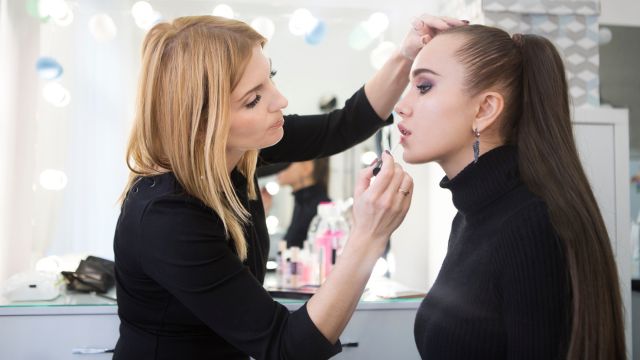
In make-up artistry, cleanliness is not a minor matter, but an essential part of professionalism. In the subject of hygiene and workplace organization, you will learn how to create a hygienic, safe and trustworthy work area. First, you will deal with the basic hygiene stages. Cleaning, disinfection and sterilization. You will learn which of these measures are necessary in everyday make-up work and when they should be used. This includes how to clean and disinfect brushes, sponges, palettes and tools correctly to prevent skin irritations and infections.
Another focus is on correct hand washing and personal hygiene routines. You will learn how to keep contact surfaces clean, remove products hygienically and prevent the transmission of germs. This also includes careful handling of make-up, creams and liquid products to ensure their quality and safety.
The overall impression of the workplace is just as important: a well-organized table, clear processes and a quiet, clean work area convey professionalism and confidence. You will learn how to arrange your materials clearly, prepare consumables and arrange your set so that you can work efficiently and tidily.This subject will give you the skills to apply make-up not only beautifully, but also responsibly and hygienically - a prerequisite for quality, safety and a professional appearance.
Material science
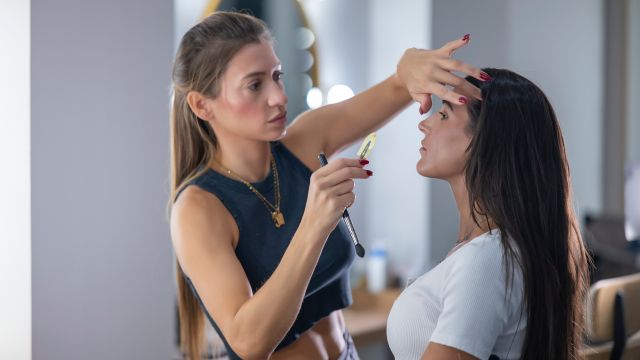
In materials science, you will learn about the most important tools of the trade . Before you can create make-up, you need to know which materials to work with and how to use them correctly, and you will learn about different brushes and tools, including foundation and eyeshadow brushes as well as spatulas, eyelash curlers and sponges. You will learn which shape and texture of a brush creates which effect and which brush is best for applying creamy, powdery or liquid textures. Because every product can only be applied beautifully if the right tool is used.
You will also take a closer look at different make-up textures . Powder, cream, gel, liquid and stick products. You will learn which textures combine well with each other, how they behave on the skin and how to apply them so that they look natural and last a long time. This also includes how to remove products correctly in order to use them hygienically and sparingly.
Another focus is the correct handling of the material. You will practise how to clean brushes, store products and prepare your work set so that you can work efficiently, cleanly and professionally, and the aim of this unit is for you to not only know your tools, but to master them. This means that your make-up is not left to chance, but is created with precision, feeling and technical confidence.
Color theory
Colors are omnipresent: in our reflection in the mirror, in nature, in clothing and make-up. But only when we understand their effect on people and know how they relate to each other can we use them consciously. This is exactly where color theory comes in.
To begin with, you will get to know the color wheel. It shows how colors are related to each other and which combinations have a harmonious or contrasting effect. Whether warm or cool, soft or strong - every color carries a certain mood . You will learn how these moods are used in make-up to create radiance, freshness or depth.
In the next step, you will focus on color analysis. You will observe the skin undertone, eye color and hair structure in order to recognize which color nuances make a face appear lively. It's about noticing differences that seem inconspicuous at first glance, but play a major role in the overall picture.
In the practical part of the type consultation, you will get to know the classic color types, such as the spring, summer, autumn and winter types. Step by step, you will learn how to clearly classify people and choose suitable make-up colors. The aim is to choose colors not just because they look "beautiful", but because they emphasize the natural personality. at the end of this unit, you will not only have theoretical knowledge, but also a trained eye. You will develop a feel for which shades harmonize in make-up and how you can use color in a targeted way to create a look that is lively, harmonious and expressive.
Facial analysis
How does a face change when light and shadow are used in a targeted way? This is exactly where facial analysis comes in: it is about consciously perceiving proportions and understanding the influence of make-up on the shape of the face. You will learn to recognize and distinguish between different face shapes such as oval, round, angular, heart-shaped or long. This is the basis for working specifically with light and shadow later on.
The aim of any make-up design is to create harmonious and balanced proportions. In make-up artistry, the oval face is considered ideal, as its lines appear soft and even. With the help of contouring and highlighting techniques , you can visually approximate other face shapes to this ideal.
An important part of the unit is taking a close look at individual parts of the face. You analyze the distance between the eyes, the shape and height of the eyebrows, the proportions of the forehead, cheeks and chin as well as the lines of the bridge of the nose. The shape of the lips and jawline also play a role. All these details determine how a face looks: soft, striking, open or rather compact.
Train your eye for subtle differences and develop a confident, professional sense of proportion. The result is make-up that emphasizes your personality and shapes your overall appearance.
Customer-oriented work in the beauty industry
The beauty industry is not just about applying make-up, but also about meeting people. In customer-oriented work, you will learn how to communicate professionally, respectfully and clearly with customers. You will learn how to recognize wishes, correctly assess expectations and find out what the other person really needs by asking specific questions. Language is a key aspect of this: technical terms are helpful in the classroom, but can quickly become confusing when talking to customers. You will therefore learn to explain content in a way that is easy to understand without losing your expertise.
One sensitive topic is how to deal with skin blemishes, scars or signs of ageing. Here it is important to remain respectful and empathetic. Instead of emphasizing problems, the focus is on demonstrating ways to accentuate existing beauty. You will practise how to give honest advice without offending and how to give customers a positive feeling .
You will also be given tools for dealing with uncertainty, dissatisfaction or difficult conversational situations : How do I stay calm? How do I formulate feedback in an appreciative way? How do I professionally steer a conversation back to a common solution? This subject strengthens your communication skills and makes you confident in direct contact. You will not only appear as a make-up artist, but also as a person of trust who sees people, takes them seriously and accompanies them professionally.
Module Anatomy & hygiene - basics for eyelash stylists
Medical basics & anatomy
A precise look at the biological basics will not only make your work as a lash stylist safer, but also much more professional. In this subject, you will deepen your knowledge of the structure of the eye and all the structures that are relevant to the application of lash extensions. On this basis, you will be able to make better decisions later on, recognize risks at an early stage and advise your clients competently.
You will study the anatomical layers of the eye, the eyelid apparatus and the interaction between the conjunctiva, cornea and tear film. Particular attention is paid to the natural protective mechanisms - from blinking to tear production - and how these can be influenced by extensions or adhesives. The eyelashes themselves are also analyzed in detail. Structure, thickness, natural curvature and the different growth phases (anagen, catagen and telogen phase) form the basis for a type-appropriate and gentle extension.
The subject is rounded off by an examination of the cranial and facial anatomy, as this is crucial for subsequent styling planning. You will learn to classify different eye and eyelid shapes and understand their significance for mapping, styling and application. The practical benefits are always at the forefront: the better you know the anatomical requirements, the safer, more precise and healthier your work will be - for you and your clients.
Dermatology & skin reactions
When you work on eyelashes, the first glance at the skin often determines how safe and pleasant the treatment will be for your client. In dermatology and skin reactions, you will learn how to accurately assess different skin types and recognize sensitive skin at an early stage. You will deal with typical reactions such as redness, swelling or areas of dryness and understand which signs indicate allergies or intolerances.
Another focus is on real case studies from the lash area: from mild irritations to allergic reactions to adhesives or patches. You will learn how to assess such situations safely, communicate correctly and act responsibly. This will give you the specialist knowledge you need to advise clients professionally and carry out every treatment in a dermatologically sound manner.
Pathology & contraindications
In this module, you will delve deep into the medically relevant diseases of the eye and eyelid area . This knowledge is essential for working safely and responsibly as a lash stylist. You will learn to correctly classify typical abnormalities such as inflammation, infections, functional disorders and structural changes to the eyelid, conjunctiva, cornea or lacrimal gland and assess their impact on possible treatment.
A central component is the recognition of clear contraindications. When should treatment not be carried out under any circumstances? When should caution be exercised? And how do you communicate this professionally with the client? You will develop a trained eye for risk factors, understand the underlying pathological processes and learn how to quickly identify warning signals.
Building on this, you will receive a practical decision-making guide that will lead you step by step through the assessment - from the first visual inspection to the decision as to whether an extension can be carried out or whether it makes sense to refer the patient to a specialist. This specialist knowledge strengthens your confidence, protects your customers and forms the basis for responsible work in everyday studio life.
First aid & emergency management
If something suddenly goes wrong during an eyelash treatment, every second counts - this is exactly where this subject comes in. You will learn how to act calmly and professionally in such situations, regardless of whether an allergic reaction, acute irritation or unexpected adhesive contact occurs. The aim is for you to be able to recognize typical emergency situations, assess them correctly and initiate appropriate immediate measures.
You will deal with the most common complications in the lash studio - from harmless but unpleasant irritations to serious hypersensitivities. This is not just about theory, but about practical scenarios from everyday studio life. You will learn how to make structured decisions and communicate in a customer-oriented manner. In this way, you will develop the routine you need to remain confident in tricky moments and always protect your customers' health in the best possible way.
Hygiene and occupational safety eyelash stylists
A safe and hygienic working environment is the basic prerequisite for professional lash styling and also your strongest quality feature. In this subject, you will learn how to minimize risks, prevent infections and reliably protect your clients.
You will deal with the basics of hand hygiene, the professional disinfection of tools and surfaces and the safe handling of products and materials. You will also learn when sterilization is relevant and how to correctly classify various hygiene measures. The aim is to provide you with clear procedures that you can apply consistently in your everyday studio life and that will significantly strengthen your professional image.
Using practical examples and clear standards, you will develop a feel for what a hygienic workplace looks like, how it is prepared and how you can ensure safety and cleanliness throughout the treatment. This subject lays the foundation for professional lash work: responsible, safe and hygienic.
Module Eyelash extension 1:1 technique
Theory & basics - eyelash extensions
A solid foundation is the key to a professional lash career - and this is exactly where this subject comes in. You will learn the most important theoretical principles that will make your future work precise, safe and customizable. You will develop a feel for how different lash types, lengths and curvatures work and how to derive coherent styling decisions from this.
Another key area is the anatomy and growth cycles of natural eyelashes. This knowledge will help you to work responsibly and optimize the durability of your sets. The module is supplemented by the basics of hygiene and workplace set-up so that you can work cleanly, safely and professionally right from the start. Customer consultation, style selection, contraindications and correct forceps guidance are also part of this comprehensive introduction and will prepare you optimally for the practice.
Material science & basic technique - eyelash extensions
In this subject, you will delve step by step into the technical basics of professional eyelash extensions. You will learn about the different materials, understand how glue is formulated and how it reacts, and develop a confident feel for the correct use of tools and products. A central focus is on the perfect preparation of natural lashes. Because only a thoroughly cleaned, correctly degreased and carefully analyzed starting base guarantees a long-lasting and gentle result.
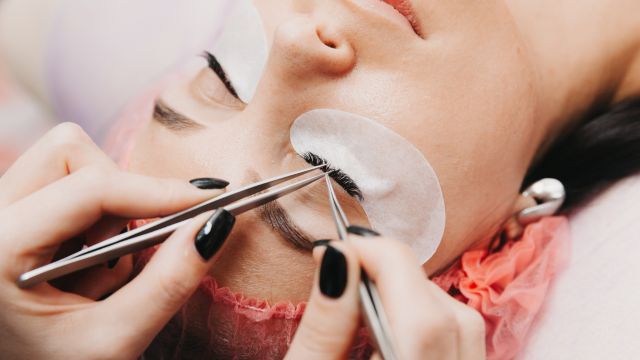
You will practise the correct patch application, the precise isolation of individual natural lashes and the safe application of individual extensions. You will also learn about lash direction and the basics of lash mapping in order to create specific shapes, openings and effects. Using a practice head, you will apply what you have learned in practice and develop an initial feeling for the rhythm, stability and accuracy of your hand movements. This subject forms the technical foundation on which all other lash techniques are built. It is clearly structured, practice-oriented and perfectly suited to developing your skills cleanly and professionally right from the start.
Practice on the model - Classic Set
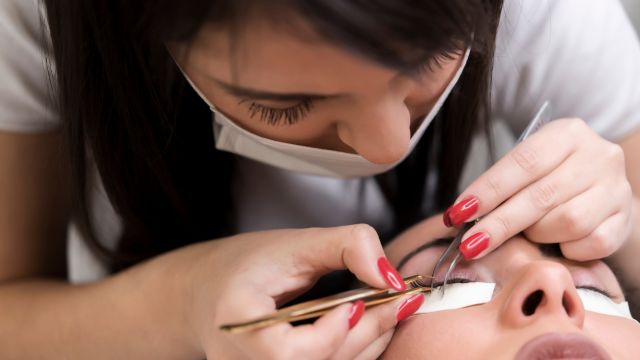
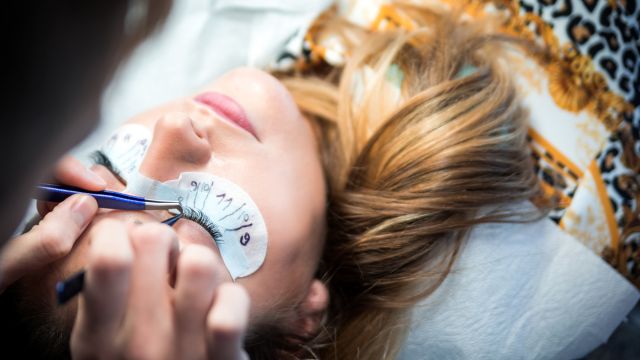
For many, working on a Classic Full Set on a real model feels like the first real step into the professional life of a lash stylist. In this course, you will put your previously acquired knowledge into practice: you will work on a complete Classic Full Set on your own model for the first time - under professional guidance and with intensive supervision. The aim is to gain confidence in the application, to implement clean isolations and to achieve an even, natural-looking result.
At the beginning, you will see a complete demonstration by the trainer, in which every step is explained in a comprehensible manner - from preparation and correct alignment of the lashes to the perfect placement of individual extensions. You will then work independently on the model while you are continuously corrected, supported and individually coached. In this way, you will develop a feeling for speed, technique and precision that you will need for your future work.
Refill, correction & finishing
After the first complete sets, the real art of eyelash extensions begins: neatly filling in, optimizing and touching up a wide range of results for clients. In this subject, you will learn how to safely remove outgrown extensions, professionally close gaps and correct incorrect applications. You will learn which factors improve durability, how to create clean transitions and why structured work processes are crucial for a lasting, high-quality result.
In the next step, you will deepen your practical skills: you will practise efficient refill techniques, learn to recognize typical problem areas and develop solutions for individual challenges in everyday studio life. At the same time, you will sharpen your eye for detail, as precise precision work is the basis for a natural, even and long-lasting result. This subject concludes the technical part and prepares you to work confidently, safely and with a focus on quality with regular customers.
What career opportunities do I have as a lash stylist?
As a qualified lash stylist, you can work independently in your own studio, be employed in beauty and cosmetics studios, offer mobile services for clients at home or work in wellness hotels and spas. The demand for professional eyelash extensions is continuously high, as many customers appreciate the long-lasting effect and book regular refill appointments.
As a self-employed person, do I need a business license for eyelash extensions in Austria?
Yes, for the independent practice of eyelash extensions in Austria you need a business license "Cosmetics" limited to eyelash design. This generally requires a qualification examination or equivalent proof. Registration is carried out at the responsible magistrate or district authority. The FlexyFit Academy will be happy to assist you with the legal steps and inform you about the necessary requirements.
What are the earning opportunities as a lash stylist?
The earning potential as a lash stylist is attractive and depends on factors such as experience, location, customer base and working methods. If you are employed, you will receive a regular salary with social insurance. Self-employed lash stylists benefit from flexible pricing and regular refill appointments, which provide a predictable income. The earning potential is particularly good in urban areas and when demand is high.
Are there further training opportunities after the basic training?
Yes, after the Basic training you can continue your education with the Lash Stylist Expert training and learn volume techniques, Russian Volume, Mega Volume and special styling techniques. These specializations significantly expand your range of services and enable you to earn higher fees. Training courses on new trends, products and techniques will also keep you up to date and increase your appeal as an expert.
What do I learn in the Lash Stylist Basic training?
You will learn the classic 1:1 eyelash extension technique, in which each artificial eyelash is individually bonded to a natural eyelash. The training includes theory on material science, hygiene, anatomy and the growth cycle of eyelashes as well as intensive practice with tweezers, bonding technique, styling planning and customer advice. You will train on real models and learn refill techniques, error correction and professional aftercare for long-lasting results.
What is the 1:1 technique for eyelash extensions?
The 1:1 technique is the classic method of eyelash extension, in which a single artificial eyelash is glued to a natural eyelash. This technique creates a natural, elegant look with more length and density. It is gentle on the natural lashes and is particularly suitable for customers who want a subtle effect that is suitable for everyday use. The 1:1 technique is the basis for all other volume techniques.
Can I do the training alongside my job?
Yes, absolutely! The flexible structure with e-learning modules and selectable attendance dates allows you to learn on the job. You can work through the theory at your own pace and complete the practical units at weekends or by arrangement. Lifelong access to all learning materials gives you maximum flexibility. Many successful graduates have completed the course alongside their main job.
What requirements do I need for the Lash Stylist training?
You need to be at least 18 years old and interested in beauty and cosmetics. No previous school knowledge, high school diploma or experience in eyelash extensions required. For younger participants, a written declaration of consent from parents or legal guardians is required. The course is suitable for beginners and advanced students. A steady hand, patience, precision and pleasure in dealing with customers are important. The training systematically teaches all techniques from the ground up.
Is the training also suitable for career changers?
Yes, absolutely! Many successful lash stylists come from other professions and have turned their passion for beauty into a career. The flexible training with online modules and face-to-face courses allows you to learn on the job. Life experience and customer orientation from other industries are valuable skills. The training teaches all techniques systematically - perfect for a career change into the beauty industry.
Do I have to bring my own materials or models?
No, depending on the package you choose, you will receive professional starter kits with eyelashes, glue, tweezers and all the necessary materials. Professional tools and products are available for the practical face-to-face sessions. Please bring your own models, for example from your friends or family. However, the academy will be happy to help you find suitable models for your practical sessions.
Is there a minimum age for the models?
Models should be at least 18 years old, as the treatment requires precision and the models have to lie still for a long time. Models under the age of 18 require the written consent of their parents or legal guardians. Make sure that your models do not have any contraindications such as eye infections, allergies to adhesives or very sensitive eyes.
Get in touch with us. We're happy to help.
Up to 100% of course fees may be covered!
Get funding for your continuing education and get a head start now. We’ll advise you on your funding options— free of charge and with no obligation —either by phone or in person.
Top ratings
Get your free trial now. Try it first, then study!
Great training and super nice people. You can tell how much emphasis is placed on conveying the necessary knowledge to the course participants in an understandable way. I was even kindly allowed to take a course completely free of charge after there were somewhat problematic and disruptive participants in my group. I will 100% take more courses with you in the future because learning is extremely fun, especially thanks to the friendly staff!
The entire flexyfit team is extremely friendly, prompt and helpful. The lecturers are competent and respond to the course participants. All learning materials were provided clearly and in sufficient detail. The additional videos mean there is something for every type of learner. All in all, the training and exam went well. I can definitely recommend flexyfit and will be happy to book and recommend further training courses with you again!
I really enjoyed training to become a B-license fitness trainer there. The teaching materials provided are great and flawless. I learned a lot of new things there and always enjoyed what I was doing. The team is great and is always there for you if you have any questions!
The best thing that could have happened to me is this academy. Access to participants is excellent. All employees are very competent, very professional and very friendly. A person can learn so much that it is indescribably good. I would recommend it to everyone. When I arrived in Austria I was looking for something like this and luckily I found this academy and signed up for the course without hesitation. Everything we get in return is worth 100 times more than what we pay. Indescribable experience, indescribable people, once again and 1000 times I say: Thank you for everything, thank you for this indescribable experience. THANK YOU, THANK YOU, THANK YOU
I was able to learn a lot of new things as part of my training at the Flexyfit Academy and was able to take on a new, demanding challenge with my chosen course. The structure of the training courses is very understandable and clear, so that you can master the distance learning course on your own without any problems. If there were any questions, ambiguities or isolated problems, the Academy team was always quick to help and we could always find a common solution. Here and there I would have liked a little more practical relevance. Nevertheless, I always felt very comfortable, had great speakers and with my degree as a qualified medical sports coach, many new doors are now open to me :)
I was able to complete my chosen course very well and quickly. The team is very quick and courteous and you are always offered a good solution if there are any uncertainties. I will book again when I get the chance and can recommend the academy!
Training at Flexyfit was the best decision; I learned a lot about sport and nutrition. The support was always there, very competent and nice staff/trainers. I will definitely recommend the Academy. Especially thanks to Melanie, Sarah and Daniel
A really demanding training, great material, the videos are great, the script complements it well. The structure is very sensible and you can find your way around easily. I just find the proportionality of the yoga license compared to the Pilates license unfavorable. Many more exams are required for the yoga license. The final exam for the yoga license is also significantly more difficult; in my opinion, questions need to be reconsidered.
Thank you Flexyfit - very competent, great documents and support. The practical exercises in Innsbruck were TOP - thank you Matthias. I can only recommend. I will continue. 😉
Very high quality training! The Flexyfit Academy tried very hard to answer and explain in detail all the questions that arose during the training. Can I definitely recommend!
Absolutely satisfied! I chose distance learning because I couldn't be there in person, and I highly recommend it! Everything worked smoothly, contact was quick and a solution was always found if there were any problems. The team is super friendly and the profile overview is very clear. A small suggestion: It would be helpful if users who are inactive for a long time received a reminder or if an app were available so that they could learn on the go.
I was very positively surprised by the training! The distance learning course was very uncomplicated and the service was also perfect! The materials were very good and I learned a lot! I can recommend it with a clear conscience! Update 2024: Now that I have completed my third training course, I can only confirm my first assessment! As a full-time worker, it was a great opportunity for me to do part-time training that corresponds to my passion! I regularly read books on the subject of sport and health, and I have to say that the training courses everywhere are very good and up to date! That surprised me somewhat positively! =) Thanks to Flexyfit I can now turn my hobby into a career! So another clear recommendation from me!
A great training program that is offered there, with a very friendly and competent team. It was a pleasure to learn with your very well prepared videos and scripts. I'm already looking forward to my next training. I'm already looking forward to my next training. I can only highly recommend it, I definitely give it 5 stars.
I did the children's trainer training at Flexyfit. From the very beginning you receive great support and the communication is perfect. Everyone is hardworking and friendly. Everything worked perfectly online and on site. It definitely won't be the last training or workshop I do with you. I am looking forward to meet you again. Thanks to Daniel, Melanie and Beno :-)
Flexible learning made easy :) Very competent and friendly. Very quick answers to questions and I would recommend Flexyfit to anyone who wants to do training in the sports sector 💪🏾
I have already completed two correspondence courses and I can say that continuing my education with the Flexyfit courses is simply fun. You learn at your own pace and are flexible in terms of time and location.
I have now completed two training courses at the Flexyfit Academy and would do it again in a heartbeat. If possible, I recommend the face-to-face courses, they simply result in a really exciting exchange. Service and support are top and all needs are taken into account. Mini drawback: the online learning system is not entirely straight-forward, but you get used to it quickly.
➕ Good institute with a great online academy and a wide range of training options. I have already completed 3 training courses there. I like the modular structure, so that various basic modules can also be used for other training courses. ➖ Unfortunately, the price structure has been adjusted so that (basic) modules that have already been completed can no longer be deducted from the price. A pity.
I have already completed two training courses at the Flexyfit Sports Academy and am completely satisfied! A super nice team, the organization and documents are top - can only be recommended ;)
Great team! The organization of the training is uncomplicated and very competent. The speakers are professional and experienced and bring a good mix of theory and practice. Overall, only recommended.
Incredibly friendly team, always available, incredibly helpful and trying very hard to find a solution for everything. The learning videos and scripts are well prepared and easy to follow. I was personally able to learn the most from the really good tutors in the practical part. Overall, you get a very good overview and insight into the relevant subject areas. The course also showed me personally where I would like to orient myself further and which areas I would like to deepen in depth. In addition: well-equipped teaching halls and very attractive rooms - everything is very inviting and familiar. Every now and then you see someone from the team just coming back from running or the weight room - that makes you feel right away! (Training: Dipl. Medical Sports Supervisor)
I am very satisfied, I had a TOP professor (which is not a given these days). I think it's great that as a nutrition trainer you also have to learn anatomical subjects (it's called sports competence). The support was great too. Very helpful team! All in all I'm very satisfied.
Super fast and nice service! Every question answered immediately and in a pleasant and appreciative way! What would be better would be more time for face-to-face teaching!
My training at Flexyfit Sport Academy... I received the best support and advice from the most competent, friendly and successful team. Many thanks to the top team (office, speakers and coaches). It was a great pleasure for me to walk with you on the path to realizing my own goals.
For all coaches who want to absorb detailed knowledge in one or more areas. I'm just very enthusiastic about the Flexyfit Sport Acamedy and felt like I was in great hands with the trainers. The enthusiasm was so palpable even during the Zoom workshops. Regardless of whether you prefer to read the script or watch the accompanying videos, there is a medium for every type of learner and the learning material is extremely well prepared. And should any questions arise, the “Customer Service” is there super quickly and responds after a few hours or is there to give advice.
Simply great and very, very nice. All the employees from the Flexyfit Sports Academy team are so nice, courteous and helpful. Help is available within minutes to an hour if questions arise while learning online. It's a lot to learn, but it shows that trainer training, no matter the subject, requires a certain foundation and I personally think it's exactly right. For me, this shows quality and that not every self-proclaimed professional is also a connoisseur and expert. Be careful with who and where you train! It is our body and every person should pay attention to it and have the “right” trainer with specialist knowledge at their side. I can only recommend Flexyfit Sports Academy. Many thanks to all Flexyfit Sports Academy employees, you are great!!!!!
Incredibly helpful staff! Even worked especially for me on public holidays and made appointments, very accommodating and supportive. Absolutely recommended and happy :)
The training (Dipl. Health Fitness & Personal Trainer) is really great, if I had a problem I was always helped very quickly. The videos in conjunction with the scripts are very helpful and well designed, the training overall is well structured, including the intermediate exams, practice tasks, etc. This consolidates what you have learned even better! The lecturers are also very competent and my two examiners were very friendly and relaxed, so there was no reason to be nervous. All in all highly recommended!
Excellent training opportunities and outstanding experiences: I had the pleasure of completing three different training courses at the Flexyfit Sports Academy, and it is without a doubt a first-class facility for the further development of sporting skills. Here are my personal reasons why I find the Flexyfit Sports Academy so exceptional: Outstanding Trainers: The trainers I have met are first class. Everyone has extensive knowledge and experience in their respective areas and always responds to the individual needs of the participants. The training was tailor-made for me and extremely effective. Diverse training offers: The Academy offers a wide range of training suitable for various fitness goals. No matter whether you are striving to build strength, flexibility or endurance, you will find the right program here. State-of-the-art facilities: The facilities at Flexyfit Sports Academy are first class and equipped with state-of-the-art equipment. They ensure an optimal training experience and enable participants to get the best out of themselves. An inspiring community: The atmosphere in the academy is motivating and supportive. You feel like you are part of a committed community that has a common goal: making progress in sports and fitness. Excellent value for money: The quality of the training you receive is in excellent relation to the cost. It is an investment for health and well-being. I can fully recommend the Flexyfit Sports Academy. The training I completed here exceeded my expectations. If you are looking for a place where you can achieve your sporting goals, this is the place. The Academy deserves top marks and I look forward to further training in the future.
The training to become a qualified fitness trainer was very instructive and interesting. The modules are carefully structured and go from theory to practice. The whole training was uncomplicated. Service perfect, I can only recommend the Academy. Melanie and Sarah thank you for everything! Simply great!
You will shortly receive a newsletter confirmation email to:
Please also check your SPAM folder
We wish you a flexytastic day
* Required fields
You will receive our training brochureby email.
Thank you
You will shortly receive an email with your download link to the brochure at:
Please also check your SPAM folder
We wish you a flexytastic day
The protection of your personal data is of particular concern to us. I agree that my details will be used for contacting me. I have read the privacy policy and agree to it.
Quality You Can Count On
More than
43.025Satisfied graduates - fromGreat Britain
and
19 other countries, have placed their trust in us since 2007.
Course Contents
Details
About cookies Cookies are small text files that are used by websites to enhance the user experience.
The law allows us to store cookies on your device if they are strictly necessary for the operation of this website. For all other types of cookies, we need your consent. This website uses different types of cookies. Some cookies are set by third parties that appear on our pages. You can change or withdraw your consent at any time via the cookie statement on our website.
In our privacy policy you can find out more about who we are, how you can contact us and how we process personal data.
6
Necessary cookies help to make a website usable by enabling basic functions such as page navigation and access to secure areas of the website. The website cannot function properly without these cookies.
This cookie is used to distinguish between humans and bots. This is beneficial for the website to generate valid reports on the use of its website.
_cfuvid
This cookie is part of Cloudflare's services - including load balancing, providing website content and providing a DNS connection for website operators.
This cookie is used internally by the owners of the website when content is uploaded or renewed on the website.
XSRF-TOKEN
Ensures browsing security for visitors by preventing cross-site request forgery. This cookie is essential for the security of the website and the visitor.
3
Preference cookies allow a website to remember information that affects the way a website behaves or looks, such as your preferred language or the region you are in.
Registers a unique ID that is used to generate statistical data on how the visitor uses the website.
_ga_#
Collects data on how often a user has visited a website, as well as data for the first and last visit. Used by Google Analytics.
15
Marketing cookies are used to follow visitors on websites. The intention is to show ads that are relevant and engaging to the individual user and therefore more valuable to publishers and third party advertisers.
Contains the expiry date for the cookie with the corresponding name.
_uetsid
Used to track visitors across multiple websites to present relevant advertising based on the visitor's preferences.
_uetvid_exp
Contains the expiry date for the cookie with the corresponding name.
MUID
Widely used by Microsoft as a unique user ID. The cookie enables user tracking by synchronizing the ID in many Microsoft domains.
MSPTC
This cookie registers visitor data. The information is used to optimize the relevance of advertising.
_uetvid
Used to track visitors across multiple websites to present relevant advertising based on the visitor's preferences.
_uetsid
Collects data on visitor behavior across multiple websites to present more relevant advertising - This also allows the website to limit the number of times the same advertisement is displayed.
_uetvid
Used to track visitors across multiple websites to present relevant advertising based on the visitor's preferences.
Used to track whether the visitor has shown interest in certain products or events on multiple websites and how the visitor navigates between websites - This is used to measure advertising effort and facilitates the payment of referral fees between websites.
IDE
Used by Google DoubleClick to register and report the user's actions on the website after viewing or clicking on one of the provider's ads, with the purpose of measuring the effectiveness of an advertisement and displaying targeted advertising to the user.
pagead/1p-conversion/#/
Pending
test_cookie
Used to check whether the user's browser supports cookies.






 Course Plan
 BK
BK
 Registration











 Switch WhatsApp®"
And you will be forwarded directly to the WhatsApp® app.
Switch WhatsApp®"
And you will be forwarded directly to the WhatsApp® app.


