Sehr hilfsbereit bei Fragen, telefonischer Rückruf immer freundlich
vor 27 Tagen
Jede Frage wird schnell beantwortet und bestens erklärt, alles sehr unkompliziert!
10.07.2026
Die Flexyfity Academy ist so gut aufbereitet - die Videos, die Skripte, die Prüfungen - alles ist verständlich, gut strukturiert und es hat so viel Freude gemacht hier zu lernen. Bei technischen Problemen hat sich der Support innerhalb kürzester Zeit zurückgemeldet und ich habe mich stets bestens betreut gefühlt. Auch meine Prüfungsangst war schnell verflogen, weil die Prüfungsdozentin so nett gewesen ist. Ich freue mich schon jetzt auf weiter Kurse in der Academy und empfehle sie weiter.
09.07.2026
Super und unkomplizierter Service!
15.06.2026
Super Beratung, alles hat perfekt funktioniert. Sehr freundlicher und professioneller Service. Ich freue mich schon auf die Ausbildung und kann die Betreuung nur weiterempfehlen!
14.06.2026
Sehr höfliche und sehr schnelle Beratung.
19.05.2026
Ich bin mit Flexifit sehr zufrieden.
E-Mails werden immer schnell und hilfreich beantwortet und auch telefonisch bekommt man freundliche und kompetente Auskünfte.
Ich habe auch an den Kursen teilgenommen und fand die Kurse sehr gut organisiert und interessant.
Die Vortragenden waren professionell und hilfsbereit.
Insgesamt bin ich sehr zufrieden und kann Flexifit nur weiterempfehlen.
13.05.2026
Schnelle und unkompliziert Hilfe! Der Kontakt war immer außerordentlich hilfsbereit und freundlich.
24.04.2026
Super Kundendienst
21.04.2026
Fundierte Ausbildung, aussagekräftige Skripten und Videos, toller Support!
13.04.2026
Schnell und nicht aufwendig!
01.04.2026
Sehr umfangreiche und interessante Ausbildung.
Sehr nette und kompetente Referenten.
25.03.2026
Die Inhalte sind echt toll wie auch die Trainer. Es ist unkompliziert online eine Ausbildung neben Arbeit und Kindern zu verrichten.
Wenn eine Ausbildung dann wieder über flexifit
13.03.2026
Sehr nettes und kompetentes Team. Tolle Ausbildungen. Danke Euch 🙏🏽🫶🏽
06.03.2026
Bei Rückfragen zu einem Kurs, die ich über die Chat-Funktion gestellt habe, habe ich sofort Antwort bekommen und das Angebot für ein spontanes Telefonat. Da fühlt man sich gleich mal gut aufgehoben.
Nach dem Telefonat habe ich mich gut abgeholt gefühlt und zusätzlich alle besprochenen Punkte per Email schriftlich auch noch erhalten.
Großartig!! Das war der Auslöser, dass ich den Kurs auch sofort gebucht habe
14.02.2026
Kundenservice vorab zur Bestellung durch Melanie - sämtliche Fragen wurden umfassend und sehr rasch beantwortet
10.02.2026
Eine super tolle learning Plattform. Fragen egal welches Thema werden sehr schnell beantwortet.Note 1
Diploma visagist en opleiding visagist - twee diploma's, één opleiding
Je uitgebreide opleiding tot gediplomeerd visagist en visagist
Uw vraag is naar ons onderweg en we
zullen deze zo snel mogelijk beantwoorden zo snel mogelijk! We waren zo vrij en hebben
u een bevestiging per e-mail gestuurd naar:
Word gediplomeerd visagist & make-up artist – twee diploma’s in één opleiding
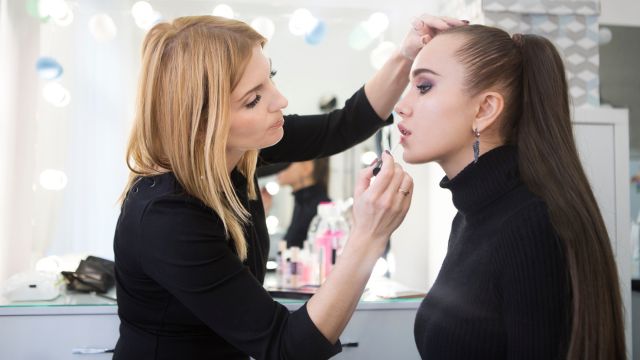
Met de gecombineerde opleiding tot visagist en make-upartiest doe je uitgebreide kennis op in één cursus – van de basisprincipes van visagie tot huidanalyse, kleuradvies en dag-, avond- en bruidsmake-up, tot special effects en professioneel werken op de set. Deze alles-in-één-oplossing combineert twee veelgevraagde beroepen en maakt van jou een veelgevraagde expert in de beautybranche – flexibel via blended learning, met theorie online en praktijk ter plaatse.
Twee beroepen, één opleiding
Deze gecombineerde opleiding brengt de volledige lesstof van beide afzonderlijke opleidingen samen en biedt je de meest uitgebreide kennis voor je start. Je behaalt twee erkende diploma’s in één opleiding en bespaart daarmee tijd en kosten ten opzichte van twee afzonderlijke opleidingen.
Door de dubbele expertise ben je breder inzetbaar op de arbeidsmarkt en kun je meer diensten aanbieden.
Opleidingsvormen & blended learning
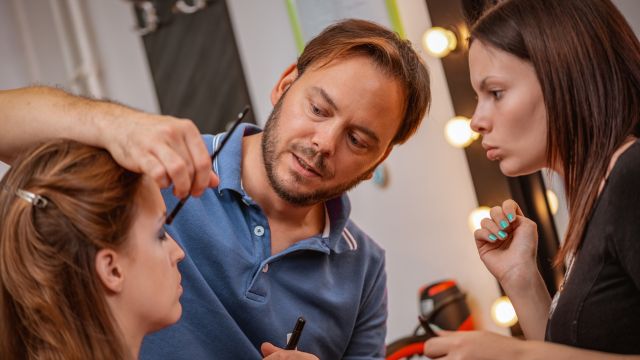
Klassikale cursus: intensieve praktijk in kleine groepen (4–10 deelnemers) op een van onze locaties in Wenen, Linz, Graz of Innsbruck – alle make-uptechnieken hands-on onder professionele begeleiding.
Blended learning: de basismodule ‘Beautycompetentie’ en de module ‘Anatomie’ volg je flexibel online via e-learning; de praktische modules vinden plaats als klassikaal onderwijs op de door jou gekozen locatie. Beide opleidingsvormen leiden tot hetzelfde erkende diploma.
Dit leer je tijdens de opleiding
Je verwerft het volledige spectrum van beide beroepen:
huidanalyse, kleuradvies & gezichtsanalyse
Dag-, avond- en bruidsmake-up
Professionele make-up- en correctietechnieken
Special effects en creatieve make-up
Professioneel werken op de set
Je carrièremogelijkheden
Met het gecombineerde diploma gaan er talrijke wegen voor je open in de schoonheidsbranche:
Zelfstandig ondernemerschap – eigen studio, mobiele diensten, tutorials, workshops
Waarom de gecombineerde opleiding?
Breder dienstenaanbod – van dagelijkse looks tot evenementenlooks, alles onder één dak
Groter concurrentievoordeel – duidelijk voordeel ten opzichte van specialisten in één vakgebied
Meer flexibiliteit – je bent niet beperkt tot één werkgebied
Betere verdienmogelijkheden dankzij een breder aanbod
Flexibele, rentevrije betaling in termijnen
Duur, afronding & certificering
Duur: 3–4 maanden (afhankelijk van het format en het leertempo)
Diploma: gediplomeerd visagist en make-up artist
Examen: theoretisch meerkeuze- en praktisch eindexamen
Certificering: internationaal erkend
Mogelijkheden voor bijscholing
Na de opleiding kun je je gericht verder specialiseren – bijvoorbeeld in:
Permanente make-up & microblading
Wimperverlenging & lash-styling
Haarstyling & kapperstechnieken
Beauty- & wellnessmanagement
Dit heb je nodig om aan de slag te gaan
Online of schriftelijke aanmelding
Geen speciale voorkennis nodig – interesse, passie en creativiteit zijn voldoende
Minimumleeftijd 18 jaar (jonger dan 18 jaar met schriftelijke toestemming van de wettelijke voogd)
Voor de contactfase: reis naar Wenen, Linz, Graz of Innsbruck mogelijk
Heb je concrete vragen over de opleiding?
We geven je graag persoonlijk advies – telefonisch, per e-mail of via de chat. Stel ons nu je vraag, vrijblijvend en gratis.
Online aanvraag
Juridische informatie over zelfstandig ondernemerschap
Zelfstandig ondernemerschap op het gebied van make-up – en met name wimperstyling – is, afhankelijk van het land, geregeld door het handels- of beroepsrecht. Vaak is een gereglementeerd beroep (bijv. decoratieve cosmetica) vereist, waarvoor doorgaans een bekwaamheidsexamen of een gelijkwaardig kwalificatiebewijs nodig is.
Ons diploma vervangt geen vergunning op grond van het bedrijfsrecht. We helpen je graag met informatie over de noodzakelijke stappen en tips voor het bekwaamheidsexamen. Totdat je de volledige bedrijfsvergunning hebt verkregen, kun je de vaardigheden die je hebt geleerd al toepassen in een studio of tijdens evenementen en zo werkervaring opdoen. Bindende informatie kun je verkrijgen bij de voor jou bevoegde bedrijfs- of beroepsinstantie; het is jouw verantwoordelijkheid om de werkzaamheden uit te voeren in overeenstemming met de geldende wettelijke bepalingen van jouw land.
Lesinhoud - Dit leer je tijdens de opleiding
Omvang van het leren
560 E |
Toepassingsgebied
BKZ
200
Schoonheidsexpertise
EL
240
eLearning | Zelfstudie
RE
30
Literatuuronderzoek
TE
60
Praktische realisatie
AE
30
Extra taken & examens
Onze opleidingen komen in principe in aanmerking voor subsidie. Of je subsidie wordt toegekend, wordt bepaald door de desbetreffende subsidie-instantie.
Wij helpen je graag bij het verzamelen van alle benodigde cursusinformatie die je nodig hebt voor je subsidieaanvraag.
Uiteraard staan wij je gedurende het hele proces met raad en daad terzijde en begeleiden we je vanaf de eerste aanvraag tot en met het indienen van je aanvraag. Neem contact met ons op – wij zorgen ervoor dat je zo goed mogelijk voorbereid bent!
Hier vind je een uitgebreid overzicht van alle modules, vakken en hoofdstukken die in de opleiding zijn opgenomen. Ontdek de volledige opbouw en omvang van de opleiding en krijg een duidelijk beeld van de behandelde onderwerpen.
Module Schoonheidsexpertise
Huidtheorie
Als we het over de huid hebben, denken de meeste mensen eerst aan huidverzorgingsproducten, make-up of hun eigen spiegelbeeld 's ochtends. Maar de huid is veel meer dan alleen onze buitenkant. Het is het grootste orgaan in ons lichaam, ons beschermende schild, een zintuiglijk orgaan en een uitdrukking van onze gezondheid.
In Huidkunde leer je over de anatomische structuur van de huid en haar afzonderlijke lagen. Je leert hoe de huid werkt, welke taken ze vervult en waarom ze soms gevoelig reageert op invloeden van buitenaf. Je leert hoe je verschillende huidtypes kunt herkennen en welke huidverzorgings- en make-upproducten geschikt zijn voor welk huidtype. Een ander belangrijk onderdeel van het programma is de juiste manier om met huidirritaties en allergieën om te gaan. Je leert hoe je allergische reacties herkent, hoe je er verantwoord mee omgaat en hoe je producten kiest die de huid ondersteunen in plaats van belasten.
Deze praktijkgerichte unit helpt je om de huid niet alleen te zien, maar ook echt te begrijpen. Dit stelt je in staat om bij het type make-up passende make-up aan te brengen die de nadruk legt op de huid in plaats van deze te camoufleren - zonder de gezondheid en het welzijn van je klanten uit het oog te verliezen.
Hygiëne en organisatie op de werkplek
In de visagie is netheid geen bijzaak, maar een essentieel onderdeel van professionaliteit. In het onderwerp hygiëne en werkplekorganisatie leer je hoe je een hygiënische, veilige en betrouwbare werkplek kunt creëren. Allereerst maak je kennis met de basisstappen van hygiëne. Reiniging, desinfectie en sterilisatie. Je leert welke van deze maatregelen nodig zijn bij het dagelijkse schminkwerk en wanneer ze moeten worden gebruikt. Je leert onder andere hoe je penselen, sponsjes, paletten en gereedschappen op de juiste manier reinigt en desinfecteert om huidirritaties en infecties te voorkomen.
Een ander aandachtspunt is het correct wassen van de handen en persoonlijke hygiëneroutines. Je leert hoe je contactoppervlakken schoon houdt, producten hygiënisch verwijdert en de overdracht van ziektekiemen voorkomt. Hieronder valt ook het zorgvuldig omgaan met make-up, crèmes en vloeibare producten om de kwaliteit en veiligheid ervan te garanderen.
De algemene indruk van de werkplek is net zo belangrijk: een goed georganiseerde tafel, duidelijke processen en een rustige, schone werkplek stralen professionaliteit en vertrouwen uit. Je leert je materialen overzichtelijk te ordenen, verbruiksmaterialen voor te bereiden en je set zo in te richten dat je efficiënt en netjes kunt werken. Dit vak geeft je de vaardigheden om make-up niet alleen mooi, maar ook verantwoord en hygiënisch aan te brengen - een voorwaarde voor kwaliteit, veiligheid en een professionele uitstraling.
Materiaalwetenschap
In Materiaalkunde leer je de belangrijkste gereedschappen van het vak kennen. Voordat je make-up kunt maken, moet je weten met welke materialen je moet werken en hoe je ze op de juiste manier gebruikt. Je maakt kennis met verschillende kwasten en gereedschappen, waaronder foundation- en oogschaduwkwasten, spatels, wimperkrullers en sponsjes. Je leert welke vorm en textuur van een kwast welk effect creëert en welke kwast het beste is voor het aanbrengen van romige, poederachtige of vloeibare texturen. Want elk product kan alleen mooi worden aangebracht met het juiste gereedschap.
Je neemt ook verschillende make-up texturen onder de loep. Poeder-, crème-, gel-, vloeibare en stickproducten. Je leert welke texturen goed met elkaar combineren, hoe ze zich op de huid gedragen en hoe je ze aanbrengt zodat ze er natuurlijk uitzien en lang blijven zitten. Dit omvat ook hoe je producten op de juiste manier verwijdert om ze hygiënisch en spaarzaam te gebruiken.
Een ander aandachtspunt is de juiste omgang met het materiaal. Je oefent hoe je kwasten schoonmaakt, producten opbergt en je werkset voorbereidt zodat je efficiënt, schoon en professioneel kunt werken. Het doel van deze unit is dat je je gereedschap niet alleen kent, maar ook beheerst. Dit betekent dat je make-up niet aan het toeval wordt overgelaten, maar met precisie, gevoel en technisch vertrouwen wordt gecreëerd.
Kleurenleer
Kleuren zijn alomtegenwoordig: in ons spiegelbeeld, in de natuur, in kleding en make-up. Maar pas als we hun effect op mensen begrijpen en weten hoe ze zich tot elkaar verhouden, kunnen we ze bewust gebruiken. Dit is precies waar de kleurentheorie om de hoek komt kijken.
Om te beginnen leer je het kleurenwiel kennen. Het laat zien hoe kleuren zich tot elkaar verhouden en welke combinaties een harmonieus of contrasterend effect hebben. Warm of koel, zacht of sterk - elke kleur heeft een bepaalde stemming . Je leert hoe deze stemmingen in make-up worden gebruikt om glans, frisheid of diepte te creëren.
In de volgende stap richt je je op kleuranalyse. Je observeert de ondertoon van de huid, de kleur van de ogen en de haarstructuur om te herkennen welke kleurnuances een gezicht levendig doen lijken. Het doel is om verschillen te herkennen die op het eerste gezicht onopvallend lijken, maar die een grote rol spelen in het totaalbeeld.
In het praktische gedeelte van het typeconsult maak je kennis met de klassieke kleurtypes, zoals het lente-, zomer-, herfst- en wintertype. Stap voor stap leer je hoe je mensen duidelijk kunt indelen en geschikte make-upkleuren kunt kiezen. Het doel is om kleuren niet alleen te kiezen omdat ze er "mooi" uitzien, maar omdat ze de natuurlijke persoonlijkheid onderstrepen, en aan het einde van dit onderdeel heb je niet alleen theoretische kennis, maar ook een getraind oog. Je ontwikkelt een gevoel voor welke kleurtonen harmoniëren in make-up en hoe je kleur gericht kunt gebruiken om een look te creëren die levendig, harmonieus en expressief is.
Gezichtsanalyse
Hoe verandert een gezicht als licht en schaduw gericht worden gebruikt? Dit is precies waar gezichtsanalyse om de hoek komt kijken: het doel is om verhoudingen bewust waar te nemen en de invloed van make-up op de vorm van het gezicht te begrijpen. Je leert verschillende gezichtsvormen herkennen en onderscheiden, zoals ovaal, rond, hoekig, hartvormig of lang. Dit is de basis om later specifiek met licht en schaduw te werken.
Het doel van elk make-up ontwerp is het creëren van harmonieuze en evenwichtige verhoudingen. Bij make-up artistry wordt het ovale gezicht als ideaal beschouwd omdat de lijnen zacht en gelijkmatig lijken. Met behulp van contour- en highlightingtechnieken kun je andere gezichtsvormen visueel benaderen tot dit ideaal.
Een belangrijk onderdeel is het van dichtbij bekijken van afzonderlijke delen van het gezicht. Je analyseert de afstand tussen de ogen, de vorm en hoogte van de wenkbrauwen, de proporties van het voorhoofd, de wangen en de kin en de lijnen van de neusbrug. De vorm van de lippen en de kaaklijn spelen ook een rol. Al deze details bepalen hoe een gezicht eruitziet: zacht, opvallend, open of eerder compact.
Train je ogen om subtiele verschillen te herkennen en ontwikkel een zelfverzekerd, professioneel gevoel voor verhoudingen. Het resultaat is make-up die je persoonlijkheid benadrukt en je algehele uitstraling vormgeeft.
Klantgericht werken in de schoonheidsindustrie
De schoonheidsindustrie draait niet alleen om het aanbrengen van make-up, maar ook om het ontmoeten van mensen. In klantgericht werk leer je hoe je professioneel, respectvol en duidelijk met klanten communiceert. Je leert hoe je wensen herkent, verwachtingen correct inschat en erachter komt wat de ander echt nodig heeft door gerichte vragen te stellen. Taal is hierbij een belangrijk aspect: technische termen zijn handig in het klaslokaal, maar kunnen snel verwarrend worden wanneer je met klanten praat. Je zult daarom leren om inhoud uit te leggen op een manier die gemakkelijk te begrijpen is zonder je expertise te verliezen.
Een gevoelig onderwerp is hoe om te gaan met huidoneffenheden, littekens of tekenen van veroudering. Hier is het belangrijk om respectvol en empathisch te blijven. In plaats van problemen te benadrukken, ligt de nadruk op het demonstreren van manieren om bestaande schoonheid te accentueren. Je oefent hoe je eerlijk advies geeft zonder te beledigen en hoe je klanten een positief gevoel geeft.
Je krijgt ook handvatten om om te gaan met onzekerheid, ontevredenheid of moeilijke dialoogsituaties : Hoe blijf ik kalm? Hoe formuleer ik feedback op een waarderende manier? Hoe stuur ik een gesprek professioneel terug naar een gezamenlijke oplossing? Dit vak versterkt je communicatieve vaardigheden en maakt je zelfverzekerd in direct contact. Je komt niet alleen over als visagist, maar ook als vertrouwenspersoon die mensen ziet, serieus neemt en professioneel begeleidt.
Module Make-up artiest
Dag make-up
Dagmake-up moet er licht en fris uitzien en je begeleiden in het dagelijks leven zonder kunstmatig over te komen. Eerst leer je de basis: je leert verschillende huidtypes herkennen, de huid correct voorbereiden en het gezicht opmeten zodat verhoudingen en highlights weloverwogen kunnen worden ingesteld. Een goede basis is cruciaal voor hoe natuurlijk en harmonieus het resultaat eruitziet.
Hierop voortbouwend creëer je natuurlijke make-up looks voor het dagelijks leven en op het werk. Je leert hoe je de teint, ogen en lippen kunt benadrukken zodat het gezicht er levendig uitziet zonder overdreven opgemaakt te lijken. Ook oogmake-up komt aan bod. Hoe maak ik de ogen op zodat ze duidelijk uitkomen achter het brilmontuur? Welke kleur- en schaduwtechnieken ondersteunen de gelaatstrekken?
In het praktijkgedeelte werk je direct met een model. Je werkt aan twee complete looks met variaties om vertrouwen te krijgen in de toepassing. Je probeert verschillende basistechnieken uit, test producten en oefent met het gebruik van penselen en texturen. Het doel van deze unit is dat je niet alleen de basis kent, maar deze ook kunt toepassen: een egale teint, zacht geaccentueerde ogen en een natuurlijke algehele look die de individuele schoonheid benadrukt. Hier leg je de basis voor alle verdere make-up technieken.
Avond- & glam make-up
Avond- of glam make-up kan opvallen en aanwezigheid tonen. In deze cursus leer je hoe je looks creëert die geschikt zijn voor speciale gelegenheden zoals feestjes, evenementen, diners of elegante avonden. Het gaat om make-up die intenser is dan een look voor overdag, maar toch stijlvol en harmonieus blijft.
Je werkt met contour- en highlightingtechnieken om het gezicht specifiek te modelleren en diepte te geven. Je oefent ook met het professioneel aanbrengen van kunstwimpers om de look opener en expressiever te maken. Voor de huid gebruik je stralende producten, glans en intensere kleuren om glamour aan de look toe te voegen zonder deze te overbelasten.
In het praktische gedeelte creëer je glamourlooks waarin licht en het totale effect centraal staan. Je leert hoe kleuren, texturen en details samenwerken en hoe je "te veel" kunt voorkomen. Het doel is om een perfect gecoördineerde look te creëren waarin ogen, lippen en teint met elkaar harmoniëren. Het eindresultaat is een glamourlook die clean, elegant en typegetrouw is.
Bruidsmake-up
Bruidsmake-up wordt beschouwd als de hoogste discipline omdat het techniek, gevoel en perfectie vereist. Op deze speciale dag moet alles precies goed zijn: de look, de duurzaamheid en vooral het vertrouwen van de bruid in jouw werk.
In dit vak leer je hoe je make-up maakt die lang houdt en bestand is tegen emotionele momenten. Je werkt met fixatietechnieken en geschikte texturen en producten die bestand zijn tegen tranen, knuffels, het weer en vele uren zonder problemen. Tegelijkertijd zorg je ervoor dat de look fris, natuurlijk en tijdloos is, want trouwfoto's gaan een leven lang mee. Je richt je op bruidslooks die trouw zijn aan het type: van klassiek en elegant tot modern en clean tot lichte boho-variaties. Niet alleen het gezicht, maar ook de persoonlijkheid, stijl, huidtype en algehele indruk van de trouwdag spelen een rol. Een belangrijke focus ligt op empathische interactie met de bruid. Je leert naar haar te luisteren, haar onzekerheden op te pikken, haar wensen uit te werken en een rustige, professionele setting te creëren.
In de praktijk maak je proeflooks en stem je de make-up af op de jurk, accessoires en hairstyling. Je oefent met coördinatie, detailwerk en het ontwikkelen van een harmonieuze totaallook, met als doel bruidsmake-up te creëren met technisch zelfvertrouwen, maar ook met hart, zodat bruiden zich gezien, mooi en in goede handen voelen.
Smokey Eye, Halo Eye & Cut Crease
Dramatische ooglooks hebben techniek, precisie en een goed gevoel voor vormen nodig. In dit vak richt je je op drie expressieve variaties van oogmake-up: smokey eye, halo eye en cut crease.
Eerst leer je verschillendeoogvormen herkennen en analyseren. Je leert welke invloed de ooglidplooi, wenkbrauwboog, wimperlijn en oogafstand hebben op het effect van een oogopslag. Het gaat niet alleen om het "namaken" van een stijl, maar ook om het begrijpen welke look welke oogvorm ondersteunt. Wanneer opent een halo oog de blik? Wanneer is een smokey eye flatterend en wanneer benauwend? Hoe creëer je een uitgesneden vouw zodat het oog duidelijk afgetekend is?
Vervolgens ga je stap voor stap door de looks heen. Je leert hoe je kleuren opbouwt, overgangen zacht vermengt en strakke lijnen trekt. De volgorde, de consistentie van het product en de penseeltechniek zijn hierbij belangrijk - kleine details met een groot effect. Je oefent alle drie de variaties in detail en past ze daarna creatief toe. Je kunt experimenteren met kleurintensiteit, texturen en glans om de looks aan te passen aan verschillende soorten en gelegenheden.
Het doel van deze unit is dat je niet alleen in staat bent om oogmake-up aan te brengen, maar ook om het te begrijpen en bewust te ontwerpen. Zo kun je looks creëren die de vorm van de ogen benadrukken, expressie versterken en persoonlijkheid onthullen.
Eyeliner looks
Eyeliner kan het oog openen, benadrukken, verlengen of diepte geven - mits het op de juiste manier wordt aangebracht. Bij het onderwerp eyelinerlook draait alles om lijnen, expressie en precisie.
Allereerst leer je verschillende technieken: de klassieke, fijne liner voor dagelijks en zakelijk gebruik, de gebogen wing voor meer expressie en de moderne grafische liner voor creatieve looks. De verschillende oogvormen spelen hierbij een centrale rol. Je analyseert hoe de vorm van de ogen, de ooglidplooi en de wimperlijn het effect van een eyeliner beïnvloeden en hoe je het lijntje zo kunt aanpassen dat het visueel het oog ondersteunt.
Je leert ook over productwetenschap: gel-, vloeibare en potloodliners hebben verschillende eigenschappen en toepassingsgebieden. Je leert wanneer je welke liner moet gebruiken, hoe je deze gecontroleerd aanbrengt en hoe je correcties netjes en professioneel uitvoert. In het praktijkgedeelte oefen je stap voor stap de basistechnieken om ze vervolgens creatief toe te passen. Je experimenteert met vorm, lengte, dikte en effect om je gevoel voor lijn en balans te trainen.
Foto/film make-up
Bij foto- en filmmake-up is de doorslaggevende factor hoe de make-up eruitziet onder de camera, het licht en de resolutie. Wat er in de spiegel natuurlijk uitziet, kan er op foto's te bleek, te glanzend of te contrastarm uitzien. In dit onderwerp leer je hoe je make-up zo kunt ontwerpen dat het er zowel live als op foto's professioneel en helder uitziet.
Allereerst bekijk je de verschillen met make-up voor alledaags gebruik of voor evenementen. Je leert hoe studioverlichting, flits en HD-camera's de huid laten zien en welke technieken nodig zijn om contouren zichtbaar te houden, glans te controleren en kleuren correct weer te geven. Een andere focus ligt op zakelijke portretten en professionele shoots, waarbij natuurlijkheid en ernst centraal staan. Ook mannenmake-up komt aan bod. Het doel hier is om onregelmatigheden te egaliseren zonder er "opgemaakt" uit te zien en om een verzorgde, authentieke teint te creëren.
In de praktijk werk je onder realistische omstandigheden. Je brengt make-up aan onder tijdsdruk, prioriteert de belangrijkste stappen en werkt snel en netjes. Je oefent hoe je looks efficiënt aanpast, reageert op veranderingen in het licht en de resultaten direct op de monitor analyseert.
Corrigerende make-up
Corrigerende make-up is het gericht bedekken en in balans brengen van huidoneffenheden. Je leert verschillende huidtypen te analyseren en de juiste producten en technieken te kiezen voor oneffenheden, littekens, roodheid of pigmentstoornissen. Je past de kleurenleer direct toe. Welke tinten neutraliseren roodheid? Welke tinten laten een doffe huid stralen? Hoe krijg je een egale, natuurlijke teint zonder maskereffect?
Een ander aandachtspunt is het camoufleren en benadrukken van afzonderlijke delen van het gezicht. Je leert hoe je de look van je neus, lippen, wangen en ogen kunt optimaliseren zonder er onnatuurlijk uit te zien. Best Ager make-up voor de 60+ generatie komt ook aan bod. Hierbij ligt de nadruk op geschikte texturen, zachte overgangen en technieken die de rijpere huid ondersteunen in plaats van benadrukken.
Communicatie met klanten is ook belangrijk. Hoe spreek ik gevoelig en positief over huidproblemen zonder onzekerheden te versterken? Hoe breng ik suggesties over op een professionele en respectvolle manier? In het praktijkgedeelte maak je voor- en nabeelooks waarin je de geleerde technieken gericht toepast. Je traint om correcties precies, natuurlijk en harmonieus te verwerken.
Decor make-up/drag make-up
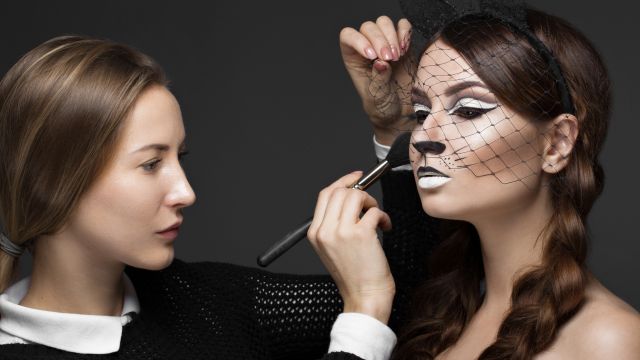
Maximale impact, sterke vormen en creatieve expressie - dit alles hoort bij podium- & dragmake-up. Je verlaat bewust de grenzen van de klassieke schoonheidsmake-up en leert het gezicht zo te vormen dat het er zelfs van een afstand en bij sterke belichting helder en krachtig uitziet.
Er wordt gewerkt met overdrijving: contouren worden benadrukt, de anatomie van het gezicht wordt visueel veranderd en er wordt opnieuw nagedacht over verhoudingen. Technieken zijn onder andere blokwenkbrauwen, kleurblokken, sterke contouren, kunstmatige schaduw, het overschilderen van de vorm van de lippen, grote wimpers, wimperstapeling, glitter en opvallende texturen.
In het praktische gedeelte ontwikkel je een opvallende look en creëer je stap voor stap een persoonlijk drag- of podiumpersonage. Je speelt met expressie, vorm, kleur en houding om een personage te creëren dat presence heeft en een verhaal vertelt. Naast technisch zelfvertrouwen krijg je ook de moed om creatief te zijn. Je leert make-up te begrijpen als een kunstvorm en creëert een onmiskenbare, luide en trotse look.
Epoch ziet eruit
Hoe herken je op het eerste gezicht uit welk tijdperk een look komt? Dit is precies waar het onderwerp 'period looks' om de hoek komt kijken. Cursisten kijken naar de typische en stilistische kenmerken van verschillende decennia: de duidelijke wenkbrauwen en donkere lippen van de jaren 20, de glamoureuze lijnen en rode lippen van de jaren 50, de natuurlijke tinten en aardetinten van de jaren 70, de krachtige blush en metallic glans van de jaren 80 tot en met de millenniumglans, glans en koele pasteltinten. Je leert welke details een look duidelijk in een bepaald tijdperk plaatsen, van de vorm van de wenkbrauwen en het aanbrengen van oogschaduw tot lipcontouren.
Een belangrijk onderdeel is het werken met foto- en filmreferenties. Je traint om snel kenmerken te herkennen, deze om te zetten in make-up stappen en een look snel aan te passen of te moderniseren. Hierbij komt observatie, deductie en creatieve vertaling kijken.
In de praktijk creëer je één of twee complete looks. Je oefent met het duidelijk en authentiek doorvoeren van historische elementen zonder dat de look te zwaar of "gekostumeerd" overkomt. Dit vak helpt je om een praktisch begrip te krijgen van de geschiedenis van stijl en om historische personages zo te implementeren dat ze direct herkenbaar zijn en er professioneel opgemaakt uitzien.
SFX - littekens, wonden enz.
Het zijn de kleine details die bepalen of een effect er geloofwaardig uitziet. In dit vak leer je hoe je SFX-make-up realistisch en nauwkeurig kunt realiseren.
Je begint met het leren over materiaalkunde en de eigenschappen van latex, was, siliconen, geltexturen, nepbloed en verschillende kleurenpaletten zoals alcoholverf en olieverf. Ze leren hoe deze materialen zich gedragen, hoe ze worden opgebouwd en gemodelleerd en hoe ze veilig kunnen worden gebruikt . De nadruk ligt vooral op textuurwerk zodat littekens, huidveranderingen en wonden er organisch uitzien en niet "kunstmatig".
Je kijkt dan naar verschillende soorten wonden : snij- en prikwonden, schaafwonden en brandwonden, schot- en schotwonden, verse en genezen littekens en hematomen en zwellingen. Ze trainen kleuropbouw, diepte, schaduwbeheersing en het effect van glans en matheid. Er worden ook kaalkoppen gebruikt. Je leert hoe je ze moet aanpassen, hoe je ze moet plakken en hoe je randen netjes kunt overvloeien - als bouwsteen binnen de vele SFX-technieken.
In de praktijk oefen je stap voor stap de verschillende effecten en combineer je materialen tot realistische resultaten zijn bereikt. Je zult je oog aanscherpen voor hoe een verwonde of veranderde huid er eigenlijk uitziet en leren hoe je dit professioneel kunt namaken. Het doel is om een veilige en gecontroleerde benadering van SFX-technieken te leren die er authentiek, geloofwaardig en filmklaar uitzien op de huid.
Ouderdomsuiterlijk
Ons gezicht verandert voortdurend in de loop van ons leven - hoe kan dit effect specifiek worden gecreëerd? Dat is precies wat je gaat bekijken in de cursus Ouderdomsuiterlijk.
Eerst bekijk je het natuurlijke verouderingsproces en analyseer je typische kenmerken zoals fijne en diepe rimpels, volumeverlies, een verandering in de huidstructuur, pigmentvlekken en verzonken gebieden. Je leert waar veroudering zichtbaar wordt en hoe deze veranderingen kunnen worden gereproduceerd met make-up - subtiel of duidelijk - en hoe te werken met kale kappen: je oefent met het aanbrengen, opbrengen en netjes blenden zodat de overgang er natuurlijk uitziet en de vorm van het hoofd realistisch lijkt.
Hierop voortbouwend leer je onderscheid te maken tussen een realistische ouderdomslook voor foto & film en een theatrale, goed zichtbare look voor toneel en afstand. Je leert hoe sterke lijnen moeten worden gezet, hoe schaduwen de look van het gezicht veranderen en hoe kleur het effect verandert.
In de praktijk zul je de technieken stap voor stap toepassen en een gevoel voor nuances ontwikkelen: wanneer ziet een rimpel er geloofwaardig uit? Waar ziet een schaduw er overtuigend uit? Hoe wordt een gezicht ouder zonder "maskerachtig" over te komen? Het doel is om vertrouwen te krijgen in het gebruik van verouderingstechnieken - precies, gecontroleerd en passend bij het toepassingsgebied.
Fantasie uiterlijk
Hoe creëer je een figuur dat niet uit onze wereld komt? In het vak Fantasy Look creëer je make-up als een compleet kunstwerk. Je leert de basis van het schminken van lichaam en gezicht , je ontdekt welke kleuren geschikt zijn voor de huid, met welke penselen en sponsjes je welk effect kunt bereiken en hoe je oppervlakken, verlopen en structuren netjes kunt creëren. Dit omvat ook het vakkundig integreren van accessoires zoals stras, veren, pruiken, hoofddeksels of gemodelleerde elementen om de look een driedimensionaal effect te geven.
Een ander aandachtspunt is het ontwerpen van personages. Je ontwikkelt je eigen personage - van het idee tot de kleurkeuze en de symbolische betekenis van afzonderlijke elementen. Het gaat hierbij om sfeer, verhaal, ontwerptaal en herkenningswaarde. Je plant hoe kleuren, patronen en materialen op elkaar inwerken zodat de look coherent is en niet willekeurig.
Tot slot realiseer je een compleet fantasiefiguur in de praktijk. Stap voor stap creëer je een look die niet zomaar is opgemaakt, maar geënsceneerd. Je brengt niet alleen make-up aan, je creëert het: met fantasie, technische vaardigheid en een duidelijk artistiek concept.
Beschikbare leervarianten van deze training
Gecertificeerd visagist & visagist
GEKOZENKlassikale cursussen
€ 4.590,00
Hoogtepunten
Taal van de instructie
NL
Gespecialiseerde module
Groepsbijwonen cursus
Schoonheidsverzorging (online)
Leertype | Leermethode
Variant leren
online/aanwezigheid
Leermethode
visueel/motorisch
Type auditief en visueel lerende
Zeer geschikt
Type communicatieve & motorische leerling
Zeer geschikt
Leertijd
flexibel + data
Leerondersteuning (# all-inclusive)
Scripts en documenten als PDF
Ondersteuning via Onlinecampus, e-mail, chat, telefoon.
WhatsApp & ondersteuning op locatie
Testen
Onderzoek/conclusie
Online tussentijdse examens op het gebied van schoonheid
Eindexamen
Flexibele datum
Certificaat in DE, EN, SP
Certificaat wereldwijd geldig & onbeperkt in tijd
Academie rekening (# all-inclusive)
Online campus levenslang beschikbaar
Gratis demo-account / proefpakket
Kopieën van certificaten te downloaden als PDF
Certificaten met verificatie (QR-code)
Promotie
Financieringsmogelijkheden
tot 100%
Educatief verlof (AT)
Promotie voor bedrijven
Promotie voor zelfstandigen
Cursusbegeleiding
niet-bindend
Kostenraming voor financieringsagentschap
Voordeel
Carrièreplatform met vacatures
Uitgebreide bijscholingsprogramma's
Absoluut beste prijs & dienstenaanbod
GEKOZENKlassikale cursussen
€ 4.590,00
Hoogtepunten
Taal van de instructie
NL
Gespecialiseerde module
Groepsbijwonen cursus
Schoonheidsverzorging (online)
Leertype | Leermethode
Variant leren
online/aanwezigheid
Leermethode
visueel/motorisch
Type auditief en visueel lerende
Zeer geschikt
Type communicatieve & motorische leerling
Zeer geschikt
Leertijd
flexibel + data
Leerondersteuning (# all-inclusive)
Scripts en documenten als PDF
Ondersteuning via Onlinecampus, e-mail, chat, telefoon.
WhatsApp & ondersteuning op locatie
Testen
Onderzoek/conclusie
Online tussentijdse examens op het gebied van schoonheid
Eindexamen
Flexibele datum
Certificaat in DE, EN, SP
Certificaat wereldwijd geldig & onbeperkt in tijd
Academie rekening (# all-inclusive)
Online campus levenslang beschikbaar
Gratis demo-account / proefpakket
Kopieën van certificaten te downloaden als PDF
Certificaten met verificatie (QR-code)
Promotie
Financieringsmogelijkheden
tot 100%
Educatief verlof (AT)
Promotie voor bedrijven
Promotie voor zelfstandigen
Cursusbegeleiding
niet-bindend
Kostenraming voor financieringsagentschap
Voordeel
Carrièreplatform met vacatures
Uitgebreide bijscholingsprogramma's
Absoluut beste prijs & dienstenaanbod
Basisinformatie over de leervarianten:
De trainingsinhoud is hetzelfde voor elke leervariant
De examenperiode, duur van de training en examenprocedure zijn onafhankelijk van de leervariant
Je kunt upgraden van afstandsonderwijs naar persoonlijk of individueel onderwijs. Afzonderlijke moduleblokken kunnen ook geboekt worden
Met de "face-to-face cursus" leeroptie kun je individuele blokken boeken en voltooien in één-op-één lessen.
Het uiteindelijke certificaat verschilt niet, ongeacht in welke leervariant je de cursus hebt afgerond
Je Academy-account en de leerinhoud blijven de rest van je leven bij je.
Wat zijn de voordelen van de gecombineerde opleiding visagist & visagist?
De gecombineerde opleiding combineert klassieke schoonheidstechnieken met creatieve special effects en maakt van jou een veelgevraagde allrounder. Je ontvangt twee internationaal erkende diploma's en bent in staat om zowel bruidsmake-up als SFX voor filmproducties aan te bieden. Deze veelzijdigheid opent aanzienlijk meer carrièremogelijkheden en bronnen van inkomsten - van bruiloften en redactionele shoots tot theater- en tv-producties.
Waar kunnen gediplomeerde visagisten werken?
Met beide diploma's kun je aan de slag in alle sectoren van de beauty- en entertainmentindustrie: bruidsvisagie en make-up voor evenementen, film- en tv-producties, theater en musicals, modeshoots en catwalks, dragshows en cosplay-evenementen, contentcreatie op sociale media of als freelance beauty- en SFX-specialist. De combinatie van beide kwalificaties maakt je bijzonder aantrekkelijk voor agentschappen, productiebedrijven en veeleisende particuliere klanten.
Heb ik een bedrijfsvergunning nodig in Oostenrijk als ik zelfstandig wil werken?
Voor louter decoratieve make-up zonder invasieve huidbehandelingen heb je in Oostenrijk een bekwaamheidstest "Cosmetica (schoonheidsverzorging)" nodig die beperkt is tot decoratieve cosmetica. Voor cosmetica- en huidbehandelingsactiviteiten is een gereglementeerde handel met een bijbehorende handelsvergunning vereist. De registratie vindt plaats bij de verantwoordelijke gemeentelijke of districtsinstantie. De Academie helpt je graag bij de juridische stappen.
Wat zijn de verdienmogelijkheden met beide kwalificaties?
Het verdienpotentieel met beide diploma's is aanzienlijk hoger dan met slechts één diploma, omdat je verschillende marktsegmenten kunt bedienen. Je verdient geld met bruidsmake-up, evenementenopdrachten, modeshoots, film- en tv-producties en theateropdrachten. Als je in loondienst bent, ontvang je een regelmatig salaris met sociale verzekering. Freelancers profiteren van projectgebaseerde vergoedingen, die zeer aantrekkelijk kunnen zijn afhankelijk van specialisatie, ervaring en kwaliteit van je portfolio.
Hoe bouw ik een klantenbestand op met beide diploma's?
Je bouwt een succesvol klantenbestand op door een gevarieerd portfolio van beauty- en SFX-werk, een actieve aanwezigheid op social media op Instagram, TikTok en YouTube met tutorials en transformaties, netwerken op trouwbeurzen, filmfestivals, mode-evenementen en theaterproducties, samenwerkingen met fotografen, filmmakers, bruidsmodewinkels en evenementenbureaus en doorverwijsmarketing via tevreden klanten. Je veelzijdigheid is je grootste verkoopargument.
Neem contact met ons op. We helpen u graag verder.
Wat is het verschil tussen een visagist en een visagist?
De gediplomeerde visagist richt zich op klassieke schoonheidstechnieken, huidanalyse, kleuradvies en professionele dag-, avond- en bruidsmake-up voor natuurlijke tot elegante looks. De visagist is ook gespecialiseerd in speciale effecten, fantasiemake-up, karakterportretten, podiumlooks en creatieve transformaties. Het gecombineerde opleidingsprogramma combineert beide gebieden voor maximale veelzijdigheid - je krijgt zowel subtiele beautylooks als dramatische SFX-effecten onder de knie.
Wat leer ik in de gecombineerde opleiding visagist & visagist?
Je leert alle klassieke make-up technieken zoals huidanalyse, kleuradvies, dag-, avond- en bruidsmake-up, smokey eyes, foto- en filmmake-up en correctietechnieken. Je leert ook creatieve visagistechnieken zoals podium- en dragmake-up, SFX met wonden, littekens en protheses, period looks van barok tot 1920, make-up voor ouderen met verouderingstechnieken en fantasy en character design met bodypainting en airbrushen.
Welke vereisten heb ik nodig voor het gecombineerde trainingsprogramma?
Je moet minstens 18 jaar oud zijn en beschikken over creativiteit en interesse in schoonheid en artistieke make-up. Voor jongere deelnemers is een schriftelijke toestemmingsverklaring van ouders of voogden vereist. Je hebt geen voorkennis van school, A-niveau of make-up ervaring nodig. De cursus is geschikt voor creatieve beginners en gevorderden. Belangrijker dan voorkennis zijn een passie voor make-up, de bereidheid om te experimenteren en de bereidheid om zowel klassieke als creatieve technieken te leren.
Is het gecombineerde trainingsprogramma ook geschikt voor carrièrewisselaars?
Ja, absoluut! Veel succesvolle visagisten komen uit andere beroepen en hebben van hun passie voor schoonheid en creatieve make-up een carrière gemaakt. Het flexibele opleidingsprogramma met online modules en face-to-face cursussen stelt studenten in staat om on-the-job te leren. Levenservaring en verschillende perspectieven verrijken vaak het creatieve werk. In het opleidingsprogramma worden alle technieken systematisch van de grond af aan aangeleerd - perfect voor een carrièreswitch.
Neem contact met ons op. We helpen u graag verder.
Wat is een portfolio en waarvoor heb ik het nodig?
Een portfolio is je professionele werkboek met foto's van hoge kwaliteit van je beste make-upwerk en transformaties. Het laat potentiële klanten, agentschappen, productiemaatschappijen en werkgevers zien wat je vaardigheden, stijl en veelzijdigheid zijn. Het portfolio is je visuele visitekaartje en is vaak doorslaggevend voor contracten. Een sterk portfolio met professionele voor-en-na beelden van verschillende looks opent deuren naar lucratieve projecten en helpt bij het opbouwen van je merk.
Moet ik mijn eigen make-up of modellen meenemen?
Nee, afhankelijk van het pakket dat je kiest (Basic, Premium of VIP), ontvang je verschillende professionele starterkits met beauty- en SFX-materialen en -tools. Je mag ook je eigen producten gebruiken. Neem voor de praktische face-to-face sessies je eigen modellen mee, bijvoorbeeld uit je kennissenkring, familie of vriendenkring. We ondersteunen je echter graag bij het zoeken naar geschikte modellen.
Is er een minimumleeftijd voor de modellen?
Er is geen minimumleeftijd voor de modellen - jongeren kunnen ook als model optreden. Modellen jonger dan 18 jaar moeten schriftelijke toestemming hebben van hun ouders of voogden. De verscheidenheid aan modellen van verschillende leeftijden verrijkt je portfolio en toont je veelzijdigheid met verschillende huidtypes, gezichtsvormen en make-upstijlen.
Krijg ik ondersteuning bij het opbouwen van mijn portfolio?
Ja, tijdens de cursus maak je professioneel werk op beide gebieden - klassieke beautylooks en creatieve SFX-transformaties - dat je kunt gebruiken voor je portfolio. Je krijgt begeleiding bij het ontwerpen van je portfolio en leert hoe je je werk professioneel fotografeert en presenteert. Het praktische werk met echte modellen biedt ideale mogelijkheden voor hoogwaardige portfoliofoto's voor sollicitaties, agentschappen en sociale media.
Neem contact met ons op. We helpen u graag verder.
Tot wel 100 % subsidie voor cursussen mogelijk!
Laat je bijscholing financieren en ga nu aan de slag. Wij geven je gratis en vrijblijvend advies over je subsidiemogelijkheden – telefonisch of persoonlijk.
Top beoordelingen
Vraag nu je gratis proefabonnement aan. Eerst uitproberen, dan studeren!
Super Ausbildung und mega nette Leute. Man merkt, wie viel Wert darauf gelegt wird den Kursteilnehmern das nötige Wissen verständlich zu vermitteln. Ich durfte sogar freundlicherweise einen Kurs komplett kostenlos nachholen, nachdem etwas problematische und störende Teilnehmer in meiner Gruppe waren. Ich werde 100%ig in Zukunft noch weitere Kurse bei euch machen, weil das Lernen allen voran dank des freundlichen Personals extremen Spaß macht!
Das gesamte Team von flexyfit ist überaus freundlich, prompt und hilfsbereit. Die Vortragenden sind kompetent und gehen auf die Kursteilnehmer ein. Sämtliche Lernunterlagen wurden übersichtlich und ausreichend detailliert zur Verfügung gestellt. Durch die zusätzlichen Videos ist für jeden Lerntyp etwas dabei. Alles in allem verliefen Ausbildung und Prüfung top. Ich kann flexyfit jedenfalls weiterempfehlen und werde weitere Ausbildungen gerne wieder bei Euch buchen und weiterempfehlen!
Ein super Team - kompetent, freundlich, stets hilfsbereit und unterstützend - hat die praxisnahe Ausbildung hervorragend begleitet. Sehr zu empfehlen! :)
Die Ausbildung zum Fitnesstrainer B-Lizenz hat mir dort sehr viel Spaß gemacht. Die gestellten Lehrmaterialien sind super und einwandfrei. Ich habe dort sehr viel neues gelernt und war immer mit Freude an der Sache. Das Team ist super und ist bei Rückfragen immer für einen da!
Das Beste, was mir passieren konnte, ist diese Akademie. Der Zugang zu den Teilnehmern ist hervorragend. Alle Mitarbeiter sind sehr kompetent, sehr professionell und sehr freundlich. Ein Mensch kann so viel lernen, dass es unbeschreiblich gut ist. Ich würde es jedem empfehlen. Als ich in Österreich ankam, war ich auf der Suche nach so etwas und zum Glück habe ich diese Akademie gefunden und mich ohne zu zögern für den Kurs angemeldet. All das, was wir als Gegenleistung bekommen, ist 100-mal mehr wert als das, was wir bezahlen. Unbeschreibliche Erfahrung, unbeschreibliche Menschen, noch einmal und noch 1000 Mal sage ich: Danke für alles, danke für dieses unbeschreibliche Erlebnis. DANKE, DANKE, DANKE <3
Ich konnte im Rahmen meiner Ausbildung bei der Flexyfit Academy sehr viel neues lernen und konnte mich mit meinem ausgewählten Lehrgang einer neuen anspruchsvollen Herausforderung stellen. Die Struktur der Ausbildungen ist sehr verständlich und übersichtlich gestaltet, sodass man ohne Probleme das Fernstudium alleine meistern kann. Bei Fragen, Unklarheiten oder vereinzelten Problemen war das Team der Academy immer schnell zur Seite und man konnte immer eine gemeinsame Lösung finden. Hier und da hätte ich mir noch etwas mehr Praxisbezug gewünscht. Nichtsdestotrotz habe ich mich immer sehr wohl gefühlt, habe tolle Referenten gehabt und mit meinem Abschluss zum Dipl. Medical Sportbetreuer stehen mir nun viele neue Türen offen :)
Konnte meinen gewählten Lehrgang sehr gut und zügig abschließen. Das Team ist sehr schnell und kukant und man bekommt immer eine gute Lösung angeboten, sollte es Unklarheiten geben. Werde bei Gelegenheit wieder buchen und kann die Akademie empfehlen!
Hat sehr viel Spaß gemacht meine Schwimmtrainer Ausbildung bei der Flexyfit zu absolvieren! Das Programm ist sehr umfangreich und die Trainer sind sehr gut ausgebildet.
Die Ausbildung in der Flexyfit war die beste Entscheidung, hab sehr viel in puncto Sport und Ernährung dazugelernt. Die Unterstützung war immer gegeben, sehr kompetentes und nettes Personal/ Trainer. Ich werde die Academy auf alle Fälle weiter Empfehlen. Insbesondere danke an Melanie, Sarah und Daniel
Eine wirklich anspruchsvolle Ausbildung, tolles Material, die Videos sind prima, das Script ergänzt gut. Die Struktur sehr sinnvoll aufgebaut, man findet sich gut zurecht. Lediglich finde ich die Verhältnismäßigkeit der Yogalizenz gegenüber der Pilateslizenz ungünstig. Es werden viel mehr Prüfungen in der Yogalizenz gefordert. Die Abschlussprüfung ebenfalls in der Yogalizenz deutlich schwieriger, Fragen müssten in meinen Augen überdacht werden.
Danke Flexyfit - sehr kompetent, tolle Unterlagen und auch Unterstützung. Die praktischen Übungen in Innsbruck waren TOP - Danke Matthias. Kann ich nur weiterempfehlen. Ich werde weitermachen. 😉
Qualitativ sehr hochwertige Ausbildung! Die Flexyfit Academy war sehr bemüht auf alle Fragen die im Zuge der Ausbildung entstanden sind einzugehen und genau zu erklären. Kann ich auf jeden Fall weiterempfehlen!
Absolut zufrieden! Ich habe mich für das Fernstudium entschieden, da ich persönlich nicht vor Ort sein konnte, und ich kann es wärmstens empfehlen! Alles hat reibungslos funktioniert, die Kontaktaufnahme war schnell, und bei Problemen wurde immer eine Lösung gefunden. Das Team ist super freundlich, und die Profilübersicht ist sehr übersichtlich. Ein kleiner Vorschlag: Es wäre hilfreich, wenn Nutzer, die längere Zeit inaktiv sind, einen Reminder erhalten würden oder eine App zur Verfügung stünde, um auch mobil lernen zu können.
Ich war von der Ausbildung sehr positiv überrascht! Das Fernstudium hat ganz unkompliziert funktioniert und der Service war auch perfekt! Die Unterlagen waren sehr gut und ich habe sehr viel dazugelernt! Kann ich mit gutem Gewissen weiterempfehlen! Update 2024: Nachdem ich nun bereits meine dritte Ausbildung abgeschlossen habe, kann ich meine erste Bewertung nur bestätigen! Als Vollzeit-Berufstätiger war es für mich eine super Möglichkeit nebenberuflich eine Ausbildung zu machen die meiner Leidenschaft entspricht! Ich lese regelmäßig Bücher zum Thema Sport und Gesundheit, und muss sagen dass die Ausbildungen überall auf einem sehr guten und aktuellen Stand sind! Das hat mich doch etwas positiv überrascht! =) Dank Flexyfit kann ich nun mein Hobby zum Beruf machen! Deshalb nochmal eine klare Empfehlung von mir!
Eine tolle Ausbildung, die da angeboten wird, mit einem sehr freundlichen und kompetenten Team. Es war ein Vergnügen mit euren sehr gut aufbereiteten Videos und Skripten zu lernen. Ich freue mich schon auf meine nächste Ausbildung. Kann ich nur sehr weiterempfehlen, von mir gibt es definitv 5 Sterne.
Sehr zuvorkommendes Team und ein allseits herzlicher Umgang! Die Ausbildungslehrgänge inkludieren einen interessanten Austausch mit guten, sportlichen Ausbildnern :)
Ich habe die Kindertrainer Ausbildung bei Flexyfit gemacht. Von Beginn an wird man super betreut, die Kommunikation passt perfekt. Alle sind bemüht und freundlich. Online sowie vor Ort hat alles perfekt gepasst. Es wird bestimmt nicht die letzte Ausbildung bzw. Workshop sein, welchen ich bei euch gemacht habe. Freue mich auf ein Wiedersehen. Danke an Daniel, Melanie und Beno :-)
Flexibles lernen leicht gemacht :) Sehr kompetent und freundlich . Sehr schnelle Antworten bei Fragen&wer eine Ausbildung im Sport Bereich machen will würd ich jedem die Flexyfit empfehlen 💪🏾
Ich habe bereits zwei Fernkurse absolviert und ich kann sagen, dass Weiterbilden mit den Flexyfit Kursen einfach Spaß macht. Man lernt im eigenen Tempo und zeitlich und örtlich flexibel.
Ich habe mittlerweile zwei Ausbildungen bei der Flexyfit Academy absolviert und würde es sofort wieder machen. Wenn möglich empfehle ich die Präsenzkurse, es ergibt sich einfach ein super spannender Austausch. Service und Betreuung sind top und es wird auf sämtliche Bedürfnisse eingegangen. Mini-Manko: das Online-Lernsystem ist nicht ganz straight-forward, aber man findest sich schnell ein.
➕ Gutes Institut mit toller Online-Academy und einem vielfältigen Ausbildungsangebot. Ich habe bereits 3 Ausbildungen dort absolviert. Gut finde ich den modulartigen Aufbau, sodass div. Basismodule auch für andere Ausbildungen herangezogen werden können. ➖ Leider wurde die Preisstruktur angepasst, sodass bereits absolvierte (Basis-)Module preislich nicht (mehr) in Abzug gebracht werden können. Schade.
Habe bereits zwei Ausbildungen bei der Flexyfit Sports Academy gemacht und bin voll zufrieden! Ein super nettes Team, die Organisation und Unterlagen sind Top - nur zu empfehlen ;)
Tolles Team! Die Organisation rund um die Ausbildung ist unkompliziert und sehr kompetent. Die Vortragenden sind professionell und erfahren und bringen eine gute Mischung aus Theorie und Praxis mit. Im Gesamten nur zu empfehlen.
Unheimlich freundliches Team, immer erreichbar, wahnsinnig hilfsbereit und sehr bemüht, für alles eine Lösung zu finden. Die Lernvideos und Skripten sind gut aufbereitet und easy to follow. Am meisten konnte ich persönlich von den wirklich guten Tutoren im praktischen Teil lernen. Insgesamt bekommt man einen sehr guten Über- und Einblick in die relevanten Themenbereiche, mir persönlich hat der Kurs auch gezeigt, wohin ich mich weiter orientieren & welche Bereiche ich vertiefen möchte. Außerdem: top ausgestattete Lehrsäle & überhaupt sehr ansprechende Räumlichkeiten - alles sehr einladend und familiär. Immer wieder sieht man jemanden aus dem Team gerade vom Laufen oder aus der Kraftkammer zurückkommen - da fühlt man sich gleich wohl! (Ausbildung: Dipl. Medical SportbetreuerIn)
Die Ausbildung war top 👍 sehr viel gelernt, sehr nette Leute kennengelernt- ich kann in jeder Hinsicht profitieren Und mir wurde ein Traum erfüllt- DANKE SEHR 😊
Bin sehr zufrieden, hatte eine TOP Professorin (was heutzutage keine Selbstverständlichkeit ist). Finde es toll, dass man als Ernährungstrainer anatomische Fächer (nennt sich Sportkompetenz) auch lernen muss. Der Support war auch toll. Sehr hilfsbereites Team! Bin alles in allem sehr zufrieden.
Super schnelles und nettes Service! Jede Frage sofort beantwortet und das auf eine angenehme und wertschätztende Art! Was besser wäre, mehr Zeit für Präsenzunterricht!
Meine Ausbildung bei Flexyfit Sport Academy... Ich habe die beste Unterstützung und Beratung vom kompetentesten, freundlichsten und erfolgreichsten Team erhalten. Vielen Dank an das Top-Team (Büro, Referenten und Coaches). Es war mir eine große Freude, mit Ihnen den Weg zur Verwirklichung meiner eigenen Ziele zu gehen.
Für alle Coaches, die detailiertes Wissen in einem oder mehreren Bereichen aufsaugen wollen. Bin einfach nur sehr begeistert von der Flexyfit Sport Acamedy und habe mich bei den Trainern super aufgehoben gefühlt. Die Begeisterung war selbst bei den Zoom Workshops so greifbar. Egal ob man lieber das Skript liest oder die dazugehörigen Videos anschaut, für jeden Lerntyp ist ein Medium dabei und das Lernmaterial ist super gut aufbereitet. Und sollten doch mal Fragen aufkommen, ist der 'Customer Service' super schnell zur Stelle und antwortet nach ein paar Stunden oder ist mit einem Rat zur Stelle. Einfach empfehlenswert!!! Vielen Dank liebe Flexyfit Sport Academy.
Einfach super und sehr, sehr nett. Alle Mitarbeiter vom Flexyfit Sports Academy Team sind so nett, zuvorkommend und hilfsbereit. Es gibt wirklich binnen Minuten bis einer Stunde eine Hilfe, wenn Fragen beim Online lernen auftreten. Es ist sehr viel zu lernen, aber es zeigt, dass eine Trainer Ausbildung, egal welches Fachgebiet, sehr wohl eine gewisse Grundlage benötigt und ich persönlich finde es genau richtig. Das zeigt für mich von Qualität und dass nicht jeder selbsternannte Profi auch ein Kenner und Könner ist. Augen auf mit wem und wo man trainiert! Es ist unser Körper und auf den sollte jeder Mensch achten und den 'richtigen' Trainer mit Fachwissen an seiner Seite haben. Ich kann Flexyfit Sports Academy nur empfehlen. Vielen herzlichen Dank an alle Flexyfit Sports Academy MitarbeiterInnen, ihr seid toll!!!!!
Unglaublich hilfsbereites Personal! Sogar an Feiertagen extra für mich gearbeitet und Termine vereinbart, sehr zukommend und unterstützend. Absolut empfehlenswert und happy :)
Die Ausbildung (Dipl. Health Fitness & Personal Trainer) ist wirklich super, wenn ich ein Problem hatte wurde mir immer sehr schnell geholfen. Die Videos in Verbindung mit den Skripten sind sehr hilfreich und gut gestaltet, die Ausbildung insgesamt top aufgebaut, auch mit den Zwischenprüfungen, Übungsaufgaben usw. Dadurch festigt sich das Gelernte noch viel besser! Auch die Vortragenden sind sehr kompetent und meine 2 Prüfer waren sehr freundlich und locker, so dass kein Grund zur Nervosität bestand. Alles in allem sehr empfehlenswert!
Exzellente Ausbildungsmöglichkeiten und hervorragende Erfahrungen: Ich hatte das Vergnügen gleich drei verschiedene Ausbildungen in der Flexyfit Sports Academy zu absolvieren, und es ist ohne Zweifel eine erstklassige Einrichtung für die Weiterentwicklung der sportlichen Fähigkeiten. Hier sind meine persönlichen Gründe, warum ich die Flexyfit Sports Academy so außergewöhnlich finde: Hervorragende Trainer: Die Trainer, die ich kennengelernt habe, sind erstklassig. Alle verfügen über umfangreiches Wissen und Erfahrung in ihren jeweiligen Bereichen und gehen stets auf die individuellen Bedürfnisse der Teilnehmer ein. Die Ausbildung war für mich maßgeschneidert und äußerst effektiv. Vielfältige Ausbildungsangebote: Die Academy bietet eine breite Palette von Ausbildungen an, die für verschiedene Fitnessziele geeignet sind. Egal, ob man nach Kraftaufbau, Flexibilität, oder Ausdauer strebt, hier findet man das passende Programm. Hochmoderne Einrichtungen: Die Einrichtungen in der Flexyfit Sports Academy sind erstklassig und mit modernster Ausrüstung ausgestattet. Sie sorgen für ein optimales Trainingserlebnis und ermöglichen es den Teilnehmern, das Beste aus sich herauszuholen. Eine inspirierende Gemeinschaft: Die Atmosphäre in der Academy ist motivierend und unterstützend. Man fühlt sich als Teil einer engagierten Gemeinschaft, die ein gemeinsames Ziel hat: Fortschritte im Sport und Fitness zu erzielen. Hervorragendes Preis-Leistungs-Verhältnis: Die Qualität der Ausbildung die man erhält, steht in einem ausgezeichneten Verhältnis zu den Kosten. Es ist eine Investition für die Gesundheit und das Wohlbefinden. Ich kann die Flexyfit Sports Academy uneingeschränkt weiterempfehlen. Die Ausbildungen, die ich hier absolviert habe, haben meine Erwartungen übertroffen. Wenn man nach einem Ort sucht, an dem man die sportlichen Ziele erreichen kann, ist dies der richtige Ort. Die Academy verdient die Bestnote, und ich freue mich auf weitere Ausbildungen in der Zukunft.
Die Ausbildung zum Dipl. Fitnesstrainer war sehr lehrreich und interessant. Die Module sind durchgedacht aufgebaut und gehen von Theorie zu Praxis. Die ganze Ausbildung hat unkompliziert funktioniert. Service perfekt, ich kann die Academy nur weiter empfehlen. Melanie und Sarah danke für alles! Einfach top!
Uw vraag is naar ons onderweg en we
zullen deze zo snel mogelijk beantwoorden zo snel mogelijk! We waren zo vrij en hebben
u een bevestiging per e-mail gestuurd naar:
Controleer ook je SPAM-map
We wensen je nog een flexytastische dag
* Verplichte velden
Hartelijk dank
Uw afspraak voor een consultatie is genoteerd!
We zijn zo vrij geweest u een bevestiging per e-mail te sturen naar :
Controleer ook uw SPAM-map
We wensen je nog een flexytastische dag
* Verplichte velden
Je gaat geen enkele verplichting aan door je te registreren. Toegang verloopt automatisch.
* Verplichte velden
Uw gegevens
Code verzonden naar:
Voer de viercijferige code in die je per e-mail en/of sms hebt ontvangen. (Controleer uw spam-map)..
YEAH, DONE!
We hebben een e-mail met de link naar je gratis demo-account naar het volgende e-mailadres gestuurd:
Controleer ook je SPAM-map (het kan 10 minuten duren voordat de e-mail aankomt).
We wensen je nog een flexytastische dag!
Je kunt ons van maandag tot en met vrijdag vanaf 8.30 uur bereiken. Advies en service in het Duits en Engels.
Je ontvangt binnenkort een e-mail om je inschrijving voor de nieuwsbrief te bevestigen:
Controleer ook uw SPAM-map
We wensen je nog een flexytastische dag
* Verplichte velden
Je ontvangt onze trainingsbrochureper e-mail.
Hartelijk dank
U ontvangt binnenkort een e-mail met uw downloadlink naar de brochure op:
Controleer ook uw SPAM-map
We wensen je nog een flexytastische dag
De bescherming van uw persoonlijke gegevens is van bijzonder belang voor ons. Hierbij geef ik toestemming dat mijn gegevens worden gebruikt om contact met mij op te nemen. Ik heb het privacybeleid gelezen en ga ermee akkoord.
Kwaliteit waarop je kunt vertrouwen
Meer dan
43.025Tevreden afgestudeerden - vanGroot-Brittannië
en
19 andere landen, hebben ons sinds 2007 hun vertrouwen geschonken.
Leerinhoud
details
Over cookies Cookies zijn kleine tekstbestanden die door websites worden gebruikt om de gebruikerservaring te verbeteren.
De wet staat ons toe om cookies op uw apparaat op te slaan als ze strikt noodzakelijk zijn voor de werking van deze website. Voor alle andere soorten cookies hebben we uw toestemming nodig. Deze website maakt gebruik van verschillende soorten cookies. Sommige cookies worden geplaatst door derden die op onze pagina's verschijnen. U kunt uw toestemming te allen tijde wijzigen of intrekken via de cookieverklaring op onze website.
In ons privacybeleid vindt u meer informatie over wie wij zijn, hoe u contact met ons kunt opnemen en hoe wij persoonsgegevens verwerken.
6
Noodzakelijke cookies helpen om een website bruikbaar te maken door basisfuncties mogelijk te maken, zoals paginanavigatie en toegang tot beveiligde delen van de website. Zonder deze cookies kan de website niet naar behoren functioneren.
Deze cookie wordt gebruikt om onderscheid te maken tussen mensen en bots. Dit is gunstig voor de website om geldige rapporten te maken over het gebruik van je website.
rc::c
Deze cookie wordt gebruikt om onderscheid te maken tussen mensen en bots.
Deze cookie wordt gebruikt om onderscheid te maken tussen mensen en bots. Dit is gunstig voor de website om geldige rapporten over het gebruik van de website te genereren.
_cfuvid
Deze cookie maakt deel uit van de diensten van Cloudflare - waaronder load balancing, het leveren van websitecontent en het leveren van een DNS-verbinding voor websitebeheerders.
Deze cookie wordt intern gebruikt door de eigenaren van de website wanneer inhoud wordt geüpload of vernieuwd op de website.
XSRF-TOKEN
Garandeert de surfveiligheid van bezoekers door cross-site request forgery te voorkomen. Deze cookie is essentieel voor de veiligheid van de website en de bezoeker.
3
Met voorkeurscookies kan een website informatie onthouden die van invloed is op de manier waarop een website zich gedraagt of eruit ziet, zoals de taal van uw voorkeur of de regio waarin u zich bevindt.
Registreert een unieke ID die wordt gebruikt om statistische gegevens te genereren over hoe de bezoeker de website gebruikt.
_ga_#
Verzamelt gegevens over hoe vaak een gebruiker een website heeft bezocht, evenals gegevens over het eerste en laatste bezoek. Gebruikt door Google Analytics.
15
Marketingcookies worden gebruikt om bezoekers op websites te volgen. De bedoeling is om advertenties te tonen die relevant en aantrekkelijk zijn voor de individuele gebruiker en daardoor waardevoller voor uitgevers en externe adverteerders.
Bevat de vervaldatum voor de cookie met de bijbehorende naam.
_uetsid
Gebruikt om bezoekers op meerdere websites te volgen om relevante advertenties te presenteren op basis van de voorkeuren van de bezoeker.
_uetvid_exp
Bevat de vervaldatum voor de cookie met de bijbehorende naam.
MUID
Op grote schaal gebruikt door Microsoft als unieke gebruikers-ID. De cookie maakt het mogelijk gebruikers te volgen door de ID op veel Microsoft-domeinen te synchroniseren.
MSPTC
Deze cookie registreert bezoekersgegevens. De informatie wordt gebruikt om de relevantie van advertenties te optimaliseren.
_uetvid
Gebruikt om bezoekers op meerdere websites te volgen om relevante advertenties te presenteren op basis van de voorkeuren van de bezoeker.
_uetsid
Verzamelt gegevens over het gedrag van bezoekers op meerdere websites om relevantere advertenties te presenteren - Hierdoor kan de website ook het aantal keren dat dezelfde advertentie wordt weergegeven beperken.
_uetvid
Gebruikt om bezoekers op meerdere websites te volgen om relevante advertenties te presenteren op basis van de voorkeuren van de bezoeker.
Gebruikt om bij te houden of de bezoeker interesse heeft getoond in bepaalde producten of evenementen op meerdere websites en hoe de bezoeker tussen websites navigeert - Dit wordt gebruikt om reclame-uitgaven te meten en maakt de betaling van verwijzingsvergoedingen tussen websites mogelijk.
IDE
Gebruikt door Google DoubleClick om de acties van de gebruiker op de website te registreren en te rapporteren nadat hij een advertentie van de aanbieder heeft bekeken of erop heeft geklikt, met als doel de effectiviteit van een advertentie te meten en de gebruiker gerichte reclame te tonen.
pagead/1p-conversion/#/
In afwachting van
test_cookie
Wordt gebruikt om te controleren of de browser van de gebruiker cookies ondersteunt.






 Cursusrooster
 BK
BK
 GTC
GTC











 Schakel WhatsApp®".
En je wordt rechtstreeks doorgestuurd naar de WhatsApp®-app.
Schakel WhatsApp®".
En je wordt rechtstreeks doorgestuurd naar de WhatsApp®-app.


